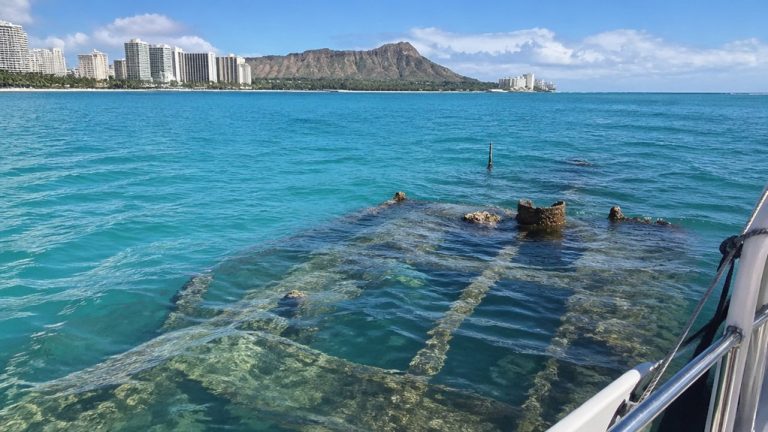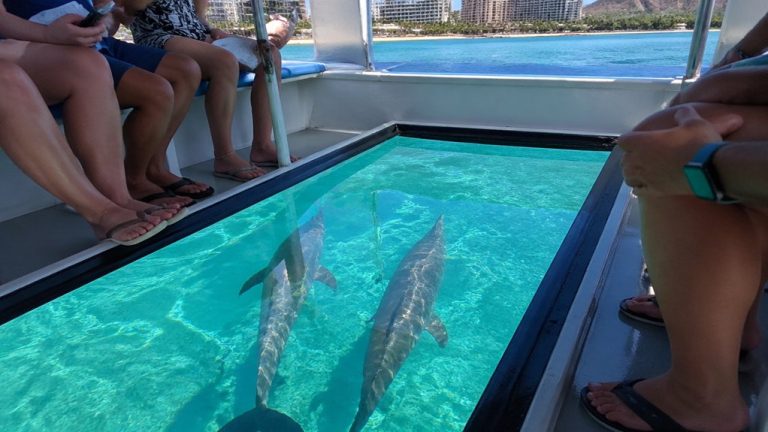
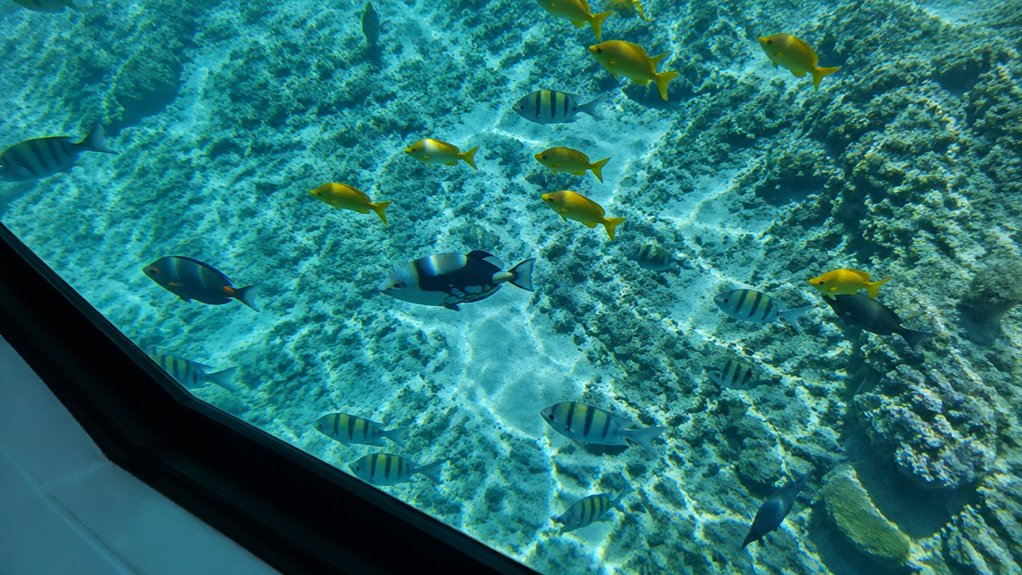
Within minutes of leaving Waikiki, you’ll usually spot yellow tangs sliding over the reef like living confetti under the glass. Then the scene gets busier. Parrotfish rasp at coral with a crunch you can almost imagine, bluestripe snapper hover in neat flashes of silver and blue, and goatfish comb the sand with whisker-like barbels. If you know where to look, the shy fish start showing themselves too.
Key Takeaways
- Yellow tangs often cruise Waikīkī reefs in bright schools, easily spotted through glass panels near shallow reef edges.
- Parrotfish scrape algae and coral along the bottom, and their feeding helps create Hawaii’s famous white sand.
- Bluestripe snapper, sweepers, and convict tangs form shimmering schools above reefs, ledges, and sandy channels.
- Butterflyfish like longnose, raccoon, four-spot, and milletseed appear around coral heads, reef slopes, and mixed coral patches.
- Wrasses and yellowfin goatfish add action at cleaning stations and sandy patches, especially in clear, calm mid-morning conditions.

Oahu Grand Circle Island Experience from Waikiki
Enjoy Grand Circle Island experience tour with breathtaking views of Amelia Earhart Lookout on Diamond Head, admire Chinaman’s Hat in front of Kualo...

Waikiki Turtle Snorkeling & 6-in-1 Adventure with Free Pickup
Experience a special turtle snorkeling adventure in Waikiki aboard a smooth and comfortable catamaran. This all-in-o...
Oahu Circle Island Snorkeling Tour: Dole, Pali Lookout & More
Looking for the BEST VALUE & MOST COMPLETE Circle Island Snorkeling Tour? Join us for the ultimate full-day, action-...

Waikiki Glass Bottom Boat Cruise
Experience the beauty of Oʻahu South Shore as we sail toward Lēʻahi (Diamond Head) aboard the spacious Haleiwa Qu...
What Fish Can You See in Waikiki?
What might drift past the glass in Waikiki? You’ll scan the reef and catch flashes of yellow tangs, bright little grazers that sometimes tidy sea turtles. Butterflyfish flutter near coral heads, while parrotfish scrape algae with beaklike mouths and quietly help make Hawaii’s sand. You may spot a black triggerfish cruising the edge of the scene like it owns the place. Then a school of bluestripe snapper can pour over the reef in a quick silver ribbon. Other reef fish appear in bursts and shadows: wrasses at cleaning stations, trumpetfish hanging upright, even an eel tucked into a crack. On a glass-bottom boat, the clear viewing panels make it easier to spot these reef fish as they move below Waikiki’s surface. The boat stays steady, the water throws moving light across the bottom, and every pass feels like peeking through a living window beneath Waikiki’s surface.
Most Common Fish on Waikiki Reefs
From the glass bottom, you’ll spot Waikiki’s regulars fast: bright yellow tangs cruising in loose groups, butterflyfish flicking around coral heads, and parrotfish scraping algae with beak-like mouths. You may also catch goatfish nosing through sandy patches with their chin barbels while triggerfish and wrasses patrol the reef like they own the place. These common tropical reef fish make the view feel busy and alive, and once you notice the schooling patterns, you can’t stop watching. For the clearest look at these reef fish, choosing one of the best seats on a Waikiki glass-bottom boat can make a noticeable difference.
Tropical Reef Fish
Peer through the glass and Waikiki’s reef fish start to sort themselves into familiar characters. You’ll spot Yellow tangs flashing like coins over reef flats and Wrasses zipping above live coral.
- Parrotfish scrape algae with beaklike mouths and quietly help build Hawaii’s white sand.
- Butterflyfish patrol reef edges, all thin profiles and bright masks, picking at tiny invertebrates.
- Goatfish trail chin barbels through sand, nosing out crustaceans with patient, whiskered focus.
- Wrasses hover at cleaning stations or dart past your window in quick, glossy bursts.
From a glass bottom boat, these fish are part of the living scene across Waikiki reefs just below the surface.
Stay alert for color shifts and odd shapes. This reef crowd rewards slow looking, and every pass across the window turns into a small identification game. Even beginners can pick favorites fast, though the reef keeps a few mysteries.
Schooling Fish Species
Often, the biggest surprise isn’t one flashy fish but a whole crowd moving as one across the reef. From the viewing port, you’ll often spot schooling fish streaming over coral like living confetti.
Big schools of bluestripe snapper, called ta’ape, hover above Waikiki reefs and can number in the hundreds. Yellow tangs glide in bright packs along reef edges, and you might even catch them cleaning turtle shells. Near sandy patches, yellowfin goatfish gather by day before using their barbels to hunt after dark. Sweepers and convict tangs flash in tight silver clouds over ledges and drop-offs, which look almost pixelated through the glass. Even parrotfish join loose feeding groups now and then, scraping coral with beaklike mouths and quietly helping make Hawaii’s famous sand under your boat. On Waikiki reefs, these schooling species are among the most common fish passengers spot from a glass-bottom boat tour.
Butterflyfish You May See in Waikiki
As you peer through the glass in Waikiki, you’ll likely spot butterflyfish first because their flat bodies flash bright yellow, black, and white against the reef like tiny moving flags. You can watch for common species such as the longnose, raccoon, four-spot, milletseed, and sometimes the pennant, each with its own mask, spots, stripes, or trailing fin that makes fish ID feel a bit like a game. Keep your eyes on reef edges, coral heads, and sloping sections below the boat, and you’ll have your best chance to catch these busy pickers at work. On some Waikiki glass-bottom tours, you may also glide above sea turtles cruising the same reef areas where butterflyfish feed.
Still comparing Diamond Head?
Ask for tour ideas, hotel suggestions, or a simple trip plan that combines both.
Trip Helper
Common Waikiki Species
Usually, the first butterflyfish you’ll spot from a Waikiki glass bottom boat is a flash of yellow slipping over the reef like a little floating leaf.
From a Glass Bottom Boat in Waikiki, you’ll see fish, fish and sea turtles, and other marine life from the Pacific ocean. A glass bottom boat tour lets you discover life beneath the surface without getting in the water. Watch for common butterflyfish:
- Longnose butterflyfish probing reef cracks with that needle snout
- Raccoon butterflyfish cruising near coral heads, often in pairs
- Four-spot butterflyfish nibbling coral polyps on sheltered sections
- Milletseed butterflyfish cleaning bigger fish while pennants hover deeper
You don’t need to be a biologist to notice their habits. One pecks, one pairs up, one grazes coral, and one runs a tiny reef car wash. That’s Waikiki at its smartest on an easy morning ride.
Reef Colors And Patterns
Once you’ve noticed how each butterflyfish moves, the next thing that jumps out is its paint job. On a Waikiki Glass Bottom Boat, you’ll see around those windows a catalog of reef patterns. The longnose glows yellow, wears a black mask, and carries a needlelike snout for picking coral. Raccoon butterflyfish look bolder, with an orange yellow body, black mask, white headband, and dark shoulder stripe. Four spot fish split their colors between a dusky brown top and yellow orange lower half, then add two white spots per side. Milletseed fish cover yellow bodies with neat black dots, like pepper shaken across sunshine. Even deeper marine life includes the pennant butterflyfish, white with black bars, a yellow tail, and a sail like fancy punctuation. While these reef fish are the main stars below, some Waikiki tours also give riders a chance at spotting dolphins beyond the glass-bottom view.
Where To Spot Them
Keep an eye on the reef’s busy corners, and you’ll start to spot butterflyfish where the habitat matches their habits. From a Beach Glass Bottom Boat or Waikiki Beach Glass Bottom tour, you’ll read the reef like a neighborhood map and watch marine life through the glass.
- Scan shallow coral heads and reef edges for the longnose butterflyfish nosing into cracks.
- Check cauliflower coral colonies for paired four-spot butterflyfish picking at live polyps.
- Watch mixed coral patches and cleaning stations for the busy milletseed butterflyfish.
- Glance down reef slopes for masked raccoon pairs, then toward deeper drop-offs for a pennant butterflyfish.
You won’t need luck, just patient eyes, slow boat drift, and a little curiosity today as the reef reveals its regulars below you there. While watching the reef, remember to keep a respectful distance from any protected wildlife and avoid any behavior that could cause harassment or harm.
Bright Waikiki Fish to Watch For
Often, the first fish to grab your eye from a Waikiki glass bottom boat is the bright yellow tang, a flat, disc-shaped grazer that cruises the reef and nibbles algae near shore. You’ll likely spot other yellow tangs nearby, flashing like coins in clear water. Then watch for parrotfish, whose beak-like jaws scrape algae and coral and help create Oahu’s white sand. Butterflyfish, including longnose and raccoon kinds, flick past with snouts and masked faces. Schools of bluestripe snapper shimmer in yellow and blue bands around reef structure. Wrasses add more motion, and a cleaner wrasse may bob at a tiny cleaning station. If you love reef snorkeling, you’ll recognize how busy and colorful this whole reef scene feels from above on calm mornings. Waikiki is one of the most popular spots for a glass bottom boat tour on Oahu because its nearshore reefs make fish viewing easy in clear, calm conditions.
Bottom Fish Near Waikiki Reefs
Drifting over the reef, you’ll notice that some of Waikiki’s most interesting fish stay close to the bottom, nosing through sand or slipping along coral ledges.
- yellowfin goatfish sift sandy patches with chin barbels.
- parrotfish crunch coral for algae, helping make white sand.
- triggerfish patrol reef flats, and they get feisty near nests.
- wrasses, including cleaner wrasse, pick over coral while moray eels peer out.
From the glass bottom, you can watch this small drama unfold in bright daylight. It’s a busy neighborhood, full of nibbling, rooting, and the occasional grumpy look from a ledge, which feels a lot more local than chasing distant open-ocean stars. You won’t miss the action, because these reef regulars rarely stop moving right beneath your boat window, too. Seeing them from one of Waikiki’s glass-bottom boat tours makes it easy to spot these bottom-dwellers without ever leaving your seat.
Hidden Fish Under the Boat
Look straight down and a second reef world pops into view under the hull. Through glass bottoms and bottom viewports, you See fish that stay tucked close to the reef. A yellow tang glides past in a bright school, easy to pick out by its round shape and steady motion. Nearby, parrotfish scrape along the bottom, using beaklike mouths to nibble algae and coral. You might spot a wedge tail triggerfish resting by rocks, or darting off like it forgot something. Dense groups of bluestripe snapper hover in yellow-and-blue clouds, while trumpetfish and yellowfin goatfish hide in crevices or nose through sand with whiskery barbels below you. Lean closer and the hidden traffic under the boat feels busy, like a tiny city changing shifts. On a glass bottom boat in Waikiki, these reef fish are often the stars of what you can spot directly beneath the hull.
Best Time to See Fish in Waikiki
Usually, the sweet spot for seeing fish from a Waikiki glass-bottom boat comes in mid-morning, around 9 to 11 AM, when the sun sits high enough to light the reef and the sea tends to stay calmer. You’ll get clearer underwater visibility through the small windows, especially on sunny days after no heavy rain. When choosing between morning or afternoon, morning trips usually offer better visibility and smoother conditions for spotting marine life.
Mid-morning, around 9 to 11 AM, usually offers the clearest reef views from a Waikiki glass-bottom boat.
- Aim for mid-morning (9–11 AM) for bright light and calmer seas.
- Watch for reef fish and turtles when low winds keep the surface smooth.
- Hope for slack tide, since stirred sand can turn the view milky fast.
- Book early morning departures about 12 days ahead. Winter, from December to April, may also add humpback whales to the show.
That timing gives you your best shot before weather complicates things later.
Where Waikiki Glass Bottom Boats Find Fish
Just off Waikīkī Beach, glass-bottom boats cruise the South Shore reef zone where fish gather in busy, shallow neighborhoods near Diamond Head. From a glass-bottom boat in Waikiki, you’re usually gliding above reef flats and fringing reefs that hold thick schools of reef fish in bright, sunlit water. Waikiki is especially good for these tours because water clarity often lets you see the reef and fish below without heading into deeper offshore areas.
These routes pass coral heads, sandy channels, and living ledges where yellow tang and parrotfish feed all day. You may also spot butterflyfish, goatfish, wrasses, triggerfish, and the occasional green sea turtle moving past the windows like an unhurried local. Near Diamond Head, shallow habitat keeps the action close to the hull, so you can watch fish traffic without heading far offshore. That’s why tours stay on the reef instead of chasing deep-water species that rarely visit these inshore neighborhoods.
How to Spot More Waikiki Fish
Often, you’ll spot more fish in Waikiki when you slow your eyes down and scan one zone at a time instead of trying to watch the whole reef at once.
- Look near shore for bright yellow tangs schooling over the shallows. Through glass bottoms, their color pops instantly.
- Check reef edges for paired butterflyfish. Their eye bands and spots read clearly even in small windows.
- Watch sand and shadow for goatfish. At dusk, they nose around with barbels, and by day they rest.
- Peek into crevices under ledges for moray eels and wrasses. Then scan blue water and you might see some turtles, rays, or dolphins.
- If you spot turtles, dolphins, or seals from the boat, enjoy them from a distance and follow viewing distances that help protect Hawaiʻi’s marine wildlife.
Keep your face close to the glass, cut glare with your hands, and let movement reveal hidden bodies.
Frequently Asked Questions
Are Waikiki Glass-Bottom Boat Tours Suitable for Young Children?
Yes, you can take young children if you prioritize child safety, check age limits, use life jackets, confirm stroller access, plan around nap schedule, keep toy packing light, and follow Parent Tips for closely supervision.
Can You Take Clear Photos Through the Glass Bottom?
Yes, on clear days, you’ll get keeper shots nearly 50% more often: watch lighting conditions and water clarity, fight glass reflections with angle positioning, don’t use flash, tweak camera settings, and sharpen details with post processing.
Do Fish Come Closer if the Boat Is Quiet?
Yes, you’ll often see fish come closer when you use calm water approach, quiet boarding etiquette, marine sound sensitivity, soft voice protocol, minimal wave movement, slow boat drift, and passive observation techniques to reduce disturbance nearby.
Should You Bring Polarized Sunglasses on the Tour?
Yes, like lifting a silver veil, you’ll want polarized sunglasses: polarized benefits include glare reduction, color contrast, UV protection, lens polarization, eye comfort, and vision clarity while scanning water, though they won’t improve small glass viewports.
What Should You Do if You Get Seasick Onboard?
If you get seasick onboard, use motion remedies, pick smart seating choices, follow hydration tips, try ginger options, practice breath techniques, play simple distraction games, and ask for crew assistance if symptoms don’t ease quickly.
Conclusion
You don’t need to snorkel to feel Waikiki’s reef life pull you in. From the boat you’ll watch yellow tangs flash like highlighters, parrotfish crunch coral with a faint crackle, and goatfish comb the sand below your feet. Go in calm morning light for the clearest view and keep your eyes on ledges and shadows. One minute feels almost TikTok fast, then a moray peeks out and the whole reef slows down again for you.