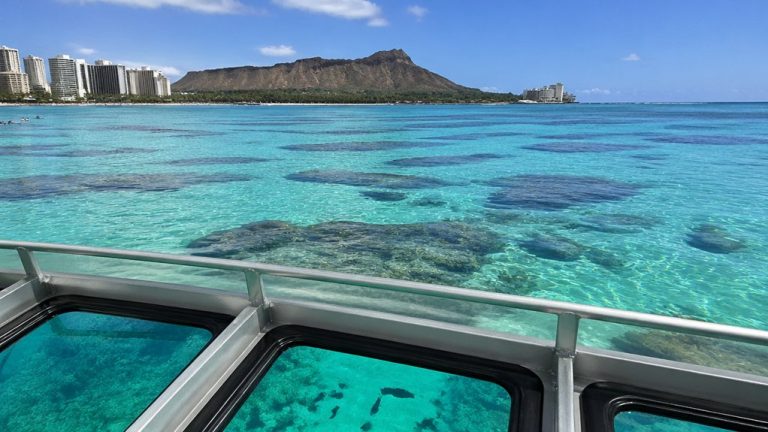
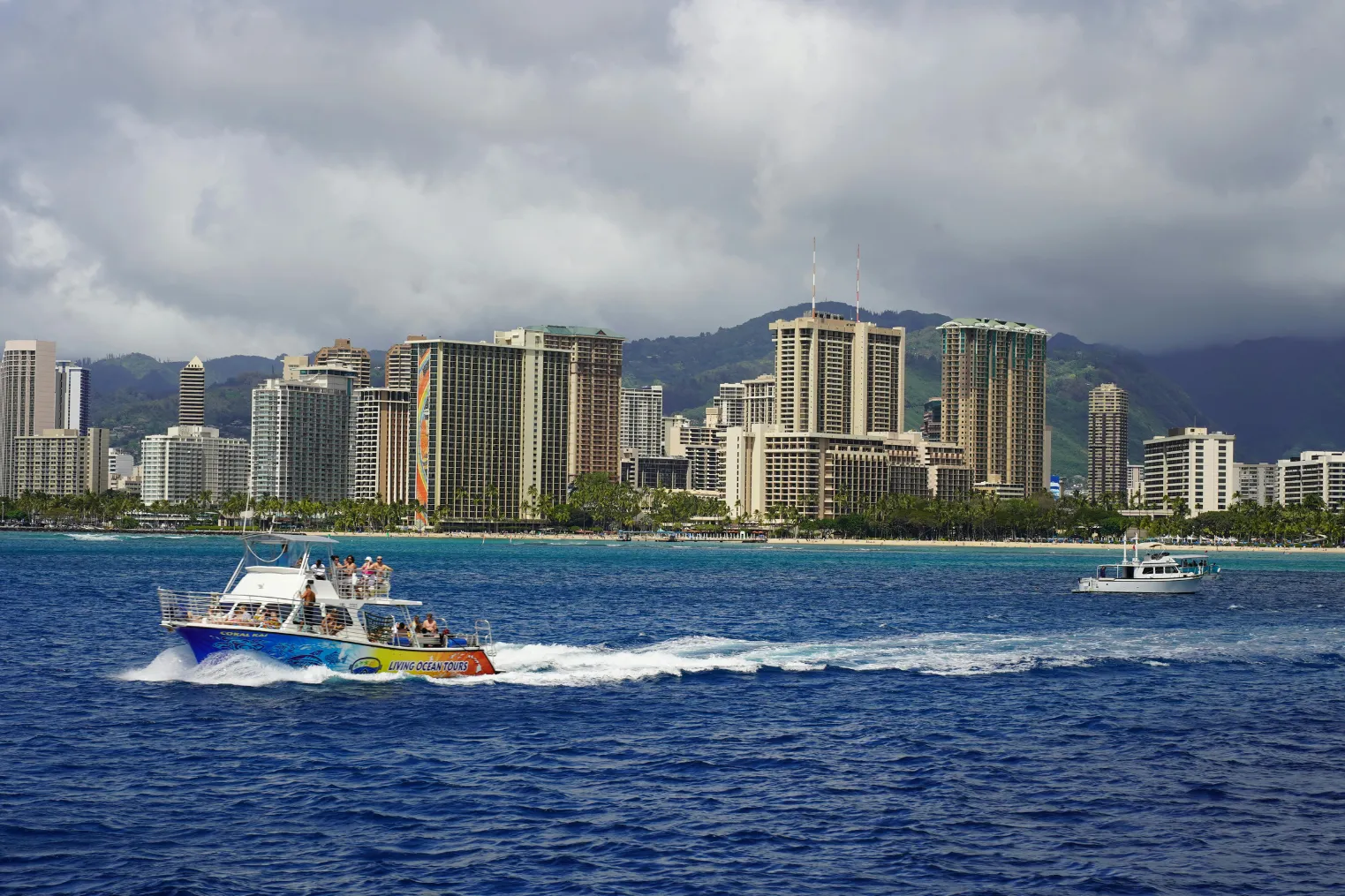
Like choosing between a page from Jules Verne and a lazy drift over a tide pool, you’ve got two very different ways to see Waikiki underwater. A glass-bottom boat keeps you in the sun with salt air on your face and bright reef colors flashing below the panel. A submarine slips you into a cool cabin and down toward wrecks and deeper blue water. The better pick isn’t as obvious as it sounds.
Key Takeaways
- A glass-bottom boat stays on the surface, while a submarine descends about 100 feet for underwater viewing through portholes.
- Glass-bottom boats show brighter, sunlit shallow reefs, but glare and water conditions can reduce clarity compared with steadier submarine views.
- Submarines reveal deeper reefs, wrecks, and larger marine life, though colors appear more muted at depth.
- Glass-bottom boat tours are usually cheaper, longer, and more open-air; submarine tours are pricier, shorter, and enclosed with air conditioning.
- Choose glass-bottom boats for lower-cost family fun and fresh air, or submarines for comfort, smoother rides, and a bigger wow factor.

Oahu Catamaran Snorkel Tour: See Turtles 100% Guaranteed
Experience one Viator's 2025 Top 20 Best Excursions in the country. This Oahu Catamaran snorkel tour offers unbeatable value and family-friendly fun f...

Oahu Grand Circle Island Experience from Waikiki
Enjoy Grand Circle Island experience tour with breathtaking views of Amelia Earhart Lookout on Diamond Head, admire...
Oahu Circle Island Snorkeling Tour: Dole, Pali Lookout & More
Looking for the BEST VALUE & MOST COMPLETE Circle Island Snorkeling Tour? Join us for the ultimate full-day, action-...

Parasailing Experience in Waikiki, HI
Experience the thrill of Oahu parasailing on this unforgettable 1-hour adventure from Waikiki. Soar up to 1,000 feet...
What’s the Difference Between the Two?
So what’s the real difference between a glass-bottom boat and a submarine tour? In Waikiki, you’re choosing between dry vs submerged viewing. A Glass Bottom Boat stays on the surface, and you peer through underwater panels at bright reef fish and coral when visibility is good. You feel the breeze and hear the slap of water. A submarine dives to about 100 feet and shows you deeper reefs and even shipwrecks through portholes. That extra depth opens a different world, though colors can look dimmer below. Surface tours are usually shorter and cheaper, while submarine rides often last longer and cost more. On both, viewing quality depends on light, water clarity, and the operator’s route and narration. Think reef window versus underwater theater seat. On Oahu, the best-known comparison is often between a Glass Bottom Boat tour and the Atlantis Submarine experience.
Which Option Is Best for Non-Swimmers?
If you don’t swim, you can still watch coral, bright fish, and even wrecks without getting wet, which makes both tours feel easy and safe from the start. A glass-bottom boat keeps you on the surface with open air, simple seating, and a quick escape from that boxed-in feeling, while a submarine gives you air-conditioned comfort and big porthole views about 100 feet down. A glass-bottom boat is especially reassuring for non-swimmers because its open-air design helps many people feel calm, comfortable, and less confined. Your best pick comes down to what helps you relax more: extra room and lower cost, or a smooth, immersive ride that feels like you’ve borrowed a fish’s window seat.
Dry Viewing Comfort
For non-swimmers, a glass-bottom boat is usually the easiest way to enjoy the reef while staying completely dry.
Glass-bottom boats let you sit above the water with shade overhead and restrooms nearby, so dry viewing feels simple from the start. Trips from Kewalo Basin keep logistics easy, and the open-air setup gives you more space to stretch. On many Waikiki glass-bottom tours, you can also expect chances to spot colorful marine life without needing any swimming experience.
Submarine tours also keep you dry inside an air-conditioned, pressurized cabin, where big portholes reveal deeper reefs and wrecks. Still, that enclosed feel isn’t for everyone, and visibility limitations can affect Glass-bottom boats more because surface views depend on sun and clarity. If you’re balancing comfort and cost, many non-swimmers will prefer the easier, breezier boat ride in Waikiki on bright, breezy afternoons with less sticker shock.
Confidence And Safety
Confidence matters when you want reef views without that little flutter of panic, and both tours make that easy in different ways. If you’re one of many non-swimmers, you can stay completely dry and still watch fish slip past the windows.
The submarine gives you the strongest sense of safety if you want a fully enclosed ride. You sit in a cool, air-conditioned dry cabin, buckle in, and descend about 100 feet without gear, ladders, or splashing. It also works well if seasickness bothers you, though tight spaces can feel snug. Glass-bottom boats are easier on the budget and widely accessible. You remain above the water, hear the breeze, and peer through viewing panels at reefs below. Following boat safety essentials can make that above-water experience feel even more relaxed for first-time riders. For kids and nervous riders, that simple setup often feels reassuring and easy too.
Is a Submarine Better for Kids?
Why do so many families pick the submarine? If you’ve got young children who can’t swim or won’t touch snorkel gear, it’s easy to see why. You stay in dry seating, cool air, and a quiet cabin while the ocean does the showing off. That setup feels simple and reassuring.
Still, glass-bottom boats deserve a look. They keep everyone dry too, and they usually win on cost, which matters when you’re buying several tickets. In Waikiki, some operators also offer wheelchair accessible glass-bottom boat experiences, which can make the boat option more practical for multigenerational families. A submarine can also feel cramped, so think about claustrophobia and how your child handles enclosed spaces. If your kid gets nervous fast, a boat may feel easier. If comfort, curiosity, and reliable visibility matter most, though, the submarine often gives kids a smoother first underwater adventure for your family.
Still comparing Glass Bottom Boat Waikiki Vs Submarine Tour: What’s The Difference?
Ask for tour ideas, hotel suggestions, or a simple trip plan that combines both.
Trip Helper
How Do the Underwater Views Compare?
You’ll notice the biggest difference in depth and range right away, because a glass-bottom boat keeps you skimming the surface while a submarine takes you down to reefs, wrecks, and fish you can’t usually spot from above. You’ll also see a trade-off in color and clarity, with shallow water often looking brighter and more vivid while deeper views can seem softer but stay steadier when glare or choppy surface light gets in the way. If you want a broad moving window on the sea, the boat gives you that, but if you’d rather feel closer to specific creatures and hidden features, the submarine puts them right outside your porthole. A glass-bottom tour is also designed around life beneath the surface, giving you a chance to observe marine scenes without actually going underwater.
Depth And Viewing Range
While a glass-bottom boat gives you a peek straight down from the surface, a submarine changes the whole viewing range by dropping to about 100 feet and cruising beside reefs and wrecks. You don’t just look below. You travel through the scene, with portholes framing reef walls, sandy channels, and wrecks a surface craft can’t reach. Most glass bottom boat tours in Waikiki are shorter experiences, which reinforces their focus on surface-level viewing rather than extended time underwater.
| Tour | What you see |
|---|---|
| glass-bottom boat | Shallow reefs and fish directly below |
| submarine | Deeper reefs, wrecks, and longer panoramas |
That depth shifts your perspective. On a glass-bottom boat, subjects often feel farther away, and visibility can shrink with glare and chop. In a submarine, you get 45 to 60 minutes of steady underwater theater. It feels less like peeking through a window and more like entering the neighborhood.
Color And Clarity
Although both tours put sea life in view, color and clarity change a lot depending on where you sit in the water column.
- On a glass-bottom boat, you get brighter hues over a shallow reef when visibility conditions are calm.
- Surface glare and light angle can blur details, so color clarity shifts with weather and launch spot.
- A submarine frames deeper reefs and wrecks through portholes, often with steadier viewing and less dependence on surface glare.
- But depth color loss mutes reds and oranges, so deep scenes feel moodier than vivid.
- Using techniques to reduce glare can help glass-bottom boat photos preserve more visible detail through the viewing panel.
You’ll usually see the most saturated coral in sunlit shallows, while the boat shows fish and coral from farther away. That trade-off shapes what feels crisp versus cinematic on your trip in Waikiki.
Proximity To Marine Life
Get closer, and the whole experience changes. On a submarine, you sink to about 100 feet and watch reefs, wrecks, sharks, and rays slide past big portholes. That gives you strong proximity to marine life, especially around deeper sites you can’t spot from above. With glass-bottom boats, you stay dry and comfortable, but you view fish and coral from the surface. Surface glare, water clarity, and angle matter. On a Waikiki tour, a glass-bottom boat can still showcase Waikiki reefs from above, giving you a broader look at the reef layout without diving below. Snorkeling usually wins for shallow reef encounters, since you hover right over coral and beside fish. Still, a submarine may reveal unique deep features. Just remember depth-related color loss can mute those underwater colors, and route, weather, and luck still shape what you actually see that day offshore in Waikiki’s waters below your waiting camera lens.
When Is a Submarine Worth the Cost?
If you want a dry, easy way to see marine life without masks, fins, or a single kick, a submarine can earn its higher price. The Atlantis submarine makes sense when you care more about comfort than activity. You descend about 100 feet and get 45–60 minutes submerged, peering through big portholes at wrecks, deeper reef, and schools of fish.
- Great for non-swimmers
- Helpful if you’re motion-sensitive
- Easy for families with very young kids
- A memorable dry experience
Still, do a quick value comparison. A glass-bottom boat or snorkel trip gives wider views, brighter color, and more freedom. Glass-bottom boats in Waikiki may also offer seasonal chances for whale spotting from the surface, which a submarine experience is less focused on. If you hate cramped cabins or want action, the submarine probably isn’t your best fit. It’s best when simple logistics, quiet wonder, and staying dry matter more than participation today.
How Do Prices Compare in Waikiki?
Price is where the choice gets real in Waikiki. If you want a clear price comparison, a glass-bottom boat usually wins on cost per person. Most Waikiki boat tours land around $49 to $79, and you often get a longer duration of 1.5 to 2.5 hours plus useful amenities on board.
Submarine tours usually start around $100 or more per adult. Their total duration is shorter, often 1 to 1.5 hours, with about 45 to 60 minutes underwater. You pay extra for deeper views, narrated sightseeing, and enclosed air-conditioned seating. That premium can feel worth it, but your wallet will notice. If you’re comparing simple reef viewing without snorkeling, the glass-bottom boat gives you more time on the water for less money, and often more included gear and amenities too. This typical cost breakdown makes it easier to see why many visitors pick a glass-bottom boat first.
Which Tour Should You Book in Waikiki?
So which tour fits your Waikiki style better? Choose based on how close, how deep, and how easy you want the day to feel.
- Pick a Glass-bottom boat if you want quick boarding, shade, restrooms, and reef views through viewing panels.
- Choose Waikiki boat tours if you like lower prices, more time on the water, and easy fun for kids.
- Book the Atlantis submarine if you’re a non-swimmer, motion-sensitive, or craving climate-controlled comfort.
- Go submarine when you want deeper reefs, wrecks, and bigger fish about 100 feet down.
If you’re traveling with nervous swimmers, the boat keeps things simple and breezy. If you want the wow factor, the submarine feels like slipping into a quiet blue sci-fi scene through large portholes in calm silence. If you want a surface-level option with variety, glass-bottom boat tours in Waikiki come in several boat styles to match different travel preferences.
Frequently Asked Questions
Are Waikiki Glass Bottom Boat Tours Suitable for Pregnant Guests?
Yes, you can usually enjoy Waikiki glass bottom boat tours while pregnant if you follow pregnancy precautions, confirm prenatal safety, ask about seating comfort, motion sickness, medical clearance, trimester restrictions, and review emergency procedures beforehand.
Can I Bring Snacks or Drinks on a Submarine Tour?
Yes, like packing for a flight, you’ll bring only limited snacks and drinks if you follow food restrictions, beverage policy, sealed containers, alcohol rules, allergy considerations, child snacks, trash disposal requirements, and check ahead onboard first.
How Early Should I Arrive for Either Waikiki Tour?
Arrive 20 minutes early for Waikiki boat tours and 30–45 minutes early for submarine tours; you’ll handle arrival time, check in kiosks, boarding procedures, parking options, security screening, and peak crowds as an early bird.
Do Either Tours Offer Hotel Pickup in Waikiki?
No, like chasing a mirage, you won’t usually get hotel transfers; you’ll head to meeting points instead. Check shuttle schedules, pickup zones, luggage policies, and curbside boarding details, or arrange private transfers if needed in advance.
What Should I Wear for a Glass Bottom Boat Tour?
You’ll wear Quick dry clothing, Waterproof shoes or Non slip sandals, plus Wearable sunscreen, a Wide brim hat, and a Sunglasses strap; bring a Light jacket so you’ll stay comfortable and protected at sea.
Conclusion
You’re choosing between two doors into Waikiki’s blue theater. One is a sunlit porch, where you drift above reefs, hear spray on the hull, and watch bright fish flash under glass. The other is an elevator to the quiet cellar of the sea, cool, dry, and full of wrecks and shadows. If you want easy, breezy, and budget-friendly, take the boat. If you want drama and depth, sink into the submarine and grin all day.