About 80 percent of family travel headaches come from gear, not the destination, and a stroller on a Waikiki glass bottom boat proves the point fast. You can make it work if you show up early, fold smart, and keep your setup light enough for narrow decks, salty rails, and those tiny glass view boxes below. The trick is knowing when the stroller helps and when it turns into extra cargo.
Key Takeaways
- A light, collapsible stroller works best on Waikiki glass-bottom boats because onboard space is limited and crew usually require folded storage.
- Arrive about 20 minutes early, tell staff about your stroller, and ask for boarding help, storage guidance, or priority seating near the canopy.
- Check stroller dimensions and accessibility with the operator in advance, especially if your child must remain in the stroller onboard.
- A compact stroller with one-handed fold, locking wheels, and a carry strap is easiest for docks, boarding, and secure storage.
- Consider leaving the stroller ashore on choppy days or crowded sailings for faster boarding, easier restroom access, and better movement around viewing areas.

Oahu Grand Circle Island Experience from Waikiki
Enjoy Grand Circle Island experience tour with breathtaking views of Amelia Earhart Lookout on Diamond Head, admire Chinaman’s Hat in front of Kualo...

Parasailing Experience in Waikiki, HI
Experience the thrill of Oahu parasailing on this unforgettable 1-hour adventure from Waikiki. Soar up to 1,000 feet...

Waikiki Glass Bottom Boat Cruise
Experience the beauty of Oʻahu South Shore as we sail toward Lēʻahi (Diamond Head) aboard the spacious Haleiwa Qu...

Oahu Catamaran Snorkel Tour: See Turtles 100% Guaranteed
Experience one Viator's 2025 Top 20 Best Excursions in the country. This Oahu Catamaran snorkel tour offers unbeatab...
Check If a Stroller Will Fit
Before you roll down to the dock, make sure your stroller will actually work on the Haleiwa Queen. This 50-foot catamaran is stroller accessible, so a standard single stroller usually fits during boarding and on the canopy-covered deck.
Still, size matters once you’re out at Kewalo Basin Harbor near slips F21 and F26. The indoor area is limited, and the glass-bottom boxes are small, so your stroller likely won’t stay beside the viewing spots. A collapsible model makes more sense, especially one with easy upright storage. Since the Haleiwa Queen is coast guard-approved, crew need clear paths to the restroom, lifejackets, and railings. If your child uses a stroller for special needs support, contact the operator ahead of time to confirm fit and the smoothest plan. It also helps to ask accessibility questions before arrival so you know exactly what the crew can accommodate.
Arrive Early for Boarding and Storage
You’ll want to get to Kewalo Basin about 20 minutes early so check-in feels easy and boarding doesn’t turn into a stroller scramble. Head for Slip F26 and watch for the big red sign at 1025 or 1009 Ala Moana Blvd, and give yourself extra time if you’re parking or riding bus #19, #20, or #42. At check-in, tell the staff you’ve got a stroller so they can show you where to stash it, and if it folds down, you’ll have a much simpler time tucking it onboard. If you’re driving, looking into Waikiki parking options ahead of time can make arrival at the boat much less stressful.
Check-In Time Buffer
Even if the ocean looks calm and the dock seems easy to spot, plan to arrive at least 20 minutes before departure. At Kewalo Basin Harbor, head for Slip F21 and the big red sign, then handle check-in before the boarding cutoff. That buffer gives you time for stroller storage on the dock or aboard the 49 passenger Haleiwa Queen, where space can disappear fast. Check your confirmation for the Ala Moana Blvd entrance so you don’t wander and burn minutes. If you want help stowing the stroller, ask the crew early or arrange priority boarding ahead. For Glass Bottom Boat Check-In, arriving early helps you avoid last-minute stress and makes boarding much smoother. It also helps with parking metered nearby, or with a bus delay. Showing up early feels boring until it saves your morning and keeps everyone pleasantly unflustered.
Slip F26 Arrival Plan
At Kewalo Basin Harbor, aim for Slip F26 at least 20 minutes before departure so you can check in, spot the BIG RED SIGN, and settle the stroller question without a rush. Enter 1009 Ala Moana Blvd and head for the front row near Ward Ave. Slip F26 is easy to miss if you’re circling for metered parking ($1–$4/hr), so give yourself margin. If you’re coming from Waikiki, the route to Kewalo Basin Harbor is straightforward, which helps when you’re budgeting extra time for parking and stroller logistics. At check-in, tell staff you’re bringing a stroller and ask about stroller priority boarding on the Haleiwa Queen. Early arrivals have the best shot when deck space fills on a first come basis. You should arrive 20 minutes before departure with water, sunscreen, and a jacket ready. That way, you can handle stroller storage questions quickly and board before the safety briefing.
Stroller Storage Setup
Before the engines hum and the harbor starts to shimmer, arrive at least 20 minutes early so the crew can check your stroller and secure it in the designated boarding and storage area on the Haleiwa Queen.
The boat is stroller-accessible for boarding, but your stroller must be folded in a crew-designated spot. Space limited, so early arrival matters. If you bought priority boarding, you’ll settle in faster and reach the shaded deck first. Keep phones, wallets, and snacks with you in a small dry bag or secure pocket. Storage covers the stroller, not loose items. If you hope your baby can stay in it, ask the crew first. Before boarding, review the cancellation policy so any last-minute schedule changes are easier to handle.
| What to do | Why it helps |
|---|---|
| Arrive early | Easier storage setup |
| Folded stroller ready | Faster boarding |
Still comparing Glass Bottom Boat Waikiki With A Stroller: What Works?
Ask for tour ideas, hotel suggestions, or a simple trip plan that combines both.
Trip Helper
Choose the Best Stroller for the Boat
Start with a stroller that’s light, compact, and easy to fold, because dock space in Waikiki can feel tight once people start lining up for the boat. A compact stroller or lightweight stroller under 20 pounds makes quick boarding smoother and slips through marina gates without bumping knees.
- Look for a one-handed fold, plus a carry strap for the walk across the dock.
- Choose a strong parking brake and locking front wheels for the rocking deck.
- If your child is under two, pick full recline or an infant-safe seat.
- Do a dimensions check with the operator and arrive 20 minutes early.
You’ll thank yourself when the salt air blows, the deck shifts, and you can stow the stroller fast before anyone starts the shuffle. Some operators also plan around accessible boarding needs, so confirming stroller dimensions ahead of time can make check-in and dock access much easier.
Pack Only What You Need
You’ll enjoy the boat more when you pack like every inch of deck space counts, because it does. Bring your stroller-day essentials in a small diaper bag, keep your load light, and leave bulky gear in the car so boarding feels quick instead of like a puzzle at the marina. If you’ve got wipes, one change of clothes, sunscreen, and maybe a jacket or seasick medicine, you’re set for the salt air, the compact restroom, and the easy roll to the ramp. For a glass bottom boat tour, it also helps to bring essentials like sunglasses or a hat so everyone stays comfortable in the sun.
Stroller-Day Essentials
Usually, the best stroller-day setup for a Waikiki glass bottom boat trip looks almost comically simple. At Kewalo Basin Harbor, you’ll board a 50‑ft catamaran fast, so a compact foldable stroller and a few essentials beat a stuffed tote every time.
- Sunscreen, a hat, one light snack, and a small water bottle for your child
- Motion‑sickness meds, plus a few diapers and wipes in a zip pouch
- A lightweight towel or blanket if you’ll leave the stroller dockside during boarding
- A small waterproof pouch for phones, cards, and keys, so your hands stay free at the glass bottom boat portal
Because Kewalo Basin Harbor tours board quickly, packing light makes the whole routine smoother from arrival to departure. Arrive 20 minutes early, ask the crew where to park the stroller, and keep the rest easy. You’ll notice the harbor breeze, not clutter.
Keep Bags Lightweight
Often, the easiest way to make a stroller-friendly glass bottom boat trip feel smooth is to carry less than you think you need. At Kewalo Basin Harbor, a small daypack works better than a tote.
| Pack | Why |
|---|---|
| Sunscreen | Easy grab |
| complimentary bottled water | Shore backup |
| light layer | Wind on deck |
| zippered pocket valuables | No rummaging |
Choose soft-sided, collapsible bags so they tuck beside your stroller on the 50 ft catamaran. For a Waikiki glass bottom boat tour, breathable clothing and simple layers also help you stay comfortable on the water. Keep snacks in tiny resealable portions. Limited onboard storage means lighter feels smarter. You’ll move faster through the viewing area, hear the water slap the hull, and still have a free hand when the crew snaps photos. Your shoulders will thank you, and boarding won’t feel like a puzzle at every narrow doorway there.
Leave Bulky Gear
Pare things down before you board, because the 50 ft catamaran feels much easier to navigate with a lightweight, foldable stroller and not much else. On a 50-ft catamaran, limited storage and limited seating mean you should leave bulky gear ashore and keep aisles clear for ocean views.
- Bring a stroller that’s lightweight foldable.
- Pack baby essentials in a small daypack.
- Skip coolers, extra chairs, and car seats.
- Arrive 20 minutes early and check with staff.
You’ll move faster through boarding, and the deck feels calmer without bags thumping seats or blocking windows. If you’re coming from farther away, confirm hotel pickup options before you finalize what gear to bring. BYOB snacks are fine, but keep them compact. If spray, sunset breeze, or a sleepy kid changes plans, you’ll be glad your setup stays simple under Waikiki skies and gull calls.
Sit Near the Glass Viewports
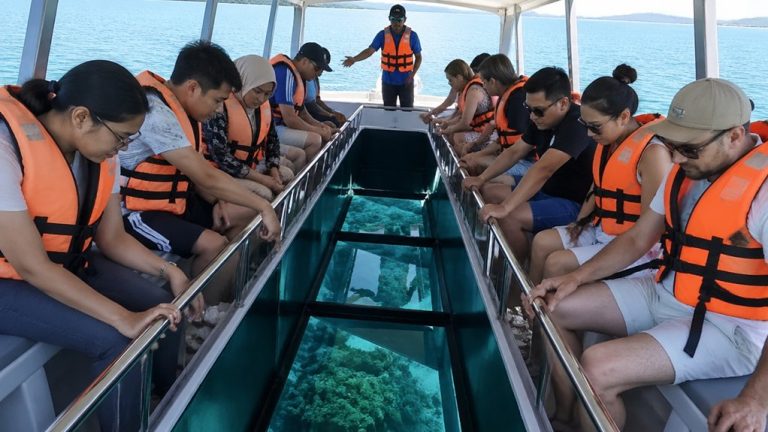
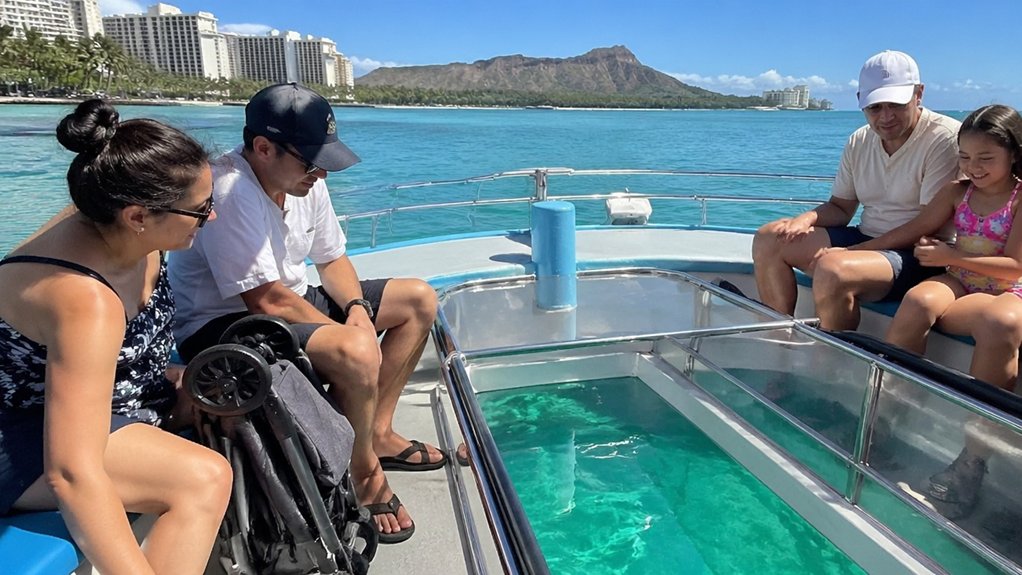
Settle in near one of the glass-bottom viewing stations if you want the real undersea look, because those small magnified viewports are the only places where you can peer down into the water. In Waikiki, glass bottom viewports are few, so arrive early, check in, and claim a seat fast. With boat capacity capped at 49, prime viewport seating disappears quickly. If you’re boarding with a stroller, fold it and park it in the designated area so you can slip into place. For small children, the adult holding them should sit at the opening. The boxes are tiny, and kids shouldn’t climb or lean over alone. Expect a limited field of view, not a full glass floor, and adjust your angle as visibility changes. These best seats also give you the strongest chance of spotting marine life through the limited viewing areas.
Keep Kids Cool and Comfortable
Keeping little ones comfortable starts with shade and light layers. Waikiki sun bounces off the water, so a little planning goes a long way.
Shade and breathable layers keep little ones happier, especially when Waikiki sun reflects bright and warm off the water.
- Use a lightweight stroller cover for shade, and park the stroller under the canopy during the cruise.
- Dress your child in moisture-wicking clothes, add a wide-brim hat, and stash a thin sweater for cooler breezes.
- Apply reef-safe sunscreen before boarding, then keep a small tube handy for touch-ups on exposed deck spots.
- Pack an insulated bottle and a zipper pouch with calming items, so quick sips and quick soothing feel easy.
Families often find that best ages for a glass bottom boat ride are the years when kids can sit comfortably for the cruise and enjoy spotting fish through the viewing area.
You’ll hear the engine hum, feel salt in the air, and notice how a familiar cup or toy can rescue the moment before anyone melts down from the heat.
Know When to Skip the Stroller
Comfort matters, but sometimes the smoothest move is to leave the stroller ashore. In waikiki, a glass bottom boat carries only 49 passengers, so fast boarding counts. If you need to stow bags, weave through the harbor, or reach slip F21 with little time after parking, a bulky stroller can turn nimble plans into a traffic jam.
Skip it when seas feel choppy or you want the best look through the glass‑bottom viewports. You’ll lean, stand, and shift in tight spaces under the canopy while the crew points out fish and turtles. For evening tours, you’ll also want easy access to a light jacket and the restroom. On this boat, freedom to move beats extra wheels every time when wildlife pops up beside you at sea. That flexibility also makes a glass bottom boat ideal for non-swimmers who want to enjoy Waikiki’s marine life without getting in the water.
Frequently Asked Questions
Are Infants Required to Have Their Own Ticket Onboard?
Usually, you won’t need a separate infant fare if your baby follows the lap policy. Check ticket exceptions, age verification, infant seating, proof requirements, infant discounts, ticket upgrades, reservation notes, and companion ticket rules onboard.
Is There a Restroom Available During the Cruise?
Yes, over 70% of guests ask, and you’ll find onboard restroom availability: restroom location, restroom accessibility, restroom cleanliness, restroom facilities, restroom size, restroom hours, restroom privacy, restroom signs, restroom maintenance all support your cruise comfort well.
What Happens if Bad Weather Cancels the Tour?
You’ll get refund policy details, reschedule options, and voucher issuance if weather monitoring triggers safety protocols. Expect customer service within the notification timeline, plus alternate activities, parking refunds, and travel insurance guidance for your trip.
Can I Bring Snacks or Drinks for My Child?
Yes, you can bring snacks or drinks for your child; check snack policies, beverage rules, allergy accommodations, spill prevention, healthy options, portability tips, meal timing, packaging advice, trash disposal, and temperature control onboard ahead today.
Is the Boat Ride Suitable for Kids Prone to Seasickness?
Yes, 1 in 3 kids feel motion sensitivity, but you’ll manage it with preventive medication, window seating, shorter ride duration, timing departures, calming strategies, ginger remedies, visual distractions, seat padding, and stroller storage easily most times.
Conclusion
You can make a stroller work on the Haleiwa Queen if you keep it simple. Arrive early. Fold a lightweight stroller fast. Hand the crew your plan at check-in. Then settle near the glass boxes where your child can spot bright fish and hear the boat hum over clear Waikiki water. As the saying goes, forewarned is forearmed. Pack light, stay flexible, and you’ll trade boarding stress for an easy family outing with ocean views.