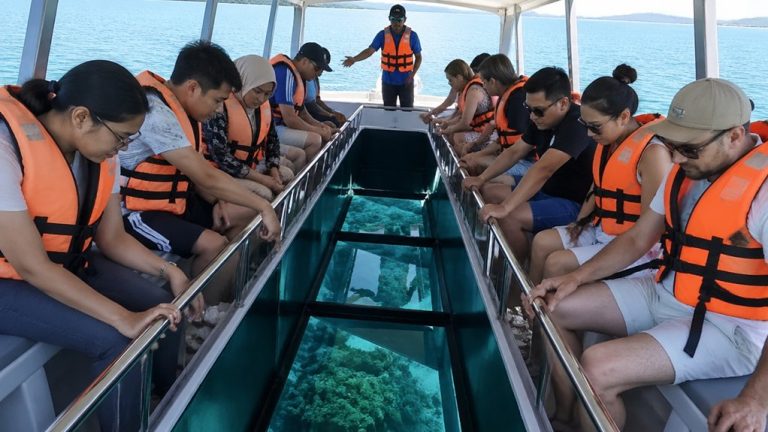
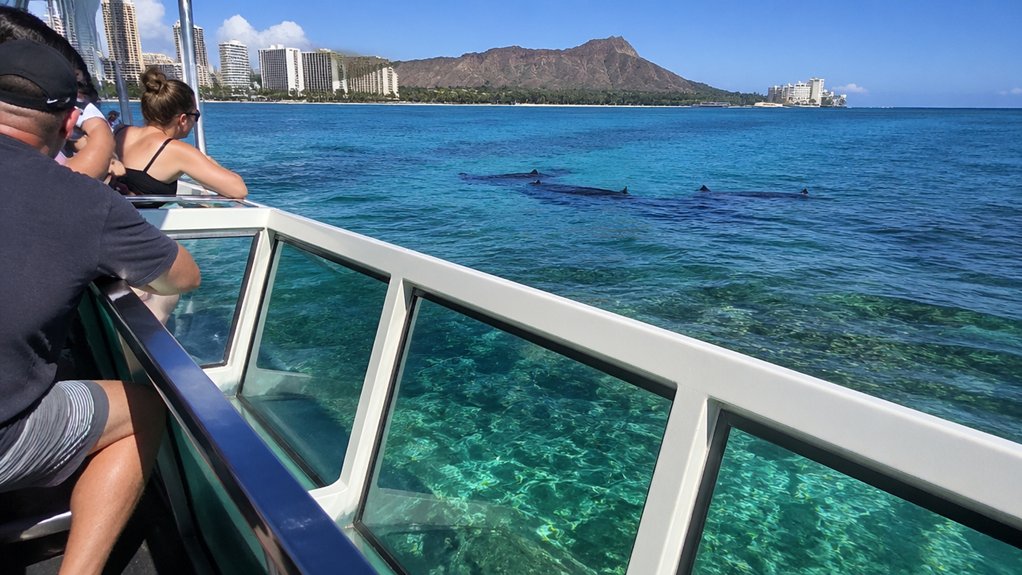
You can spot humpback whales on a Waikiki glass-bottom boat tour in winter, but you shouldn’t count on it. These boats usually skim the reef close to shore, where the clear panels frame coral heads, darting yellow tangs, and the occasional sea turtle instead of distant spouts. If a whale surfaces, you’ll hear the crew shift tone fast. Still, the setup matters more than luck, and a few small details can change what you see.
Key Takeaways
- Yes, you can sometimes see humpback whales on Waikiki glass-bottom tours during whale season, especially December through March, but sightings are never guaranteed.
- Glass-bottom tours mainly follow nearshore reef routes, so they offer lower whale-viewing odds than dedicated whale-watch cruises that spend more time offshore.
- Whales are usually best seen from the deck, since surface behaviors like spouts, breaches, and tail slaps are easier to spot above water.
- Morning trips often have calmer seas and less glare, while clear, bright conditions improve both deck spotting and underwater glass visibility.
- Crews may slow, turn, or linger when whales are reported nearby, but weather, rough seas, and safety rules can limit routing.
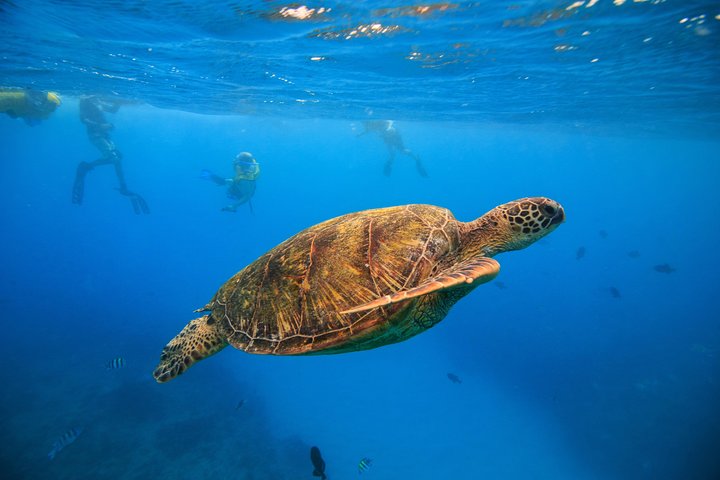
Waikiki, Hawaii: Turtle Canyon Snorkel Excursion
Discover the magic of snorkeling with Hawaiian Green Sea Turtles at Waikiki’s famous Turtle Canyon. On this 2-hour snorkeling tour, you’ll cruise...

Waikiki: 2-hour Turtle Canyon Snorkeling Adventure
Join us for a 2-hour snorkeling adventure at Turtle Canyon, one of Oahu’s top snorkeling spots! Cruise along the s...

Waikiki Turtle Canyon Snorkel: Turtles Guaranteed
Book our Turtle Canyon snorkel tour and experience one of Waikiki’s most popular turtle snorkeling destinations! D...
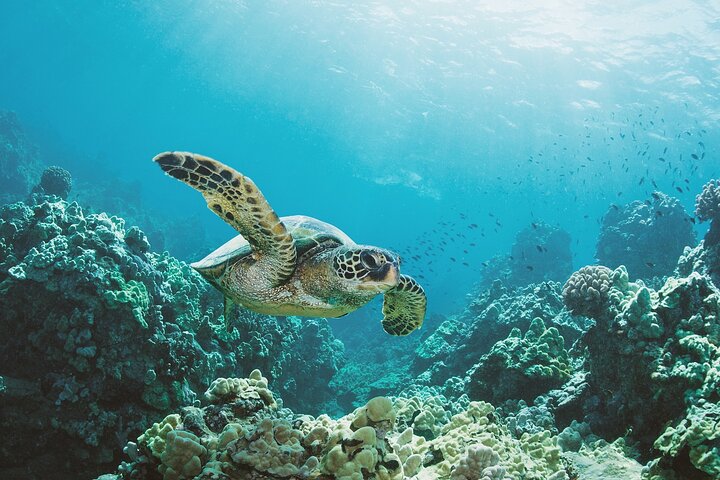
Waikiki: Turtle Canyon Snorkel Adventure on Oahu
Enjoy an exclusive snorkeling adventure in Waikiki with small group sizes for a comfortable and VIP experience. You...
Can You See Whales on Glass Bottom Tours?
Yes, you often can see whales on Waikiki glass-bottom tours during whale season from November to May, with the best odds from December through March. On a Waikiki Glass Bottom Boat, you’ll usually spot humpbacks from the deck first, looking for blows, breaches, and tail slaps near Diamond Head and the reef line. Captains often angle the boat toward those areas, and on a lucky day the crew may pause so you can watch longer and listen for whale song under the surface. The glass viewports can still add a thrill when conditions line up, but surface action is often the real show. Bring your camera, keep scanning the horizon, and stay ready. One minute you’re peering at coral, the next you’re grinning at a splash offshore. And while whales are a seasonal highlight, some tours also mention the chance of spotting dolphins off Waikiki.
Why Glass Bottom Tours Miss Whales
You’ll quickly notice why these tours miss whales: the boat sticks to reef-focused routes, and the glass windows are small fixed ports that show only a narrow slice of water. Even in whale season, humpbacks usually travel farther out past the reef, while blows and breaches happen above the surface where the glass can’t help you much. Unlike a submarine tour, glass bottom boats are designed for shallow reef viewing rather than deeper offshore wildlife encounters. So if you spot a whale, you’ll probably catch it from the open deck, and even then sightings can feel a bit like lucky timing.
Reef-Focused Cruise Routes
Often, the reason glass-bottom tours miss whales comes down to where the boat actually goes. Your glass-bottom boat usually leaves Kewalo Basin or Waikiki and tracks the nearshore reef crest, not the deeper blue water several miles out. You cruise past Turtle Canyon and shipwreck spots because those shallow routes deliver fish, coral, and turtles in about an hour. Many operators frame these outings as glass bottom boat tours centered on reef viewing rather than dedicated whale-search routes.
| Route focus | What you’re likely to see |
|---|---|
| Nearshore reef | Coral heads |
| Turtle Canyon | Sea turtles |
| Shipwreck area | Reef fish |
| Far offshore | More humpbacks |
During Hawaii’s November to May whale season, humpbacks often gather beyond these reef-focused paths. Some captains may pivot for wildlife, but the boat’s short range keeps whale encounters occasional, not expected on most trips, even in peak season.
Small Viewing Windows
Picture a handful of underwater peepholes instead of a wall-to-wall glass floor. On most glass-bottom boats in Waikiki, you peer through small cabinet-style windows, not giant panels. Each opening feels closer to a car windshield than an aquarium tunnel, so only a few people can look at once.
- You scan a narrow slice of water.
- Glare and shifting light blur the view.
- Surface sightings don’t line up with the windows below.
That setup works nicely for reef fish, turtles, and shipwreck details near the boat. Good onboard etiquette also means taking turns at the viewing windows, which makes these small openings even less practical for whale watching. It doesn’t give you the wide underwater field you’d need for whales. Even if a humpback appears nearby, you’ll usually spot it above the water first. That’s why glass-bottom boats deliver better reef viewing than true whale watching today.
Whale Sightings Vary
That limited window view also explains why whale sightings on Waikiki glass-bottom tours feel hit or miss. You’ll have the best odds from November to May, when humpback whales migrate through Hawaiian waters. Even then, the small fixed viewports below deck only show a narrow slice of ocean, so you usually won’t catch a whale unless it passes close and shallow.
The best time of year for these tours can also shape conditions, visibility, and your chances of spotting marine life from the boat. Most of the action you imagine during whale watching happens at the surface anyway. You’re more likely to spot a spout, tail slap, or breach from the open deck, with wind in your face and everyone pointing at once. Crews may slow down or reroute when they spot whales, but glare, choppy water, and depth still work against the glass. For steadier sightings, book a dedicated whale watching cruise instead.
Still comparing Turtle Canyon?
Ask for tour ideas, hotel suggestions, or a simple trip plan that combines both.
Trip Helper
What You’ll See Instead on These Tours
What shows up most clearly on a Waikiki glass-bottom boat tour isn’t a whale eye-to-eye moment, but the lively reef world below your seat. You’ll usually cruise past Diamond Head, scan small glass ports, and catch bright reef textures that read better than distant humpback whales.
- schools of tropical fish flashing like confetti
- honu gliding by, plus eels or an occasional reef shark
- the outline of a shipwreck and coral formations
You might also spot dolphins, shoreline views, and the Waikiki skyline from the deck. The ride stays dry and easy. You sit, look down, and let clear water, sun angle, and a little luck sharpen the scene. Think more aquarium window than underwater safari, with salt air included and no soggy mask hair. Many riders book these trips for marine life viewing because the reef scene is usually the main attraction.
When Whale Season Starts in Waikiki
If you’re hoping to add humpbacks to the reef-and-skyline mix, timing matters. In Waikiki, whale season starts in November and runs through May, when humpback whales migrate to Hawaiian waters to breed and calve. You’ll usually find the strongest action from January to March, when sightings peak and whale songs can carry through the air like a low underwater soundtrack. During these months, many glass-bottom tours head toward Lē’ahi, where whales often surface offshore. Captains may linger when they spot blows or breaches, and guides often add commentary. Just know the small glass viewports aren’t ideal for underwater whale views. If you’re prioritizing longer watch time, choose a dedicated whale-watching tour or a longer November-to-May option instead for a better overall chance at encounters. On a Sunset glass-bottom boat tour in Waikiki, whale sightings are possible in season, but they’re usually a bonus rather than the main focus.
Are Whale Sightings Ever Still Possible?
Yes, you can still spot humpback whales on a Waikiki glass-bottom boat during the November to May season, and when they appear, your crew may linger a little longer to let you watch. You’ll usually get the best look from the deck as spouts, fins, and rolling backs break the surface, while the small viewing windows depend on clear water, good light, and a whale that happens to pass just right. Even when the underwater view stays limited, you can still hear whale song and follow the action with onboard narration, which is a pretty good trade for a front-row seat on the water. On many glass-bottom tours in Waikiki, sea turtles are also a common highlight, giving you another memorable wildlife sighting between whale appearances.
Seasonal Whale Chances
Sometimes, you really can spot whales from a Waikiki glass-bottom boat, especially during Hawai‘i’s whale season from about November through May. Your best Waikiki Whale odds arrive in peak months, January through March, when humpbacks are most active offshore.
- Tours often cruise toward Lē‘ahi and nearby reef lines where whales may pass.
- Some crews linger a little longer when they get a whale report nearby.
- You still won’t get the same search pattern as a dedicated 1.5 to 2 hour whale-watch trip.
On many Waikiki glass-bottom tours, the main expectation is usually reef and marine life viewing, so whale sightings remain an extra seasonal perk rather than the focus. That means you should treat a whale encounter as a seasonal bonus, not a promise. If you’re hoping for the strongest chances, book during peak season and choose a true whale-watch excursion. On a glass-bottom boat, luck still gets a vote.
Surface Sightings Matter
While the glass-bottom windows spotlight reef life, whale sightings on these tours usually happen the old-fashioned way: up on deck, eyes on the horizon. During whale season, you can still see whales from Waikiki or Kewalo Basin, especially when a humpback surfaces nearby with a spout, breach, fluke, or tail slap.
That’s because the viewing panels are small and aimed at shallow reef scenes, not the open blue where whales travel. Ala Wai Harbor also offers Glass Bottom Boat Tours focused on viewing marine life below the surface rather than tracking whales offshore. If crew members spot surface activity, they’ll usually turn your attention outward and may even linger a little longer. You’ll hear the engine ease back, feel everyone shift rail-side, and scan the water together. Still, no operator can promise a sighting every trip. If you want the best odds for close encounters, a dedicated whale-watch cruise makes more sense.
Conditions Affect Visibility
Even in peak humpback season, conditions decide whether a whale becomes a real sighting or just a hopeful ripple off the bow. You can absolutely spot whales from Waikiki during season, but the glass viewports are small, so timing matters.
- Clear water helps you catch a passing whale below the boat.
- Low glare and good sun angle make those underwater windows more useful.
- Shallow movement beats prolonged submersions, since a whale can vanish into blue water fast.
Midmorning to early afternoon often offers best underwater color, which can also make shapes below the boat easier to pick out in Waikiki’s clearer light. You’ll usually have better luck on deck, where breaches, spouts, and even songs can steal the show. Some crews linger when whales appear, but if underwater views are your goal, choose a longer, open-deck whale watch. It’s the smarter pick when you want space, time, and sightings.
How Tour Length Affects Whale Sightings
Usually, the longer you stay on the water, the better your odds of spotting humpback whales off Waikiki. A 1.5-hour trip gives you more search time during peak season, from November to May, and more minutes in whale-rich water. Standard Waikiki glass-bottom cruises often last just one hour, so your chances drop simply because the clock runs out faster. Glass bottom boat tours in Waikiki are often available in one-hour trips, which can limit wildlife viewing compared with longer excursions.
Longer departures also give captains room to linger when whales appear. That can mean moments to watch a blow, track a tail slap, or even hear whale songs through onboard speakers or a hydrophone. Short tours feel every setback sharply. Choppy seas, glare, or murky water can steal viewing time. If you really want whales, book a whale-watching tour, usually 1.5 hours or longer.
Why Topside Views Are Better for Whales
From the open deck, you can scan a much wider sweep of ocean and catch the blows, breaches, and tail slaps that humpbacks show off at the surface. You’ll also spot whales sooner at a distance, especially on runs toward Lē‘ahi during Hawai‘i’s November to May season, when the best action often happens well beyond the glass-bottom viewports. If a hydrophone picks up whale song, that’s your cue to look up and out, because the real show usually starts where the sea meets the sky. Choosing a morning tour can also improve topside visibility when the ocean is often calmer and glare is lower than later in the day.
Surface Scanning Advantage
Scan the horizon from the deck, and whale watching starts to make immediate sense. On a Waikiki Boat tour, you catch the clues whales throw into the air. A spout hangs like mist. A breach lands with a slap. A tail sends spray flashing in the sun. Those signs happen above water, so deck views win.
- You can scan a wide patch of ocean with other passengers.
- Guides track pods by sight and sometimes by listening for songs.
- Crews can turn, pause, or stretch the cruise for longer looks and photos.
The best time of day can also improve topside spotting, since light and ocean conditions often make surface activity easier to see. Glass-bottom windows face down, so glare, angles, and limited light can hide a whale skimming near the surface. From topside, you stay with the action instead of staring at empty blue water below.
Better Distance Visibility
Out on the open deck, you can spot whale action long before it reaches the boat. You’re looking across the Pacific Ocean with a full horizon, so a blow, breach, or tail slap can catch your eye from several hundred yards away. That distance matters. Glass-bottom windows are built for reef fish close to the hull, not far-off surface drama. Their view is narrow, darker, and easily dulled by glare, chop, or cloudy water. If the water is rough in Waikiki, that limited view can become even harder to use for spotting whales. Up top, you can shift sides, lean into a cleaner angle, and even use binoculars. Guides do the same during whale season, scanning high and wide for spouts and flukes. If a humpback puts on a show, the deck gives you the front-row seat, not the tiny peephole below.
Where Waikiki Whale Watching Boats Go
While each operator follows its own route, Waikiki whale watching boats usually stay close to the shoreline and cruise toward Lēʻahi, better known as Diamond Head, after leaving Kewalo Basin Harbor or Ala Moana Pier.
You’ll often pass:
- live reefs glowing below the glass
- the famous shipwreck within snorkeling distance of Waikiki
- nearshore landmarks like Turtle Canyon
In whale season, your captain may angle into deeper blue water where humpbacks surface, spout, or sing through the hull. Crews often linger when they spot activity, then return toward the reefs instead of heading far offshore. That means you get a mix of coral views and possible whale encounters, with Diamond Head usually framing the horizon like a postcard. Even a Waikiki Sunset Cruise can too. Travelers comparing boat style options in Waikiki will find that routes and viewing experiences can vary slightly by vessel.
Which Waikiki Tour Is Best for Whales?
So which Waikiki tour gives you the best shot at whales? If whale sightings top your list, book a tour that actually advertises whale watching instead of a short sightseeing cruise. During Hawaii’s season from November through May, especially January to March, you’ll usually do better on longer departures and open-deck boats.
Glass-bottom trips from Kewalo Basin Harbor still give you a chance, and the water views are fun. But whales are usually easier to spot from the deck than through the small viewing windows. On the cheapest glass bottom boat tours in Waikiki, you often sacrifice broader deck views and a better overall chance of spotting whales. If you want the highest odds, consider a dedicated whale-watching cruise or a longer Ko Olina sailing. You’ll hear more, scan farther, and spend less time wondering if that splash was a whale or someone’s enthusiastic cannonball nearby. practice
How Whale Season Changes Boat Routes
During whale season, you’ll often leave Kewalo Basin or Waikiki and head past the reef line toward Lē’ahi, where deeper blue water gives you a better shot at spotting humpbacks. If a captain hears about fresh activity, you might trade some glass-bottom fish watching for surface scans, slow turns, and a few extra minutes on the water while everyone listens for that excited shout of “whale!” Many tours use Kewalo Basin Harbor as a departure point for these seasonal route changes. Weather, chop, and boat traffic can still change the plan fast, so you’ll want to stay flexible if the route shifts or the tour heads back early.
Seasonal Route Adjustments
Once humpback season rolls in, Waikiki glass-bottom boat tours often push farther offshore instead of sticking to their usual reef loops. On your tour, that can mean a longer run toward Lē’ahi, with the captain reacting fast when spouts, breaches, or even whale song reports pop up nearby.
- Routes may stretch beyond the reef during November to May.
- Captains can slow, circle, or pause for better views.
- Wind, chop, and cloudy water may keep you closer in.
Waikiki tours usually leave from Waikiki departure points, so those seasonal route changes happen after the boat heads out from its regular embarkation area. If no whales appear, you’ll usually follow the standard coral and shipwreck path. Still, a tour company can pivot quickly when another boat or NOAA alert reports activity, so your ride may change mid-cruise. Nature sets the schedule, politely enough. That uncertainty is part of the fun.
Whale Search Areas
Out toward Lē’ahi, your captain starts searching the water a little differently when whale season hits. From Waikiki or Kewalo Basin, you’ll often angle past the nearshore reefs and reef drop-offs toward Diamond Head, where humpbacks commonly travel. You still skim over coral country first, with shoreline views sliding by, but the route stays flexible. If fresh whale reports come in, your captain can change course or spend longer near an active pod to improve your odds. Sometimes the search pushes beyond the reef line when whales are feeding or moving farther out. If whales appear within the usual operating area, the boat may pause at a safe distance so you can watch blows, tail lifts, and maybe hear songs. Not a detour, right? During rougher stretches, especially when hazardous seas build Monday night into Tuesday, captains may keep routes more conservative within their usual operating area.
Weather And Visibility
Weather often makes the next call after your captain gets a whale report. During Oahu’s November to May season, you may head farther offshore toward Lē’ahi if spouts or songs come in. But routes can change fast due to weather, NOAA advisories, and sea rules that keep boats a safe distance away.
- High winds, rain, or rough seas can shorten the trip, cancel it, or keep you closer to shore.
- Calm water, bright sun, and low chop make the glass clearer, so you might catch a dark shape passing below.
- If whales surface in deeper water, your captain may pause and watch from afar instead of hovering overhead.
That means you chase the best view, not the closest pass. Sometimes the ocean writes the itinerary with a salty grin.
When a Glass Bottom Tour Is Worth Booking
If your goal is a fun hour on the water with a real chance of spotting humpback whales, a Waikiki glass-bottom tour can be worth booking during whale season from November to May. It makes the most sense when you treat whales as a bonus, not a promise. Most sightings happen from the deck, where you can scan for spouts, breaches, and tail slaps while the crew slows down or circles nearby activity. For stronger odds, book in January through March and check recent reviews to see who saw dolphins, whales, or both. Pick operators that mention whale-watching routes, not just reef views through the glass. If the ocean is calm and whales are around, that one-hour ride can feel breezy, salty, and memorable.
Who Should Choose a Glass Bottom Tour
That same easygoing setup also makes a glass-bottom tour a smart pick for a certain kind of traveler. If you want ocean time without getting wet, this is your lane. You board, sit down, and spend about an hour spotting reef life through the glass while Diamond Head rises in the background.
If you want reef views without the swim, this easy hour on the water makes ocean time feel effortless.
- You’re traveling with young kids, older relatives, or anyone who wants seated sightseeing.
- You’ve got a packed Waikiki day and need a quick stop from Kewalo Basin or Pier E.
- You prefer dry shoes, easy photos, and a calmer ride than snorkeling trips.
A Glass-bottom tour also suits you if motion sickness is a concern or if you need stroller-friendly logistics. It’s simple, breezy, and pleasantly low effort. No flippers. No saltwater hair, either.
What to Ask Before You Book
Before you click book, ask a few smart questions so your Waikiki glass-bottom cruise has a real shot at whale time. First, make sure the trip runs during whale season, November through May, and ask if that Waikiki departure heads toward Lē’ahi, where whale-focused routes often go. Check the operator’s sighting history and whether the crew stays longer when humpbacks appear. Ask how you’ll actually watch. Can you scan from the deck, or only through small viewports? Also ask what affects visibility, including glare, water clarity, and time of day, and whether missed sightings mean a refund or reschedule. Finally, confirm capacity and check-in, usually 20 to 30 minutes early, so you can claim a good spot. Even a private boat charter helps too.
Best Waikiki Tours for Whale Watching
Once you know what to ask, it’s easier to sort the solid whale-watching picks from the boats that just happen to be on the water. In Waikiki, glass-bottom tours run November through May and often head toward Lē’ahi, where you’ll watch for spouts, breaches, and tail slaps from the deck, not the small viewports.
- Choose Hawaii Glass Bottom Boats if you want a simple one-hour outing from Kewalo Basin with fair pricing.
- Pick Living Ocean Tours if you want longer searches, stronger turtle and whale odds, or combo options like Waikiki Snorkeling.
- Book a dedicated 1.5-hour whale tour when you want more time, bigger vessels, and extras like listening for whale song.
If whales appear, crews may linger. That flexibility can feel like a small gift from the sea.
Frequently Asked Questions
Are Glass Bottom Boat Tours Safe for Young Children?
Yes, you’ll find glass-bottom boat tours generally safe for young children because crews supervise boarding, vessels meet Coast Guard standards, and seating stays dry. You should provide Child supervision, sign waivers, and expect stroller-friendly access.
Can I Bring a Stroller or Wheelchair Onboard?
Can you picture boarding smoothly? You can bring a stroller, but you can’t usually bring a wheelchair onboard without prearranged help. Accessibility Considerations matter: arrive early, sign the waiver, and expect steps, gangways, and storage.
Do Glass Bottom Boats Have Restrooms on Board?
Yes, you’ll usually find a small restroom on board. Onboard facilities typically include one compact marine toilet inside the cabin, not a full bathroom, so you should expect limited space and lines on busy departures.
What Should I Wear on a Waikiki Boat Tour?
You should wear light layers, quick-drying clothes, and non-slip closed-toe sandals or water shoes. Bring a hat, UV sunglasses, and reef-safe sunscreen. You’ll want a windbreaker for breezes, and secure anything loose or valuable aboard.
Are Refunds Offered for Bad Weather Cancellations?
Yes, you’ll get Weather refunds if the operator cancels for unsafe conditions. You can rebook or choose a full refund. If you cancel yourself, you’ll typically need to do it at least 24 hours ahead.
Conclusion
If you book a Waikiki glass-bottom tour, you might catch the ocean’s headliners during whale season, but they often play a little hard to get. You’ll almost always see the reef’s everyday stars instead: green turtles, bright fish, and coral glowing under the glass. If whales are your main goal, choose a longer offshore trip. If you want an easy hour with salt air, small waves, and plenty to admire, this ride still earns its sea legs.