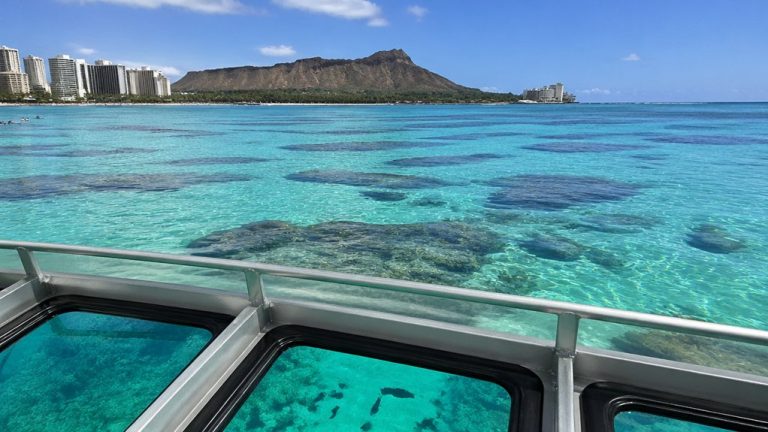

Waikiki’s reef feels like a living map under your feet, with each coral head marking a new turn in the story. You’ll glide just offshore and look down through the glass at boulder Porites, plate-like Montipora, branching coral, sand channels, and quick flashes of yellow tang and parrotfish. If the water’s clear, you might catch a honu drifting past Diamond Head, and that’s where the real question starts.
Key Takeaways
- Waikiki glass-bottom boat tours usually follow nearshore south shore reefs toward Diamond Head, staying close to shallow coral patches, sand channels, and protected reef flats.
- Through the viewing ports, you’ll typically see boulder, plate, and branching corals mixed with lava rock, rubble, crevices, and sandy channels.
- Common marine life includes butterflyfish, surgeonfish, yellow tang, parrotfish, damselfish, chromis, goatfish, wrasses, kole, and humuhumunukunukuāpuaʻa.
- Green sea turtles are often spotted drifting over shallow reef flats, especially near calm areas like Turtle Canyon and Diamond Head.
- Views are usually best on calm, sunny mid-mornings, when lower glare and clearer water make reef colors and fish easier to see.
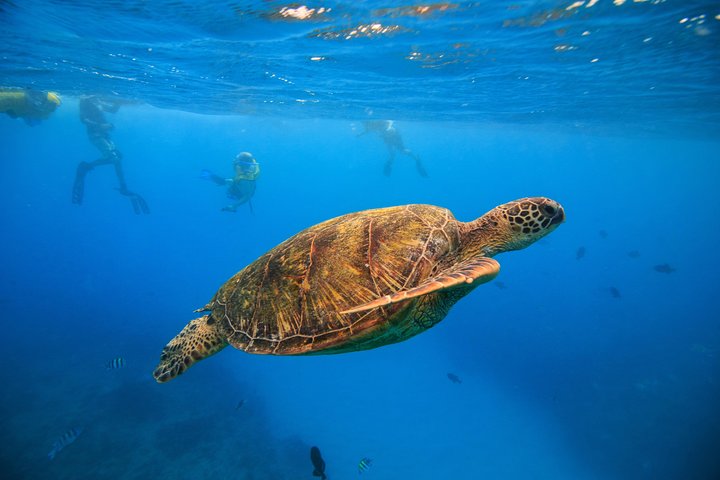
Waikiki, Hawaii: Turtle Canyon Snorkel Excursion
Discover the magic of snorkeling with Hawaiian Green Sea Turtles at Waikiki’s famous Turtle Canyon. On this 2-hour snorkeling tour, you’ll cruise...

Waikiki: 2-hour Turtle Canyon Snorkeling Adventure
Join us for a 2-hour snorkeling adventure at Turtle Canyon, one of Oahu’s top snorkeling spots! Cruise along the s...

Waikiki Turtle Canyon Snorkel: Turtles Guaranteed
Book our Turtle Canyon snorkel tour and experience one of Waikiki’s most popular turtle snorkeling destinations! D...
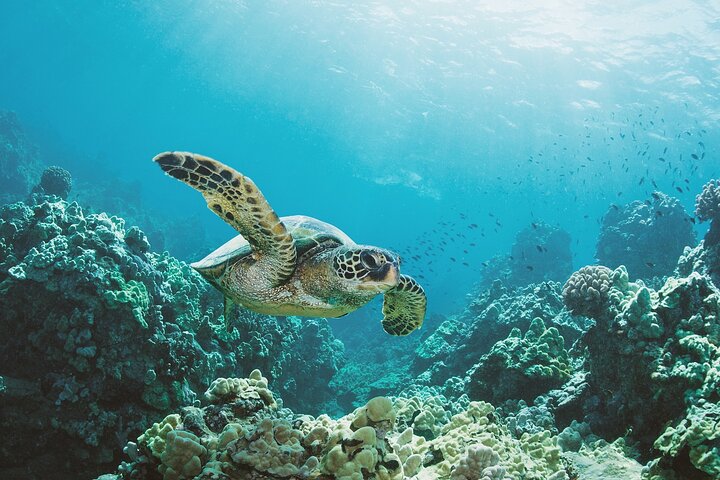
Waikiki: Turtle Canyon Snorkel Adventure on Oahu
Enjoy an exclusive snorkeling adventure in Waikiki with small group sizes for a comfortable and VIP experience. You...
What Can You See on a Waikiki Glass Bottom Boat?
Peer through the viewing windows and you’ll spot Waikiki’s shallow reef just offshore, where patchy hard corals and dark rocky outcrops break up the blue. On a Glass Bottom Boat Tour, you don’t get a giant glass floor. You lean over a few viewing panels and watch surgeonfish, wrasses, and butterflyfish flicker past like living confetti.
You’ll also have a strong chance of seeing fish and sea turtles, especially green turtles gliding over the reef with lazy confidence. Many visitors love sea turtles on Waikiki glass-bottom tours because they often drift gracefully above the reef in clear, shallow water. Depending on the season, you might catch a partial glimpse of a dolphin or even a whale, though bigger animals can slip beyond the small windows. Conditions matter. Calm, sunny mornings usually give you the clearest look near Waikiki BEACH, with less glare, less chop, and fewer squinty guesses.
Where Waikiki Glass Bottom Boats Usually Cruise
Most Waikiki glass bottom boat trips don’t roam far, and that’s the point. You’ll usually cruise just offshore along Waikiki’s south shore reefs, where boats can stay in shallow, protected water instead of bouncing into the open ocean. If your tour leaves from Kewalo Basin or nearby Waikiki, the route often tracks the coastline toward Diamond Head and nearby reef flats. That keeps you close to coral patches, channels, and the busy neighborhoods of reef fish that gather over the reef. Many trips last about an hour, so staying near shore makes the outing smoother and more efficient for everyone on board. You get a compact loop with Honolulu scenery, salty breezes, and a reminder that the fish don’t care how far you traveled. Many operators offering Kewalo Basin tours use this same nearshore approach to maximize reef viewing during a short trip.
How Clear Are Waikiki Glass Bottom Boat Views?
You’ll get the clearest look through the glass on calm, sunny mornings, when the light hits right and the water lets coral and reef fish show their colors. Waikiki is known for water clarity that can make glass-bottom boat views especially rewarding in good conditions. If clouds roll in or the wind chops up the surface, your view can shrink fast, and those small windows start to feel more like peepholes than picture frames. You’re here for a dry, easy reef glimpse, so timing matters if you want the sharpest shot at fish, turtles, and the best window-seat moment on the boat.
Water Clarity Factors
When the ocean settles into one of Waikiki’s glassy, sunny mornings, the view through a glass-bottom boat can look surprisingly clear. Your water clarity depends on weather, swell, and sunlight more than you might expect. Wind chop shakes the surface and blurs the reef below. Rain and storm-driven runoff can turn nearshore water hazy for days, so fish seem to vanish. Light angle matters too. High sun throws more illumination through the small viewing windows, while low sun adds glare. That’s why best time of day is usually a calm, bright morning in Waikiki. You’ll also notice the limits of the setup: fixed panes, plexiglass scratches, condensation, and boat motion narrow the scene. Shallow reef shapes, turtles, and big schools stand out best. Tiny, hidden creatures often stay little mysteries beneath your feet today for you on board.
Best Viewing Conditions
If the ocean cooperates, Waikiki’s glass-bottom boat views can look surprisingly sharp, especially on calm, sunny mornings. You’ll get the best shot during morning calm, when lower glare and steadier water clarity let reef fish, coral patches, and green sea turtles pop beneath the boat. That’s why many visitors prefer morning conditions over afternoon trips for clearer Waikiki reef viewing.
- Heavy rain or strong north swells can turn the view murky fast.
- Small viewing windows limit what you see, even on clear days.
- Reflections, scratched plexiglass, and boat bounce can blur fine details.
- Sit close to the panes and book sunny mornings for your clearest peek.
Even then, you’re scanning narrow underwater slices, not an aquarium wall. When conditions line up, though, the reef feels close enough to make you grin while waves slap softly against the hull outside.
Still comparing Turtle Canyon?
Ask for tour ideas, hotel suggestions, or a simple trip plan that combines both.
Trip Helper
When Waikiki Reefs Are Easiest to See
Usually, the Waikiki reefs look their best through a glass-bottom boat between about 9 and 11 in the morning, when the sun sits high enough to cut through the water and tame the glare.
If you can, book a mid-morning trip on a day with light winds and low swell. A calm reef lagoon near Turtle Canyon or the Waikiki reef flats often gives your glass window the clearest look at coral heads, darting fish, and maybe a turtle cruising by like it owns the place. Summer, especially May through September, usually brings steadier clarity, so you won’t spend the ride squinting and guessing at shadows instead of spotting real color and texture below. You’ll see more sooner, which feels like a small win. This lines up with best time of day guidance for capturing underwater color in Waikiki, since higher sun angles usually bring out brighter reef detail.
Why Waikiki Reef Sightings Change Day to Day
Even on the same boat route, Waikiki’s reefs can look completely different from one day to the next. You’ll notice reef visibility sharpen when sunshine hits the water at a better angle and clouds stay away. After Ocean swell, strong currents, or a recent storm, sand and silt drift up and blur the view.
- Sunny mid-mornings usually give you the clearest glass-window look
- Low tide can reveal reef shapes but shift wildlife farther offshore
- Winter and spring plankton can cloud water and change activity
- Trips near Turtle Canyon often deliver steadier turtle sightings
Boat position matters too. Stay closer to calm pockets near shore and you’ll often see more detail. Go farther offshore, and conditions can turn moody fast. Waikiki keeps you guessing. The ride can also feel rougher in choppier conditions, especially when glass bottom boat tours head farther offshore from Waikiki.
What Reef Fish You’ll Most Likely See
From the glass-bottom windows, you’ll usually spot common reef fish first, from oval surgeonfish cruising in groups to wrasses flicking around coral and rubble like they’ve got places to be. Then the color really kicks in, with parrotfish scraping algae with beak-like mouths and patterned butterflyfish, angelfish, and even Hawaii’s state fish flashing along the reef edge. Many of these reef fish are exactly the colorful species people hope to spot from a Waikiki glass-bottom boat. If you’re lucky, you’ll also catch a turtle gliding past while schools of fish shift and turn below you like the whole reef just changed its mind.
Common Reef Fish
Scan the reef below, and you’ll likely spot a lively cast of fish almost right away. From the boat, you can see butterflyfish cruising past coral with striped, flattened bodies that stand out clearly. Surgeonfish graze on algae nonstop, while parrotfish chisel at coral with beaklike mouths and help create sand. On a Waikiki glass-bottom ride, the glass-bottom boat makes it easier to spot these fish as they move over the reef.
- Butterflyfish flash bold bands as they weave through coral.
- Surgeonfish patrol reef faces and sandy patches for algae.
- Goatfish probe the bottom with chin barbels for hidden snacks.
- Damselfish and chromis hover in tight schools near crevices.
You might also notice turtles nearby, but these everyday reef fish usually steal the first look. Keep watching the sandy edges too. That’s where goatfish often search, like busy detectives with whiskers in protected shallow water.
Colorful Tropical Species
Often, the first fish that grab your eye are the bright tropical regulars that seem made for a glass-bottom view. You’ll spot butterflyfish and tiny angelfish pecking along coral edges in clear, shallow water. On the best seats, the glass-bottom view can make these reef fish even easier to pick out as they move over Waikiki’s shallow reef.
| Fish | What you notice |
|---|---|
| parrotfish | Beak mouths scrape algae off coral heads. |
| blue-green chromis | Electric flashes hover above the reef flat. |
| yellow tang | Bright discs cruise the slope like little suns. |
You may also catch convict tangs threading past cleaning stations. Damselfish pop in and out of rocky pockets. Through the window, these colors read almost unreal, like someone turned up the reef’s saturation. Still, the stars are practical grazers and pickers, busy with lunch while you stare. Even on a short ride, you’ll keep finding fresh color every minute.
Turtles And Fish Schools
Glass-bottom magic kicks in fast when a green sea turtle, or honu, glides into view like it owns the reef. From your glass-bottom boat, you’ll often spot turtles on many outings, especially over calm, shallow reef flats in 10 to 30 feet of water. Then the reef fish take over, flickering around coral heads like confetti with fins.
- Butterflyfish cruise in pairs.
- Yellow tang surgeonfish flash bright yellow.
- Parrotfish nibble coral with a faint crunch.
- Blue-green chromis swarm above the reef.
Go in the morning for clearer windows, calmer seas, and bigger schools feeding. Keep scanning each viewing port, because the frame is small and shy species can slip by unseen, almost like the reef is winking at you between quick glances and chatter. Many visitors choose Waikiki reefs for glass-bottom boat tours in Oahu because the area is especially popular for these sightings.
Why Sea Turtles Gather Near Waikiki Reefs
Watching Waikiki’s reefs for a few minutes, you start to see why sea turtles keep showing up here. You’re looking at a reef buffet and a calm lounge in one place.
| Draw | Why it matters | What you notice |
|---|---|---|
| Algae | Main turtle food | Steady grazing |
| Warm shallows | Easy resting | Slow drifting |
| Sheltered ledges | Safer breaks | Tucked bodies |
Near Waikiki, turtles find shallow algae and seaweed on the reef flats, so feeding doesn’t take much work. Warm water along lagoon edges lets them rest between bites and save energy. Currents and runoff also boost plant growth, which keeps the menu stocked. Protected areas and local conservation help, too, so you often spot more turtles loafing here by day, like regulars who know the best lunch counter. When you spot one, give it space and stay at least 50 yards away to avoid disturbing a protected animal.
What Coral and Reef Formations Look Like
Through the glass, you’ll spot Waikiki’s shallow fringing reef as a mix of rounded boulder corals, plate-like terraces, and branchy coral shapes spread across the nearshore shelf. You can track reef textures in the light and dark patches below, where patch reefs rise like dark islands from pale sand and rubble. As sunlight shifts, you’ll notice colors and details change fast, and that little trick of the light is part of the fun. These reefs also provide coastal protection by helping reduce wave energy along the shore.
Coral Shapes Below
What do Waikiki’s reefs look like once you peer down into the blue? You’ll spot Porites lobata first, rising like rounded boulders that anchor whole sections of reef. Nearby, branching corals lift in fingered clumps and little thickets, while Plate corals spread as thin shelves that stack along slopes.
- Boulder mounds several meters wide
- Tree-like Pocillopora and Acropora forms
- Overlapping Montipora plates like pancakes
- Lava, rubble, crevices, and sand channels mixed below
Between the larger colonies, encrusting coral and turf algae hug the bottom in low patches. Old lava flow remnants and coral rubble break the seafloor into nooks, gaps, and tiny hideouts, so the scene feels part garden, part maze. From the boat, you can trace each shape clearly through the calm water below. A glass bottom boat tour makes these reef patterns easier to notice without entering the water.
Reef Textures And Color
Leaning over the glass, you’ll notice how much texture these Waikiki reefs pack into shallow water. Layered hard corals build plates, boulders, and fingerlike branches in just 3–15 feet of water. Through glass bottoms, you catch tan and brown colonies beside bright greens, purples, and blues. Those shifting colors come from living algae, pink crusts, and pale limestone patches. The coral textures change fast too. One moment you’re tracing smooth domes, then thin terraces and shady overhangs. Sandy grooves, algal turf, and seagrass break the reef into mottled bands where light flickers and fish hide. Watch those channels closely and you might see turtles or a resting ray below. It’s like reading a textured map, with waves sketching ridges right beside calm sandy lanes today. Many visitors first get this close-up perspective on glass-bottom boat tours departing from Ala Wai Harbor.
What You Might See Near Diamond Head Reefs
Pull up over the Diamond Head reefs on a calm, sunny day and you can often spot the shallow fringing reef below, where coral heads and bommies sit in just 10 to 30 feet of water. Through the glass bottoms, you may catch wrasses, parrotfish, kole, and even humuhumunukunukuāpuaʻa nosing around coral and lava rock.
- Sand channels split the reef into bright lanes.
- Green sea turtles graze near ledges, especially in calmer morning water.
- Small caves shelter eels, and an octopus might play hide-and-seek.
- Late morning light usually gives Diamond Head its clearest views.
On many glass-bottom tours, calm seas and bright sun make it easier to pick out reef structure and marine life below.
When sunlight lines up and the water stays clear, you’ll read the reef like a map, with fish highways, coral patches, and little surprises under your boat all at once.
What a Waikiki Glass Bottom Boat Does Not Show
Even on a bright, glassy morning, a Waikiki glass bottom boat won’t give you a giant aquarium-style view of the reef below.
Most boats use small window-like ports, not full glass bottoms, so your view stays narrow. You might spot fish flickering over coral, but you won’t always see turtles, dolphins, or whales up close. Luck, season, and water conditions matter more than the ride itself.
You also won’t snorkel, dive, or touch the reef. You stay dry above the water, peering down through ports that can catch glare or look cloudy. Before booking, it also helps to ask accessibility questions so you know what boarding and onboard support the boat can actually provide. When the water turns murky, fine details fade. And if you’re hoping for pro-level underwater photos or a long scuba session, this trip keeps your camera and curiosity mostly topside for now.
Is a Glass Bottom Boat Better Than Snorkeling Waikiki Reefs?
Choose the boat if you want a quick, dry look at Waikiki’s reefs from a shaded seat, but pick snorkeling if you want the better view. A glass-bottom cruise shows coral, fish, and sometimes turtles through small viewing ports, not a full glass floor. It’s easy and fast, but water clarity and sun angle can blur details. Unlike a submarine tour, a glass-bottom boat keeps you at the surface and relies on light through viewing ports instead of underwater cabin windows.
- Stay dry and seated
- Expect narrower reef views
- Snorkeling gives 360° close-ups
- Turtle Canyon often delivers more turtles
When you slip into the water, you see color, texture, and movement at reef level. You can track fish, spot tiny creatures, and take stronger photos. Snorkeling asks more from you, though. You need basic swim skills, a good mask fit, and comfort in salt water for longer.
Who Is a Waikiki Glass Bottom Boat Best For?
Often, a Waikiki glass bottom boat works best for travelers who want an easy hour on the water without getting wet. You should choose this boat tour if you have young kids, older adults, or limited mobility and still want reef views. It’s great for families who like simple boarding, stroller access, and a narrated ride instead of snorkeling. Through small viewing windows, you’ll spot coral formations, reef fish, and sometimes turtles, with friendly crew sharing context that makes the water feel alive. A glass bottom boat is especially ideal for non-swimmers because it lets you enjoy Waikiki’s reefs safely and comfortably without entering the water. You won’t get a giant glass floor or guaranteed close-ups, though. Think of marine lifethrough the glass as a calm sampler with sea breezes, engine hum, and just enough wonder before lunch. Arrive twenty to thirty minutes early for smoother boarding.
How to Book the Best Waikiki Glass Bottom Boat Tour
Once you’ve decided this easy reef cruise fits your group, booking the right Waikiki glass bottom boat is pretty simple. You should book online early for Haleiwa Queen or Alohi, since each one-hour trip caps at 49 guests.
Book your Waikiki glass bottom boat early, Haleiwa Queen and Alohi keep each easy one-hour reef cruise to just 49 guests.
- Pick refundable fares with free cancellation up to 24 hours before departure.
- Arrive 20 to 30 minutes early at Kewalo Basin Harbor, 1009 Ala Moana Blvd, slip F26.
- Call (808) 729-6720 for charters, accessibility help, or priority boarding.
- Bring sunscreen, a light layer, and a camera. The glass bottoms can surprise you, and visibility shifts. BYOB if you’re 21+.
There is no hotel pickup option for this tour, so plan your own transportation to the harbor. No hotel pickup. A Waikiki Sunset Cruise sounds dreamy, but these reef runs reward planners, not sprinters racing the dock. Check-in includes a signed waiver before boarding.
Frequently Asked Questions
How Long Does a Typical Waikiki Glass Bottom Boat Tour Last?
You’ll usually spend about 60 to 90 minutes on a Waikiki glass bottom boat tour, though tour duration can vary during peak season, and weather impact may shorten or reschedule your trip for safety reasons.
Are Waikiki Glass Bottom Boat Tours Suitable for Young Children?
Yes, over 80% of families rate Waikiki glass bottom boat tours highly, and you’ll likely find child friendly seating, sensory considerations, and age appropriate commentary, making the experience engaging, comfortable, and manageable for most young children.
Do Waikiki Glass Bottom Boats Have Restrooms on Board?
Yes, you’ll find restrooms on some Waikiki glass bottom boats, but not all, so you should confirm restroom location, ask about privacy considerations, and check the maintenance schedule before you book your family’s tour online.
Can You Bring Food and Drinks on the Tour?
Yes, because nothing says boating like debating snacks, you can usually bring small food and nonalcoholic drinks, but you’ll need to check picnic policies, alcohol rules, and food allergies with your tour operator before boarding today.
Are Waikiki Glass Bottom Boat Tours Wheelchair Accessible?
Yes, you’ll find some tours offer wheelchair boarding, accessible seating, and assisted transfers, but you should confirm specifics before booking. You’ll want to ask about ramp access, crew assistance, and weight limits to guarantee comfort.
Conclusion
From your seat above Waikiki’s reef, you’ll catch a lively snapshot of nearshore Hawaii without getting wet. One hour can reveal coral mounds, sand channels, yellow tangs, honu, and the quick silver flash of schooling fish below the glass. Conditions change, so every trip keeps you on your toes. If you want an easy outing with ocean views, sea breeze, and zero fin fuss, this ride is a smart pick.