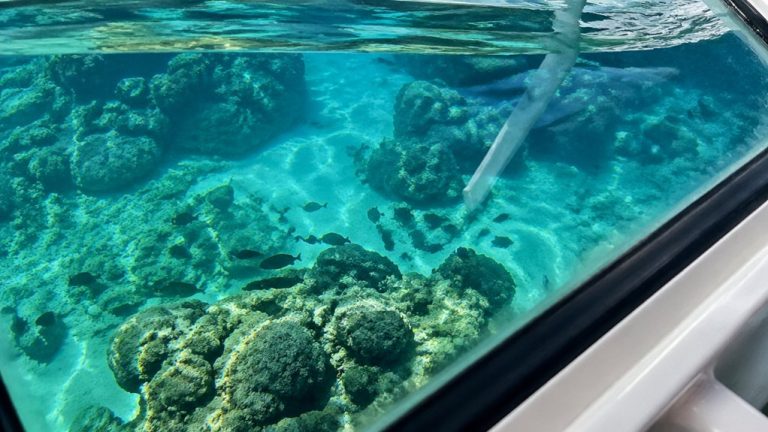
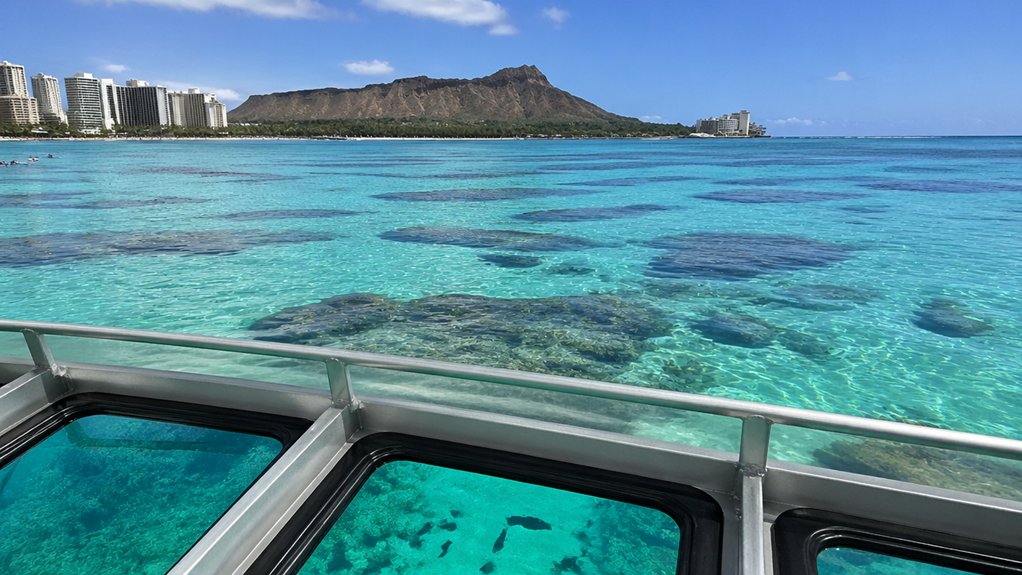
If you board a Waikiki glass bottom boat on a calm, sunny morning, you can often spot coral heads, flashes of yellow reef fish, and sometimes a green sea turtle drifting below the hull. After a few dry days, the water may look clear for 10 to 30 feet. But rain, surf, glare, and scratched viewing panels can turn that window into a foggy guess. So when do you actually get the good view?
Key Takeaways
- Waikiki water is often clear enough to see reefs, tropical fish, and sometimes sea turtles from glass bottom boats.
- Typical reef visibility is about 10 to 30 feet on calm, sunny days with low surf.
- Water clarity drops quickly after rain, runoff, or strong surf, sometimes turning visibility milky for 24 to 72 hours.
- Morning trips, especially one to two hours after sunrise, usually offer calmer seas and the clearest viewing conditions.
- Clearer routes near Turtle Canyon, Kewalo Basin, or Diamond Head often outperform central Waikiki, especially after storms.
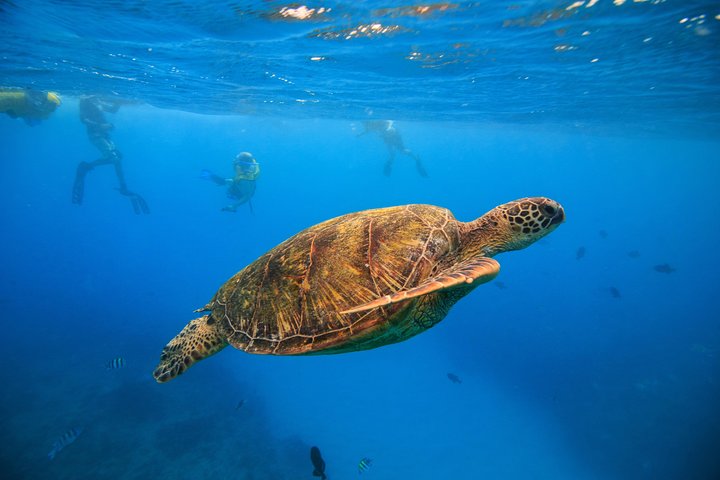
Waikiki, Hawaii: Turtle Canyon Snorkel Excursion
Discover the magic of snorkeling with Hawaiian Green Sea Turtles at Waikiki’s famous Turtle Canyon. On this 2-hour snorkeling tour, you’ll cruise...

Waikiki: 2-hour Turtle Canyon Snorkeling Adventure
Join us for a 2-hour snorkeling adventure at Turtle Canyon, one of Oahu’s top snorkeling spots! Cruise along the s...

Waikiki Turtle Canyon Snorkel: Turtles Guaranteed
Book our Turtle Canyon snorkel tour and experience one of Waikiki’s most popular turtle snorkeling destinations! D...
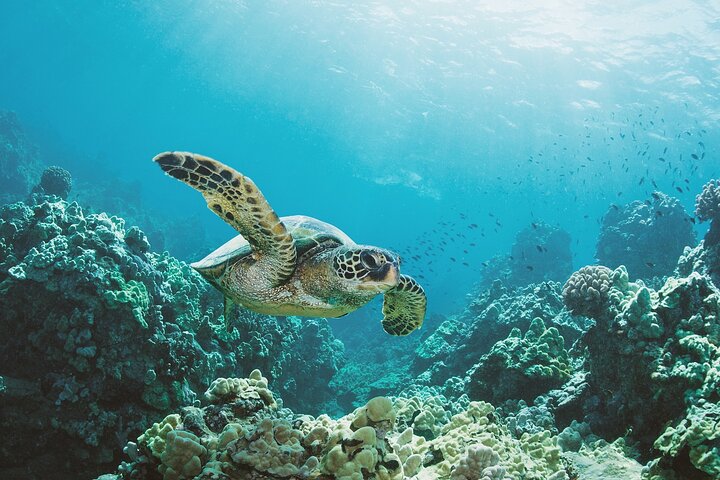
Waikiki: Turtle Canyon Snorkel Adventure on Oahu
Enjoy an exclusive snorkeling adventure in Waikiki with small group sizes for a comfortable and VIP experience. You...
How Clear Is Waikiki Water Usually?
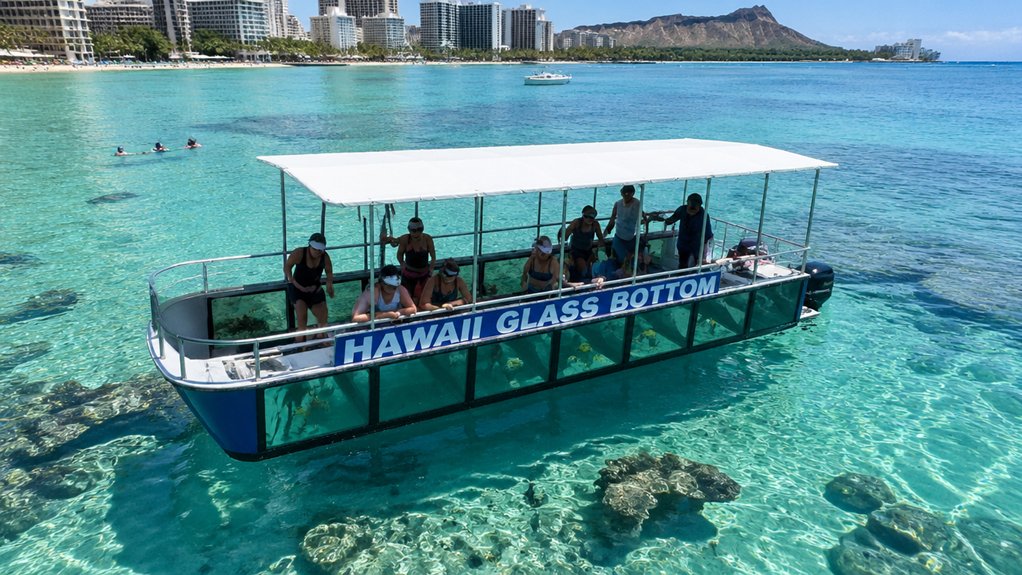
Usually, Waikiki’s water can be surprisingly clear, especially on calm sunny days when you can look through a glass-bottom boat and spot coral heads, bright reef fish, and sometimes even a sea turtle cruising below. In good conditions, Waikiki water visibility often lets you see about 10 to 30 feet near the reefs, which feels almost like peeking through a giant aquarium window. You’ll notice shifting blues, sandy patches, and fish flicking past the hull. On a glass-bottom tour, marine life can include reef fish, coral formations, and other underwater sights that make the view even more memorable. Still, clarity changes fast. Heavy rain, runoff, choppy waves, and glare can turn that clear scene milky or dull for hours or even days. Around Kewalo Basin and the Waikiki front, the water sometimes looks more postcard than reality. That’s part of the adventure, and the gamble for you on any trip.
When Are Glass Bottom Views Best?
The best glass-bottom views in Waikiki show up when the ocean settles down and the sun gets high enough to light the reef from above. On calm, sunny days, you’ll see more color through the panels, less surface glare, and sharper shapes below, from coral heads to passing turtles. This lines up with best time of day guidance for underwater color in Waikiki, which is typically late morning to early afternoon. If rain just swept through, give the water 48 to 72 hours. Runoff and stirred-up sediment can turn a promising glass bottom boat tour murky fast. You’ll usually get stronger visibility from late morning into early afternoon, especially near Diamond Head and other protected reef zones where traffic and surf bother the water less. Even then, Waikiki Glass Bottom trips always keep a little mystery. Clarity shifts. Fish wander. Turtles ignore schedules. That’s part of it.
Are Morning Tours Better in Waikiki?
Often, yes, morning tours give you a better shot at clear glass-bottom views in Waikiki. You’ll usually see better underwater visibility when the sea is calmer and boat traffic is lighter. Less chop means less glare on the surface, so reefs and fish pop with sharper contrast beneath the glass.
- Book tours within 1 to 2 hours after sunrise for the best light angle.
- Expect smoother water before busy boats start throwing wakes around.
- Check local weather and runoff updates, because clarity still changes day to day.
- Aim for summer if you can, since Waikiki mornings are often clearer than winter.
This is why many visitors comparing morning vs afternoon tours in Waikiki choose the earlier departure. If you like quiet seas, softer sounds, and a relaxed one-hour cruise, morning tours feel like the real spot.
How Does Rain Affect Water Clarity?
After a hard rain, you’ll often find Waikiki’s nearshore water looking cloudy as runoff from Oʻahu’s streets pushes sediment into the reef and cuts visibility fast. You can still head out, but glare on the surface and a murky layer in the water may make fish, turtles, and small reef details frustratingly hard to spot through the glass. The good news is that clarity usually starts to bounce back within 24 to 72 hours as tides and currents flush things out, though a few stubborn murky patches can linger. If the forecast points to steady showers, many operators suggest using a rainy day guide to decide whether to go or reschedule your glass bottom boat trip.
Rain Runoff Effects
When a hard rain sweeps across Honolulu, Waikiki’s nearshore water can turn from postcard blue to a cloudy green-brown in a matter of hours. You’ll notice rain runoff pushing silt, street grit, and stream debris toward the beach, where the water looks milky and light fades fast below the surface. During a Brown Water Advisory, Hawaiʻi health officials warn that storm runoff can also carry sewage, animal waste, chemicals, and other debris into nearshore waters.
- Sediment rises: Suspended particles scatter sunlight and slash underwater visibility through the glass.
- Colors flatten: Coral details blur, fish shapes fade, and turtles can vanish like shy locals.
- Pollutants mix in: Urban runoff can carry oils and trash that add haze and surface sheen.
- Place matters: Protected coves often look murkier than more open stretches, so one launch site may disappoint while another stays somewhat clearer.
Still comparing Turtle Canyon?
Ask for tour ideas, hotel suggestions, or a simple trip plan that combines both.
Trip Helper
Visibility Recovery Time
Though the sky may clear by breakfast, Waikiki’s underwater view usually needs more time to bounce back. After heavy rains, visibility is often worst in the first 24 hours, especially near Kewalo Basin and Waikiki.
| When | What you’ll likely see |
|---|---|
| 0–24 hrs | Murky water, fewer fish details |
| 24–48 hrs | Some turtles, patchy clarity |
| 48–72 hrs | Sediment thinning, reef shapes return |
| 2–3 days later | Better odds for crisp views |
Runoff clouds small coastal waters fast, and tide plus location matter. Protected pockets may recover sooner than open shorelines. If rain hit yesterday, you should consider rescheduling two to three days later. If you’re worried about rougher conditions during the wait, review seasickness tips before your glass bottom boat tour. Tours can vary by site, so one boat finds sea turtles while another gets a window.
Does Surf Make Views Murkier?
If the surf perks up, your glass-bottom view usually gets murkier in a hurry. Waves churn Waikiki’s nearshore sand, so visibility can drop from 10 to 30 feet to only a few. Over shallow reef flats, whitewater and bubbles cloud the window too, making coral, fish, and turtles harder to spot.
When the surf kicks up, Waikiki’s glass-bottom views can turn murky fast, with sand, bubbles, and whitewater hiding the reef.
- Moderate surf often stirs sediment fast.
- Heavy surf or storms can push runoff plumes offshore.
- You may wait 24 to 72 hours for clearer water.
- Calm trade-wind mornings usually give you the best odds.
Tour operators watch weather closely because conditions change quickly. If you book right after high surf or rain, expect mixed viewing and no guaranteed sightings. Some days the ocean serves champagne clarity. Other days, it hands you a snow globe. Even when the ride itself feels rough in Waikiki, the bigger issue for most passengers is how much chop and stirred-up sand reduce what you can see below.
Does Sun Glare Reduce Visibility?
Even with clear water under the hull, sun glare can still turn your glass-bottom view into a bright silver mirror. You notice it most when the sun sits low in the morning or late afternoon, because shallow angles bounce light back through the window.
At midday, overhead light helps you see reef shapes and colors below your glass bottom boat. Still, glare can wash out details unless you sit on the shaded side, lean under a canopy, and look downward through the port. Wearing polarized sunglasses can help reduce glare on the glass and make underwater details easier to pick out. Calm, clear weather after a dry spell gives you the cleanest look. Chop, clouds, and runoff scatter light and make reflections harsher. If the plexiglass is scratched or cloudy, even a sunny trip can make small creatures frustratingly hard to spot.
Which Waikiki Spots Have Clearer Water?
Where you launch matters a lot in Waikiki, because one stretch can glow bright blue while another turns hazy after rain.
- Head toward Turtle Canyons or reefs near Kewalo Basin, where your Waikiki Glass Bottom Boat often finds clearer water and turtles cruising below.
- Try routes edging Diamond Head, since calm sunny mornings along the South Shore usually give you richer blue views.
- Expect central Waikiki to vary fast after storms, because runoff can cloud the water until the surge settles.
- If you can roam farther, Ko Olina and west-side rides often feel less crowded, calmer, and surprisingly transparent.
On bright, gentle days, you’ll spot reef fish, coral shapes, and sea turtles more easily. The ocean rewards timing, and a little luck helps too. Many visitors love sea turtles on Waikiki glass-bottom tours, especially when clear conditions make their smooth gliding easy to see.
How Clear Are the Boat Panels?
When you step up to the viewing panel, you’ll notice fast that clarity depends on more than the water below. You might get a crisp magnified look through polished plexiglass, or you might find salt haze and scratches that make small fish look like moving smudges. Even on a well-kept boat, sun angle and water visibility still shape what you see, so the panel has limits no matter how shiny it looks. For anyone taking pictures through the window, the best phone settings can help reduce glare and make underwater details stand out more clearly.
Panel Clarity Factors
Two boats can float over the same patch of Waikiki water and give you completely different views, because panel clarity matters almost as much as the ocean itself. Before you book, look for clues:
- Newer boats often have clearer glass or plexiglass, and reviews usually say so.
- Crews that wipe away salt spray and sunscreen smears between trips give you sharper views.
- Micro-scratches and UV wear can turn panels hazy, even when fish are right below you.
- Magnified ports can help, but cloudy panels still blur tiny creatures into guesswork.
That’s why some bad reviews mention poor viewing even with wildlife present. If a panel’s neglected, you might miss the turtle and wonder if that speck is a seahorse or baby shark down there. On a Glass Bottom Boat Waikiki for Seniors, comfortable seating near the viewing area can also make it easier to stay relaxed and keep watching when conditions are good.
Plexiglass Viewing Limits
Panel condition sets a hard ceiling on what you’ll actually see, because even bright Waikiki water can’t rescue a cloudy viewing port. On a Glass Bottom tour, you’re looking through thick tempered glass or marine-grade plexiglass, and plexiglass usually hazes and micro-scratches faster. That wear softens edges, so tiny fish, reef texture, and little creatures can blur into smudges. You’ll notice the difference when operators clean panels often. Better upkeep gives you sharper color and shape. Poor upkeep leaves a milky film that fights glare, light angle, and choppy turbidity all at once. Some boats add magnified ports or indoor viewing rooms, which help a bit. Still, if the panel fogs inside or turns cloudy, you may wonder if that shadow was a seahorse. On longer trips, some passengers also ask about restroom facilities, though that doesn’t affect how clear the viewing panels appear.
Why Do Some Boats Look Cloudy?
At first glance, a cloudy glass-bottom boat can seem like it’s peering through frosted sunglasses. If you board a Hawaii Glass Bottom tour and the view looks hazy, the glass-bottom panel usually takes the blame, not the ocean.
- Scratches and weathering from salt spray, footsteps, and hard cleaning scatter light.
- Salt crust and mineral film can coat the outside until crews rinse and descale it.
- Condensation or trapped moisture inside double panes can create a milky fog.
- Sun glare, chop, and panel quality can make even clear ports look dull.
You’ll notice the difference when operators invest in better materials, optical coatings, and steady maintenance. Clear panels feel crisp. Neglected ones look like they need a quick shower today. Travelers comparing tours may also want to ask about accessibility questions, since maintenance standards often overlap with how clearly and safely operators present the viewing experience for all guests.
What Can You See on These Tours?
Look down and Waikiki’s underwater scene starts to come into focus fast. Through the glass bottom, you can scan coral reefs, flashes of tropical fish, and the wider shapes of larger animals moving below the boat. It feels a bit like snorkeling with dry hair and a better seat.
On clear blue days, you’ll pick out reef patterns, sandy patches, and passing green sea turtles. Many tours are designed to showcase Waikiki reefs, giving you an easy view of these shallow underwater habitats from the boat. You might also catch dolphins offshore, and in season, even humpback whales if conditions line up. Water glare or recent rain can soften the view, so tiny creatures often stay mysterious. Seahorses and juvenile fish are harder to identify, especially if the viewing panels look scratched or cloudy. You still get a lively underwater show, just not the same close up detail snorkeling gives.
Are Turtles Easy to Spot?
How easy are turtles to spot from a Waikiki glass-bottom boat? Usually, pretty easy. You’ll hear sea turtles called honu, and they’re a common highlight on many one-hour cruises. Guest reports often mention multiple sightings, especially on routes near Turtle Canyons and the Oʻahu South Shore. Still, nature makes no promises.
- You improve your odds by choosing a Waikiki route known for turtle traffic.
- You’ll spot more when the water looks clean and bright through the viewing panels.
- You may struggle if rain muddies the water or glare skims across the surface.
- You should know cloudy plexiglass can blur shapes, so sea turtles sometimes appear as moving shadows first.
In Hawaiʻi, the green sea turtle is protected as part of the Central North Pacific distinct population segment under the ESA, so spotting one is special but should always be done respectfully. If you stay patient, scan carefully, and trust your captain’s cues, you’ll often catch that unmistakable paddle-shaped glide below.
How Long Do Clear Conditions Last?
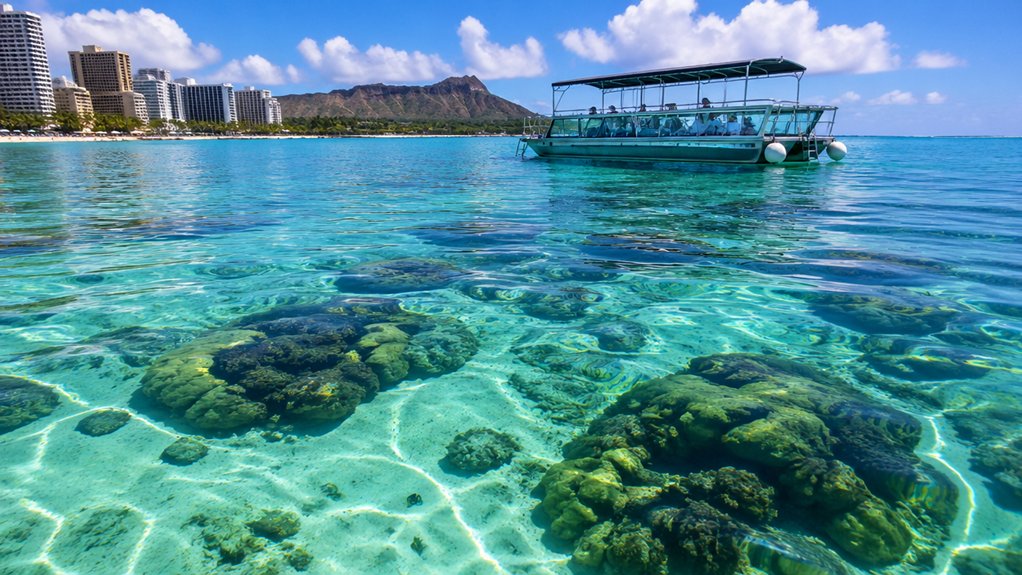
When Waikiki lines up with bright sun, light winds, and a mellow sea, clear glass-bottom conditions often hold for several hours from mid-morning into early afternoon.
You’ll usually get a full one-hour tour with views of reef ledges, darting fish, and the bottom. In summer, windows show up often and stay steadier. After rain, though, clear water can fade fast as runoff and sediment cloud things for one to three days. Even on mixed days, pockets near Turtle Canyon or reefs can stay sharp, so your route and time matter. If swell builds or chop starts tapping the hull, light scatters and the best viewing can shrink to less than an hour. That’s Waikiki for you, equal parts timing, texture, and luck sometimes too. This lines up with the best time of day, which is usually when sun angle and calmer conditions help visibility the most.
When Do Glass Bottom Tours Disappoint?
You’ll notice glass bottom tours disappoint fastest when the water turns milky after rain, the sun hits at the wrong angle, or small waves blur the view beneath cloudy panels. You can also feel let down when the viewing area gets packed and stuffy, especially on short Waikiki runs where turtles and fish might appear or might keep you guessing. If you want a better shot at clear sights, it helps to expect some variability by operator, route, and sea conditions. Forecasts calling for hazy conditions, building seas, or small craft advisories around Oahu can also make underwater views less clear and the ride less comfortable.
Poor Water Visibility
Although Waikiki often looks like a postcard from shore, glass-bottom tours can disappoint fast after heavy rain. Runoff can turn blue water hazy, and your visibility drops enough that the plexiglass view looks cloudy. On routes from Kewalo Basin to Diamond Head, conditions can change by day and by cove. The best time to book a Waikiki glass-bottom boat tour is usually during calmer weather, when visibility is more likely to be clear.
- After storms, small fish and reef texture blur together.
- Surface glare and smudged viewing ports make decent water look worse.
- In murky water, you might miss turtles, seahorses, and quick flashes of reef fish.
- Bigger animals like dolphins or whales still stand out.
If you want more reliable underwater detail, try snorkeling for closer views, or pick calmer spots like Ko Olina. Sometimes the glass-bottom magic simply needs better light.
Crowded Or Stuffy Rides
Step aboard a full glass-bottom boat, and the cozy cabin can quickly tip into cramped territory. On submarine-style or enclosed rides, you may feel stuffy fast, especially if you’re claustrophobic or seasick. A sold-out departure on the spacious Haleiwa Queen can still feel crowded, because nearly 49-passengers share one hour of rail space and glass views.
When cloudy plexiglass or small viewing ports blur the fish, everyone bunches up in the same spot. Canopy-covered decks concentrate noise, footsteps, and elbows, so the ride feels busier than the ocean outside. Some operators also offer wheelchair accessible glass-bottom boat experiences in Waikiki, which can make boarding easier even on busy departure days. If you want more breathing room, choose quieter departures or try snorkeling, an open-deck cruise, or a less crowded Ko Olina tour instead next time. Your view shouldn’t require shoulder shuffles and submarine-level patience.
Is Snorkeling Better for Visibility?
Why does snorkeling so often win on visibility in Waikiki? You see reef life at eye level, not through a glass bottom boat window that may catch glare or look cloudy.
- On calm, sunny days, snorkeling lets you hover beside coral and fish, so colors look sharper and movement feels immediate.
- After heavy rain, runoff and particles dull the water for everyone, but boat ports can add another blurry layer.
- In the water, you can pause, look into cracks, and spot turtles, reef fish, or even a shy seahorse.
- If you don’t love swimming, a boat stays dry and easy for families, though seasickness or dirty plexiglass can still limit what you notice.
For pure marine detail, you’ll usually see more by getting in. When comparing a glass bottom boat with a snorkel outing, visibility in Waikiki is usually better when you’re in the water rather than looking down through a boat window.
How Do You Pick the Best Departure?
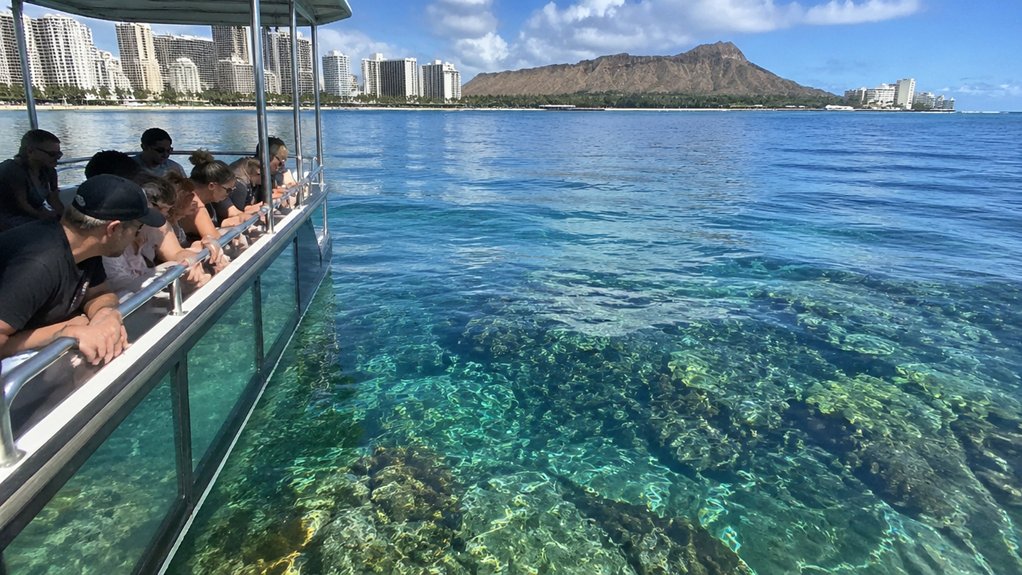
So how do you pick the departure that gives you the clearest look below the surface? Start with morning sailings, ideally before noon, when the sun angle helps you see deeper and the sea usually stays smoother. From Kewalo Basin Harbor toward Lēʻahi (Diamond Head) aboard a Waikiki glass-bottom cruise, you’ll follow a reliable sightseeing route where turtles and reef fish often appear. Next, check the weather like a detective with flip-flops. If heavy rain hit recently, wait for a date after several dry days, because runoff can cloud the water fast. You can also look at Ko Olina or West Oahu if you want calmer, less crowded water. Finally, read reviews, compare crew know-how, and pick boats with large magnified viewports and fewer passengers overall.
Frequently Asked Questions
Do Seasickness Remedies Help on Glass Bottom Boat Tours?
Yes, you’ll often get relief from motion sickness on glass bottom boat tours by using over the counter remedies like Dramamine or meclizine, plus ginger, hydration, light meals, and a centered seat if you’re sensitive.
Are Glass Bottom Boats Suitable for Young Children?
Yes, picture your child peering at reefs through the glass: these tours suit young kids because you stay seated, shaded, and dry. You’ll appreciate child safety features, short rides, easy boarding, and viewing etiquette for everyone.
Can You Bring Cameras or Phones on Board?
Yes, you can bring cameras or phones on board, and you’ll get better shots if you use waterproof cases, skip flash, steady lenses against the glass, and pack underwater filters or a secure wrist strap.
Are These Tours Wheelchair Accessible in Waikiki?
Yes, you can find Waikiki tours with wheelchair ramps and onboard accessible restrooms, but you’ll want to call ahead. You should reserve seating, confirm boarding details, and ask about transfer help, parking, and service animals.
Do Operators Offer Refunds for Poor Visibility?
No, you usually won’t get refunds for poor visibility alone; operators’ refund policies rarely include visibility guarantees. You can cancel within 24 hours if allowed, but same-day issues typically mean only rescheduling or discretionary credit.
Conclusion
So if you want Waikiki’s glass-bottom magic, you’ll do best on a calm morning after two or three dry days. That’s when you can often see 10 to 30 feet down, which is roughly the height of a two-story house tipped underwater. You’ll spot coral patches, quick silver fish, and maybe a turtle drifting by. Pick an early boat, check recent weather, and you’ll trade cloudy guesswork for crisp blue window-shopping below the hull.