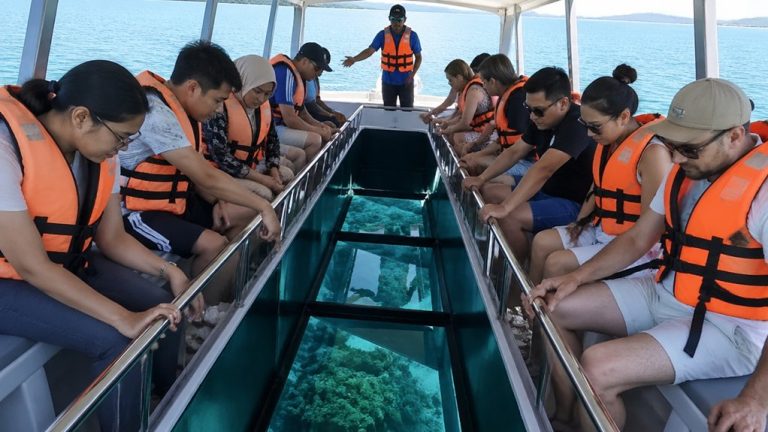
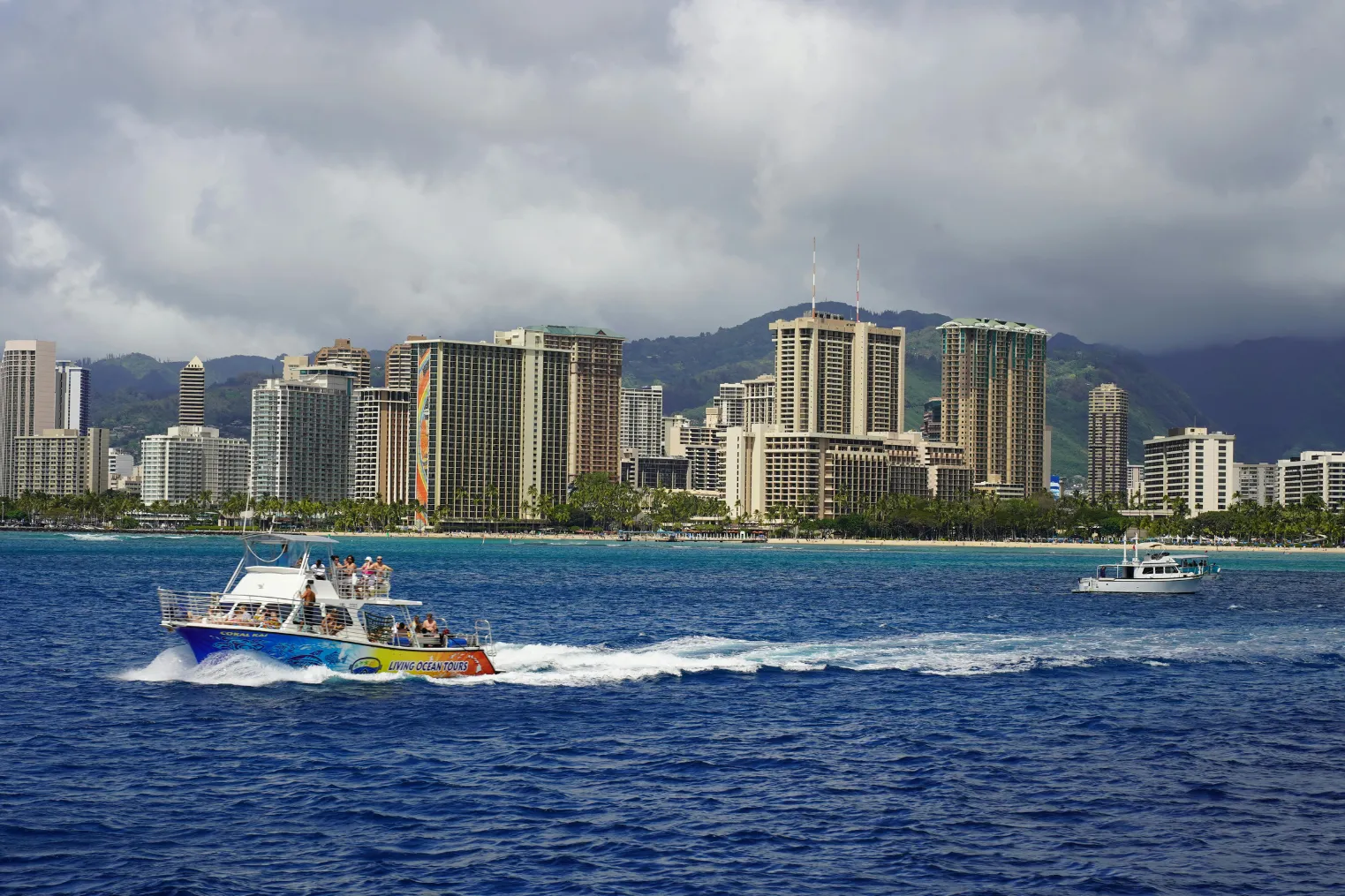
Rain on your cruise day can feel like bad luck or a secret upgrade. In Waikiki, a light shower often just taps the canopy while you stay dry, hear the crew’s stories, and watch Diamond Head fade in and out of the mist. But the glass view can go from clear to cloudy fast once ripples and runoff move in. So should you board anyway, or save your slot for brighter water?
Key Takeaways
- Go in light rain if seas are calm; tours usually continue, but underwater visibility and reef colors will look softer.
- Reschedule for heavy rain, high surf, hazy horizons, or a Small Craft Advisory because safety, comfort, and viewing quality drop sharply.
- Visibility matters more than rain; cloud cover, chop, and runoff can blur reef shapes and reduce fish sightings.
- If you get seasick easily, reschedule when conditions are choppy since the canopy blocks rain but not boat motion.
- Check the latest operator forecast and cancellation policy; unsafe weather usually means another date or a full refund.

Oahu Grand Circle Island Experience from Waikiki
Enjoy Grand Circle Island experience tour with breathtaking views of Amelia Earhart Lookout on Diamond Head, admire Chinaman’s Hat in front of Kualo...

Waikiki Turtle Snorkeling & 6-in-1 Adventure with Free Pickup
Experience a special turtle snorkeling adventure in Waikiki aboard a smooth and comfortable catamaran. This all-in-o...
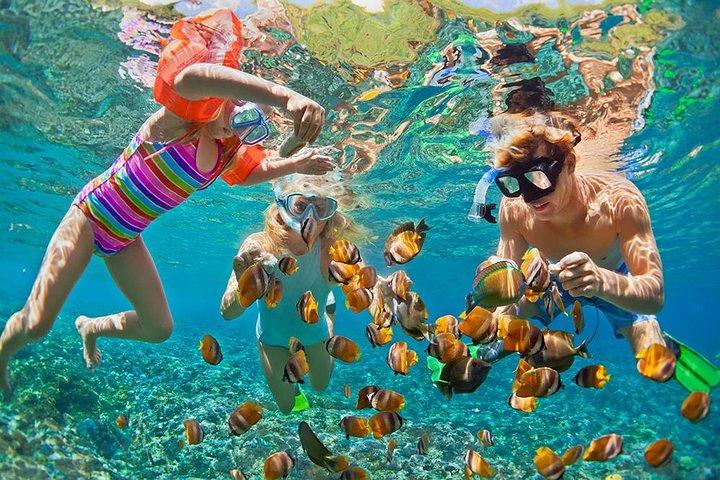
Oahu Circle Island Snorkeling Tour: Dole, Pali Lookout & More
Looking for the BEST VALUE & MOST COMPLETE Circle Island Snorkeling Tour? Join us for the ultimate full-day, action-...

Waikiki Glass Bottom Boat Cruise
Experience the beauty of Oʻahu South Shore as we sail toward Lēʻahi (Diamond Head) aboard the spacious Haleiwa Qu...
Should You Go or Reschedule?
If rain is tapping the harbor but the water still looks clear and the sea feels calm, you can usually go and still have a good time on a Waikiki glass bottom boat. On a Waikiki Glass Bottom Boat, light rain matters less than visibility, since cloudy water can blur reefs and cut marine sightings. If fish and turtles top your list, reschedule for a cleaner forecast. Heavy rain, high surf, and hazy horizons often lead to weather cancellations, so check the local HST forecast before you head out. If you’re prone to motion sickness, choppy conditions can turn the ride from breezy to queasy, so plan ahead or switch days. But if shoreline views, crew stories, and Diamond Head sound good, you may still enjoy the trip. Early next week, a passing front could bring building seas and Small Craft Advisory conditions in nearby Oahu waters, making rescheduling the safer call.
When Rain Won’t Ruin the Trip
You don’t have to scrap your plans just because Waikīkī gets a little wet, since the cruise usually still runs in light rain and you can often spot turtles, dolphins, and the shoreline even if the glass view is a bit less clear. You’ll stay more comfortable on the Haleiwa Queen too, thanks to the canopy-covered deck, shaded seating, and handy onboard restroom while you watch the water shift from silver to blue. If the rain turns heavy, the wind picks up, or the sea gets rough, the operator may cancel and offer a refund or another date, which is usually a good sign that the ocean has other ideas. For guests planning ahead, it can also help to ask about wheelchair accessibility before you go.
Light Rain Visibility
Often, a little Waikīkī rain won’t spoil the ride at all. On the Haleiwa Queen, light rain usually means the trip still runs, but glass-bottom visibility can dip, so reef viewing may look softer than on a bright Waikiki morning. For the clearest underwater views, best time of day is usually a bright morning in Waikiki.
| What you notice | What it means |
|---|---|
| Fine drizzle | Tours usually continue |
| Ripples on glass-bottom | Reef details blur a bit |
| Gray water | Fish colors look muted |
| Clear horizon | Diamond Head still shines |
| Cool breeze | Pack a rain jacket |
If your main goal is underwater viewing, you may want to reschedule. If you’re happy with shoreline scenes, crew stories, and possible turtles or dolphins above the surface, a showery sail still feels worthwhile. Whales can appear in season, and the ride stays pleasantly curious, not tragic either.
Covered Deck Comfort
Rainy-day comfort is one place the Haleiwa Queen quietly earns its keep. You stay on a canopy-covered, shaded deck, so light rain usually feels more atmospheric than annoying. The boat still feels easygoing, with bottled water, a restroom, and dry seating close by. If wind picks up, bring a light jacket.
Families bringing a stroller will appreciate the stroller-friendly setup that helps keep boarding and seating manageable even in light rain.
- Rain on the surface rarely hurts underwater visibility through the glass, though heavier showers can soften reef clarity.
- Crew narration keeps the ride lively, and Waikīkī, Diamond Head, and shoreline details still look great in gray light.
- Before you go, check conditions and the cancellation policy, especially if rain looks paired with rougher seas.
You may not get postcard sunshine, but you can still get a comfortable ride and a surprisingly pleasant view.
Weather Cancellation Thresholds
That covered comfort matters most when the weather turns from moody to messy, because the real question isn’t just getting wet. You want viewing. Light rain usually won’t trigger cancellation, but visibility through the glass-bottom boxes can fade fast after showers or recent storms. In Waikiki, rough sea conditions matter more than rain alone, since choppy water can make the ride feel bumpy and blur what you see below.
| Conditions | What you do |
|---|---|
| Light rain, calm sea conditions | Go, but expect softer visibility |
| Heavy rain, high winds, rough sea conditions | Reschedule to avoid seasickness |
If unsafe weather hits, you’ll usually get another date or a refund. Check local HST cut-off times. Arrive 20 minutes early, read your confirmation email, and call ahead if surf looks choppy. The operator runs often, yet viewing requires good weather, so a gray sky can sail while murky water hides fish and reef below.
Still comparing Diamond Head?
Ask for tour ideas, hotel suggestions, or a simple trip plan that combines both.
Trip Helper
When You Should Reschedule
If the forecast points to heavy rain, rough seas, or murky water, you should seriously think about rescheduling your glass bottom boat trip. In Waikiki, a glass-bottom ride can still run in bad weather, but your chances for strong marine sightings drop fast. If you want turtles, reef fish, or seasonal whales, don’t gamble on a gray, choppy day.
Heavy rain can also trigger Brown Water Advisory conditions in Hawaii, when runoff may carry sewage, chemicals, animal waste, and debris into nearshore waters.
- Reschedule when storms are forecast and visibility looks poor.
- Reschedule if seasickness is a worry, or take Dramamine before you go.
- Reschedule at least 24 hours ahead to avoid cancellations issues and protect your refund.
You should also move your trip if you need calm water and clear conditions for the best odds. Operators often offer a different date or a full refund when weather turns nasty.
How Rain Affects Glass-Bottom Visibility
You’ll notice the view changes fast when rain roughs up the surface, because chop, glare, and cloudy runoff can turn those glass-bottom ports from crystal window to smudged windshield. You also get less underwater light from thick cloud cover, so fish, coral, and turtles fade into the dim blue even before the water gets truly murky. Tilting your camera or phone slightly can help reduce glare on the glass when you’re trying to photograph what’s still visible below. If you want the best odds, wait for light rain, calm seas, and little recent runoff, or reschedule for a clear day when the reef has a real chance to show off.
Surface Chop And Clarity
Watch the surface when rain moves in, and you’ll see the first clue to what happens below the boat. Rain adds surface chop, and that broken texture can scramble the glass-bottom view fast. Your visibility may drop sharply, especially when wind rocks the boat and shifts your angle at the portal.
- Near Kewalo Basin, runoff can push sediment into the water and hurt water clarity for hours.
- Heavy rain and steady chop often turn reef shapes fuzzy, so fish look like quick shadows.
- Brief showers with light wind may pass with only minor trouble if clearer water sits offshore under overcast skies.
Waikiki is known for water clarity, but rain and chop can still reduce what you see through the glass even when the ocean looks bright from above.
If the ripples sound like frying bacon and the deck starts swaying, you’re probably past the sweet spot for sightseeing that day anyway.
Cloud Cover Underwater Light
Surface chop is only part of the story, because the light itself changes when rain and cloud cover settle over Waikiki. When cloud cover thickens, less sun reaches the reef, so underwater visibility through the glass can drop fast, sometimes by 30 to 70 percent. You’ll notice diffuse light instead of bright beams, and that softer glow causes reduced color saturation. Reds, oranges, and coral textures look flatter, while fish can seem oddly gray. Raindrops also rough up the surface and add surface glare through small viewing ports. If runoff/turbidity follows a shower, suspended sediment can cut nearshore clarity to a few feet. Even with calm seas, you’re dealing with viewing unpredictability, so each pass over the reef feels a bit like peering through wet sunglasses. In Waikiki, the strongest underwater color usually appears during midday sun, so rainy conditions are especially likely to dull the view when that direct light disappears.
Best Conditions To Wait
If rain is in the forecast, the best move is usually to wait for calm, sunny weather, especially if the glass-bottom view is the main reason you booked.
In Waikiki, light rain can blur glass bottom visibility fast. Ripples, glare, and cloudy light make fish, coral, and marine life look muted. After heavier rain, runoff and stirred sediment can hide the reef for days, even when Diamond Head still looks lovely from the boat. Your best sightings come when sunlight reaches deeper blue water. Even on clearer days, keep a respectful distance from wildlife, since spinner dolphins should never be approached or swum with in Hawaiʻi.
- Wait at least a day after significant rain for clearer water.
- Choose calm seas, since chop makes the viewing ports harder to use.
- Go sooner only if shoreline views matter more than underwater detail that day in Waikiki for you.
How Rough Seas Change the Ride
Brace for a different kind of ride when rough seas move in. Rain alone rarely stops your Waikiki cruise, but storm swell can turn a calm hour into a lively bounce. On a 50-foot catamaran, you’ll feel more pitch and roll, so motion sickness becomes a real possibility even with the boat’s steadier design. Following basic seasickness tips can help you stay comfortable if the water gets bouncy.
Those choppy waves also hurt glass-bottom visibility. Sediment swirls up, light fades, and reef fish can vanish like shy locals. For safety, the crew alterations may include a shorter shore route instead of open water. That can trim your chances for marine life and soften views toward Diamond Head. If you need a smooth ride or clear sightings, sit mid-ship, take meds early, or reschedule. Your stomach may thank you.
What the Covered Boat Protects You From
Usually, the Haleiwa Queen’s canopy gives you a nice buffer from the little things that can wear on a rainy Waikiki cruise. You’ll sit on a canopy-covered deck, also a shaded deck, that protects from rain, light spray, and that sneaky damp chill. It also offers shelter from sun when showers pass and blue sky returns.
The Haleiwa Queen’s canopy takes the edge off rainy Waikiki cruises, keeping you drier, warmer, and more comfortable between showers.
- You get better electronic device protection for phones, cameras, and complimentary photo gear.
- Short showers usually won’t soak seats, so you stay more comfortable and less distracted.
- The glass-bottom viewports stay uncovered, so underwater visibility can still dip in rain or chop.
That cover helps comfort, not motion. If the sea turns lumpy, your seasickness risk doesn’t really change. Think of the canopy as a dry hat for the boat, not magic suspension for your stomach. If weather has you weighing comfort tradeoffs, it also helps to review accessibility questions before you go.
What Marine Life You Can Still See
Staying drier under the canopy also means you can keep your attention where it counts, on the water and what still moves through it when the sky turns gray.
In rain, visibility usually drops through the glass-bottom viewports, but you’ll often still catch near-surface reef fish flashing within a few feet of the boat. If runoff hasn’t churned the water, the odds stay decent. You can also spot honu (sea turtles) and spinner dolphins because they surface to breathe and cruise above the reef. In season, humpback whales may show up too, though distant blows can vanish in heavier showers. Sometimes crew feeding brings tropical fish right to the portals, which feels like the ocean’s rainy-day workaround for curious passengers with good timing today. On Waikiki glass-bottom tours, it’s still common to watch marine life near the surface even when underwater visibility is less than ideal.
How to Check Waikiki Weather Fast
A quick five-minute weather check can tell you a lot before you head for the dock. Start with weather.gov/hnl and scan Honolulu’s 10-day outlook for rain chances and wind gusts during your cruise window. Then open radar and watch showers move toward Kewalo Basin. The Honolulu office currently shows no advisories when no watches, warnings, or advisories are in effect, which is a fast extra clue before you leave.
- Read the marine forecast for swell, wave height, and any Small Craft Advisory.
- Check real-time webcams at Waikiki Beach or Ala Moana for visibility near Diamond Head.
- Call the check-in line or read recent texts to confirm current operating status.
You’re not chasing perfect blue sky. You’re looking for timing, texture, and clues. A gray morning can still brighten fast, while one sneaky shower can soak sandals before boarding. If traffic cams look shiny, pack a light jacket and go anyway.
What the Cancellation Policy Really Means
Once you’ve checked the radar, read the fine print before you head for the dock.
Your cancelation policy probably gives you a full refund if you cancel at least 24 hours before the cruise start time, but some listings mention a 48-hour rule. Check your confirmation for the exact HST cutoff and departure time.
If the crew calls a weather cancellation for poor weather or unsafe seas, you’re usually allowed to reschedule or take a full refund at no extra charge. This follows the standard cancellation policy used by Glass Bottom Boat Waikiki operators. That choice depends on operator discretion, not your hunch about gray skies. Inside 24 hours, changes are typically nonrefundable and harder than spotting a sea turtle through choppy glass. Some refund claims also need proof, like screenshots or web addresses, for verification later.
Is It Still Good for Families?
You can still have a good family outing in light rain, because the shaded seating, onboard restroom, bottled water, and friendly crew keep the hour on the water easy for kids and adults alike. You should set your expectations a bit lower for the glass viewports, since rain and chop can turn turtle-spotting into more of a maybe, but the coastline, Diamond Head, and lively crew stories still give you plenty to look at. For families with non-swimmers, the glass bottom boat setup adds peace of mind because kids and adults can enjoy the ocean scenery without needing to get in the water. If you’re traveling with very young children or kids who get queasy, you’ll want to think about sea conditions first, because a bumpier ride can test small stomachs faster than your snack bag can save the day.
Kid-Friendly Onboard Features
Even in light rain, families usually still have a good time on the Haleiwa Queen because the setup feels practical, not precious. You get a shaded deck, a restroom, and a stroller-accessible layout that keeps boarding simple.
- The glass-bottom design uses magnified viewports, so kids can peer down without getting wet.
- The crew born-and-raised in Waikīkī keep children engaged with local stories, wildlife callouts, and quick family photos.
- If your child gets seasickness, you can plan ahead with pediatric-approved meds and light layers.
Haleiwa feels easy for multigenerational groups too. Infants age one and up can sit on your lap, and the one-hour ride is short enough that attention spans usually hold. Bonus: nobody has to beg for a bathroom break. Families comparing options may also come across Kewalo Basin glass-bottom boat tours when researching what to expect from similar kid-friendly outings.
Rainy-Day Viewing Expectations
Rain changes the trip more than it changes the comfort level. In rain, your Waikiki cruise still runs, and you’ll stay fairly dry under the canopy, but visibility often drops fast. Surface glare and stirred-up water can cloud the glass bottom windows, so reef viewing may feel more like a tease than a show. You might still spot fish, but turtles and other wildlife above the water become less reliable too. For families, that doesn’t ruin the hour. You still get crew narration, bottled water, a restroom, and sweeping views of Diamond Head. Think of it as a scenic boat ride with possible marine cameos. If clear underwater views are your main goal, reschedule for sunnier weather and better conditions when forecasts look promising. If your schedule is flexible, the best time to book is when sunnier forecasts give you a better shot at clear viewing conditions.
Age And Comfort Tips
For families, a rainy glass bottom boat ride in Waikiki can still be a good hour, especially if your crew cares more about the outing than a perfect reef show.
- families with young children, minimum age 1 year, usually do fine on this short ride.
- Pack a lightweight rain jacket. The shaded canopy and onboard restroom keep you comfortable.
- If seasickness motion-sickness is a concern, ask your pediatrician about Dramamine, and rotate children at windows.
You’ll get local narration, bottled water, and shoreline views even when rain blurs the glass boxes. In chop, secure strollers on the dock and expect fewer turtle or reef sightings. Older kids can still enjoy Diamond Head photos from above deck. Families often find this works best for best ages when expectations stay flexible and the ride is treated as a short outing rather than a wildlife guarantee. Think of it as a breezy harbor adventure with fish as a bonus.
What to Wear for a Rainy Cruise
Usually, a rainy Waikiki cruise feels best when you dress for mist, spray, and a little ocean breeze instead of a full storm. Start with a breathable rain jacket or waterproof windbreaker. The boat has a canopy, but drifting rain and spray can still find you.
Choose quick-drying clothes like polyester or nylon, and skip heavy cotton that stays soggy. Wear non-slip shoes with closed toes so boarding and wet decks feel steadier. For a glass bottom boat tour, lightweight layers work especially well because conditions can shift quickly between warm sun, drizzle, and sea spray. Pack your phone, camera, and tickets in a dry bag or small waterproof pouch. If you want to stay comfortable after the hour-long ride, bring a change of clothes too. A lightweight fleece helps if you get chilly when wet, especially on evening cruises, when the wind can feel sharper and the harbor air suddenly cooler.
Use This Rain-Day Decision Checklist
Before you head for the dock, run through a quick rain-day checklist so you know whether this Waikiki cruise still sounds fun.
- Check the latest weather notice first. Light rain usually means the glass-bottom tour still runs, but visibility may be softer and less dramatic.
- If heavy rain, high surf, or murky water moves in, ask whether the operator will reschedule or issue a refund before boarding.
- If you get seasickness easily, prep early with Dramamine®, bring a light jacket, and arrive 20 minutes early at Kewalo Basin.
At check-in, confirm what the crew recommends. They know when choppy conditions turn a curious ride into a queasy one. You can still have a good hour on the water, but your best call depends on comfort, visibility, and timing.
Frequently Asked Questions
Are Strollers Allowed Onboard the Glass Bottom Boat?
Yes, you can bring strollers onboard, but you’ll handle stroller boarding carefully. Ask crew about stroller accessibility, stroller storage, stroller folding, stroller safety, stroller restrictions, stroller dimensions, and stroller weight before you arrive early, please.
Can I Bring My Own Snacks and Drinks?
Yes, you can bring outside food and drinks; about 60% of guests pack snacks. You should follow beverage restrictions, cooler policies, alcohol rules, allergy accommodations, use snack packaging, sealed containers, and choose nonperishable items for ease.
Is Parking Available Near the Departure Location?
Yes, you’ll find street parking and paid lots nearby; there isn’t valet service. Check parking rates, ADA access, and longterm parking rules. You can also use transit options or ride share for easier harbor arrival.
How Early Should I Arrive Before Boarding?
Arrive early, get there 20 minutes before boarding, or 30–40 minutes early for better seats. You’ll handle the Boarding process, Ticket check in, Bag inspection, Seating assignment, Photo opportunities, Restroom access, and Weather updates smoothly too.
Are Motion Sickness Remedies Recommended Before the Cruise?
Yes, about 1 in 3 travelers feels seasick, so you’ll benefit from motion remedies: over the counter meds, ginger options, acupressure bands, prescription patches, timing doses, hydration strategies, and sea sickness counseling before boarding for best results.
Conclusion
You don’t have to fear every gray cloud. In Waikiki, brief showers often pass in 10 to 20 minutes, so you may still spot a turtle gliding past the viewports while rain taps the canopy overhead. If seas stay calm, you’ll get the story, the shoreline, and a cozy ride with fewer crowds. But if surf turns choppy or the water looks like chocolate milk, trust your gut and reschedule. Even fish prefer better windows.