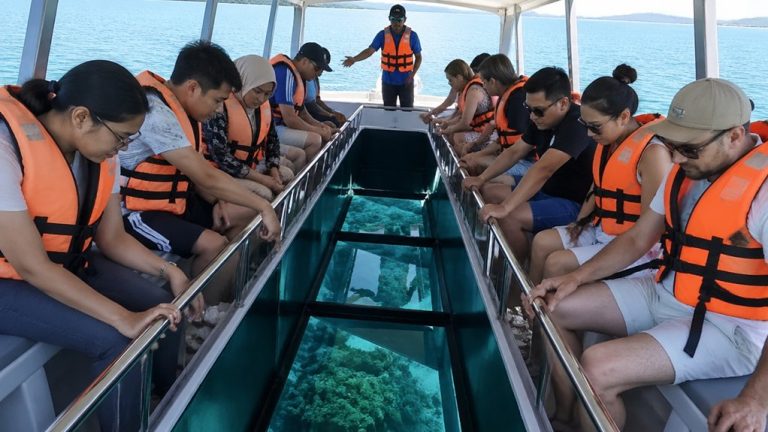
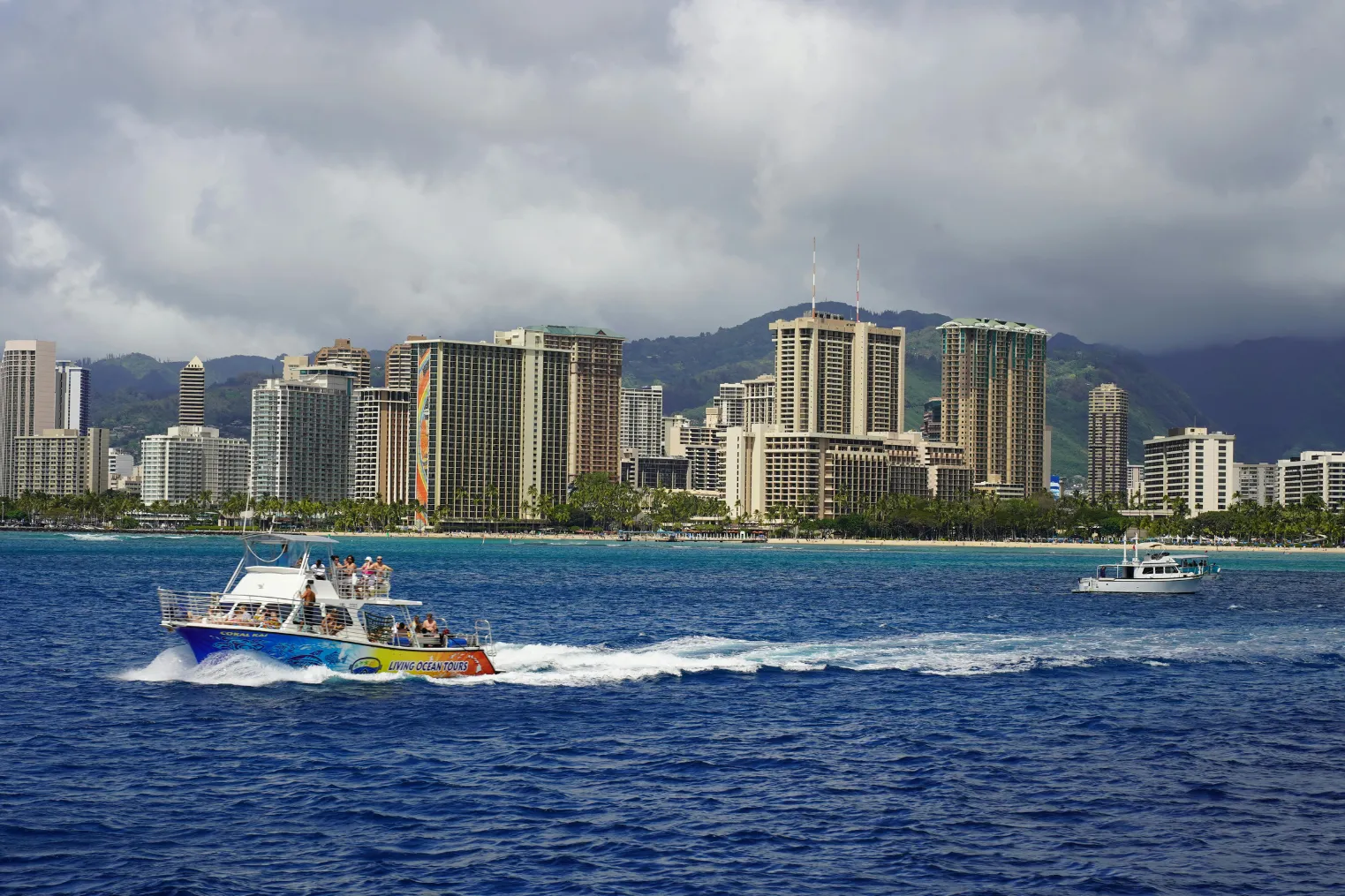
The reef below can look calm and jewel bright while your stomach starts a quiet mutiny above it. You’ll have a much better shot at enjoying the neon fish, the slap of water on the hull, and the clear pane under your feet if you prep before boarding, choose your spot wisely, and know when to get fresh air fast. A few small moves can change the whole trip.
Key Takeaways
- Take meclizine or dimenhydrinate 1–2 hours before boarding, or use ginger 30–60 minutes before the tour.
- Eat a light, bland meal beforehand, avoid alcohol and greasy foods, and sip small amounts of water regularly.
- Choose a midship seat low and near the centerline, face forward, and stay on the open deck when possible.
- Look at the horizon instead of the glass bottom or your phone, and avoid enclosed cabins or exhaust-heavy aft areas.
- If nausea starts, get fresh air, breathe slowly, sip cold water, nibble crackers, and use ginger or acupressure bands.

Oahu Grand Circle Island Experience from Waikiki
Enjoy Grand Circle Island experience tour with breathtaking views of Amelia Earhart Lookout on Diamond Head, admire Chinaman’s Hat in front of Kualo...

Oahu: Full or Half Day Grand Circle Island Tour
Choose from two exciting ways to experience Oahu's top attractions, scenic beauty, and local culture.Option 1: Dol...

Parasailing Experience in Waikiki, HI
Experience the thrill of Oahu parasailing on this unforgettable 1-hour adventure from Waikiki. Soar up to 1,000 feet...

Waikiki Glass Bottom Boat Cruise
Experience the beauty of Oʻahu South Shore as we sail toward Lēʻahi (Diamond Head) aboard the spacious Haleiwa Qu...
Prevent Seasickness Before You Board
Often, the easiest way to beat seasickness on a glass bottom boat tour starts before you ever step onto the dock. Give yourself an edge the night before. Sleep well, skip alcohol, and check forecasts so you can book a calmer morning ride, when the harbor looks like rippled glass instead of a washing machine. In Waikiki, morning ride conditions are often less choppy than later tours, which can help reduce the chance of feeling sick.
If motion sickness usually finds you fast, take OTC medicine one to two hours early, or the night before if you’re sensitive. For stronger prevention, use a scopolamine patch behind your ear as directed. You can also try ginger chews or Sea-Bands placed on the Nei-Kuan point. Before leaving, have a light bland breakfast like toast, crackers, or a banana. Your stomach will thank you before the engine hums.
Eat and Drink for a Steady Stomach
What you eat and drink before the boat leaves can make the water feel a lot friendlier. You’ll do best with a light meal, steady sips of water, and no alcohol or too much coffee, so your stomach stays calm instead of sloshing along with the waves. Pack a few plain crackers and some ginger chews too, because when the hull starts creaking and the sea starts rocking, simple snacks can be your quiet little lifesaver. It also helps to include motion sickness remedies in your bag, since they’re one of the smartest essentials to pack for a glass bottom boat tour.
Light Pre-Trip Meals
Usually, your best defense starts at breakfast, when a small meal like toast, plain crackers, or a banana can settle your stomach without making it work too hard. Smart light pre-trip meals keep you comfortably fueled, not stuffed. That gentle balance matters when the boat starts rocking and the reef begins shimmering below the glass. Your stomach will thank you later. If you’re also planning your boat tour outfit, choose breathable, comfortable clothing so you stay cool and relaxed before boarding.
- Eat 1 to 2 hours before boarding so digestion starts on shore.
- Skip greasy, spicy, high-fat foods for 12 to 24 hours before your tour.
- Choose bland backups like rice cakes, plain crackers, or grilled chicken if needed.
- If you’re hungry later, keep portions small and simple, never huge or fancy.
- Try a little ginger before boarding for extra calm and a steadier start.
Hydration Without Triggers
Before the glass starts filling with coral shapes and darting fish, keep your stomach calm by sipping water in small amounts instead of chugging a full bottle at once. Sip small amounts of water regularly before and during the tour, about 150 to 250 milliliters every 30 to 60 minutes, so you stay hydrated without feeling sloshy. Arriving early for boat check-in can also help you settle in without rushing, which may keep your stomach steadier before departure.
Also avoid alcohol and caffeine for 12 to 24 hours before boarding. They dry you out and can make nausea more likely. A light low-fat breakfast like toast, banana, or crackers eaten one to two hours before departure gives your stomach a quiet start. If you take motion meds, drink extra water. Choose bland low-acid sips if you want flavor, and let the reef do the spinning.
Ginger And Simple Snacks
Once you’ve handled hydration, give your stomach a little backup with ginger and plain snacks that travel well. Eat a light breakfast one to two hours before boarding so your stomach stays calm, not heavy.
- Choose toast, crackers, or a banana.
- Chew ginger candy before the tour.
- Try 500 to 1000 mg of ginger.
- Sip water or flat ginger ale slowly.
- Pack salty snacks for early seasickness.
Skip greasy, spicy, acidic foods and alcohol for 12 hours before sailing. If queasiness starts when the boat creaks and the bright reef flashes below the glass, nibble dry toast or crackers. Bland carbs can soak up stomach acid fast, and your stomach may forgive you. Small bites beat big gulps, and your eyes will thank you. For older riders, comfort and seating can also help reduce motion discomfort on a Glass Bottom Boat Waikiki tour.
Still comparing Seasickness Tips For Glass Bottom Boat Tours?
Ask for tour ideas, hotel suggestions, or a simple trip plan that combines both.
Trip Helper
Take Seasickness Medicine Early
Get ahead of the wobble and take your seasickness medicine early, not when the reef is already shimmering beneath the glass. For most glass bottom boat tours, you’ll get the best preventive effect if you take an over-the-counter option like meclizine or dimenhydrinate 1 to 2 hours before boarding. That pre-boarding window matters because most trips last 2 to 4 hours, just long enough for small swells and engine hum to test your stomach.
If you’re especially prone to motion sickness or heading out longer, ask about a scopolamine patch and apply it 6 to 8 hours before departure, or the night before. Follow package directions and age guidelines. If your medicine causes drowsiness, plan for it, skip driving afterward, and let the fish do the spinning. Before you board, review glass-bottom boat safety basics so you can focus on the view instead of avoidable surprises.
Try Ginger, Bands, and Other Drug-Free Aids
You can give yourself a solid edge with a few simple, drug-free tricks before the boat even leaves the dock. Try ginger chews or capsules for your stomach, slip on an acupressure band, and keep peppermint handy for a quick, cool reset when the water starts to roll. If you start early, breathe the fresh air on deck, and watch the horizon instead of the glass below, you’ll have a much better shot at enjoying the fish instead of fighting your stomach. Following basic onboard etiquette can also help keep the deck calmer and more comfortable for everyone during the tour.
Ginger For Nausea
Lean on ginger if you want a drug-free way to take the edge off nausea before a glass bottom boat tour. Take 500 to 1,000 mg 30 to 60 minutes before boarding, or chew a candy if capsules aren’t your style.
- Pack ginger chews for sudden queasiness.
- Sip real ginger tea or ginger ale slowly.
- Choose small sips, not big gulps.
- Pair ginger with a Sea-Band at the Nei-Kuan point.
- Test ginger on a short ride first.
- If you’re bringing little ones, stroller-friendly tips can help you board and settle in with less stress before the boat leaves.
Studies suggest ginger can calm nausea about as well as some antihistamines, without the sleepy fog. That’s a gift when you want to watch coral gardens glide past the hull and hear kids gasp at bright fish below. It also slips neatly into your day bag pocket.
Acupressure Bands And Aromatherapy
A simple trio can make a glass bottom boat tour feel a lot steadier: acupressure bands, a bit of ginger, and a calm scent like peppermint or lavender. Slip on a Sea-Band before boarding so its stud presses the Nei-Kuan point on your inner wrist. It’s drug-free, reusable, and worth testing early, since results vary. If the forecast looks wet, check a rainy day guide before you go so you know whether to sail or reschedule.
| Aid | How you use it |
|---|---|
| Sea-Band | Wear before waves build |
| ginger | Chew 500 to 1,000 mg before departure |
| Peppermint or lavender | Inhale from a wrist or handkerchief |
Then add fresh air and watch the horizon. The boat may creak, kids may squeal, but your stomach often stays surprisingly cooperative. You can even tuck a ginger chew in your pocket, which is less glamorous than sunglasses but much more useful today.
Pick the Best Seat on the Boat
Because motion feels calmer near the boat’s center, the smartest seat is usually midship, low and close to the centerline. If you want fewer stomach flips, aim for the middle of the Boat, where rolling and bouncing feel softer. That calmer motion can cut the sensory mismatch behind seasickness. Lower seats also help, since the bow and stern tend to pitch more dramatically. On a wheelchair accessible glass-bottom boat in Waikiki, asking for a central boarding and seating area can also make getting settled easier before the tour begins.
- Pick a seat midship for the steadiest ride.
- Choose the lower centerline when you can.
- Face forward so motion feels more predictable.
- Skip spots above the engine or aft by exhaust fumes.
- Book a larger boat or catamaran if you’re sensitive.
You’ll notice the difference fast. The boat hums instead of lurches, the glass views stay easier to enjoy, and your stomach gets a much fairer deal.
Stay Outside and Focus on the Horizon
Once the boat leaves the dock, head for the open deck and give your eyes a real job to do. Stay on deck near the middle, face forward, and pick a distant fixed point on the horizon. A shoreline, cloud bank, or far-off buoy works well. When your gaze stays steady, the motion your inner ear detects feels less surprising, and your stomach usually settles.
Skip the glass-bottom viewing area for now. Don’t stare at your phone, your shoes, or choppy waves slapping the hull. If you start to feel queasy, step outside fast, breathe slowly, and refocus on the horizon. Fresh air helps. So does starting early and keeping this up through the first hour, when wobbles like to make their entrance too. Choosing a best time of day with calmer conditions in Waikiki can also make the ride feel easier on your stomach.
Know Why Glass-Bottom Boats Cause Seasickness
Glass-bottom boats can fool your senses in a very specific way. You watch fish drift past a fixed glass panel while the hull rocks underneath you. Your eyes read the cabin as steady, but your inner ear feels every roll, creating a sensory mismatch. That confusion hits harder on smaller boats with enclosed viewing rooms, louder engines, and sometimes a whiff of fumes. If you’re susceptible to seasickness, the setup stacks the odds against you. Understanding that helps you choose better habits, like staying on deck more often instead of staring below for an hour. If mobility or comfort is a concern, asking about accessibility questions before boarding can also help you choose a glass-bottom boat setup that feels less confining and easier to manage.
Glass-bottom boats can trigger seasickness fast: your eyes see stillness while your inner ear feels every roll.
- Fixed glass blocks your horizon view
- Enclosed cabins magnify motion
- Small hulls bounce more sharply
- Engine fumes can make nausea worse
- Still interiors trick your eyes fast
What to Do If Seasickness Starts
If your stomach starts to flip, act fast and head straight for the open deck. Get some Fresh Air and face the horizon. Pick a distant, steady point and keep your eyes there. That simple reset helps your brain match what it sees with the boat’s motion, and nausea often eases within minutes.
Next, sip cold water and nibble plain crackers or a salty snack. Your stomach likes simple fuel. Slip on acupressure bands over the Nei-Kuan point, or suck a ginger chew while you wait for relief. If you packed meclizine or dimenhydrinate, only take more if the label says you can. Feeling brave? If it’s safe and allowed, a quick snorkel sometimes works wonders. The sea can be surprisingly generous then. If you think you may need to cut the trip short, knowing the easiest parking options in Waikiki can make getting back on shore less stressful.
How Long Seasickness Lasts After the Tour
Although your body may still feel a step behind the dock, seasickness usually fades pretty quickly after the tour ends. If you’re getting seasick, you’ll likely feel steadier within minutes to a few hours, and many people feel much better in 1 to 3 hours.
Even after you step ashore, seasickness usually loosens its grip within minutes to a few hours.
Mild nausea and dizziness often clear the same day. You might still notice fatigue, a dull headache, or a light rocking feeling for 12 to 24 hours, especially after bright glare, diesel smells, and cabin heat. That leftover wobble usually passes by tomorrow, unless rare land sickness tags along a bit longer than expected.
If you head back out to spot wildlife after the tour, remember to keep a recommended distance from sea turtles, monk seals, dolphins, and whales.
- Sip water in fresh air.
- Nibble crackers or ginger.
- Rest if your head feels foggy.
- An antihistamine can shorten recovery.
- Rare land sickness may linger.
Frequently Asked Questions
Are Glass-Bottom Boat Tours Safe for Pregnant Travelers Prone to Motion Sickness?
Yes, you can usually go safely if you take prenatal precautions, get motion sensitivity assessments, and seek doctor consultation first; you’ll do best choosing larger boats, calmer trips, fresh air, ginger, water, and midship seating.
Can Children Take Seasickness Medicine Before a Glass-Bottom Boat Tour?
Yes, you can give children seasickness medicine before the tour, but it feels like steering through a hurricane: follow age guidelines, check dosing timing, ask your pediatrician, and consider pediatric alternatives like ginger, wristbands, water, and snacks.
Do Prescription Seasickness Patches Work Better Than Over-The-Counter Options?
Yes, you’ll usually get better prevention from prescription patches than over-the-counter pills because prescription efficacy is stronger for longer trips. You should weigh patch side effects and long term tolerance with your healthcare provider first.
Will Snorkeling Before the Tour Make Seasickness More Likely?
Usually, no, like Odysseus finding steadier seas, you’ll often feel less sick if you snorkel first; prioritize pre tour hydration, avoid heavy seafood consumption, and note recent scuba or rough, tiring swims can increase dizziness.
Can I Bring My Own Water and Snacks on Board?
Yes, you can usually bring your own water and snacks aboard, but you’ll need to check operator rules for brought provisions and container restrictions. Pack bland items, note allergy considerations, and skip alcohol, soda beforehand.
Conclusion
You don’t need to spend your glass-bottom tour fighting your stomach. Prep early, choose fresh air, and keep your eyes on the horizon so the reef, fish, and sunlit water stay center stage. If nausea sneaks in, move outside fast, breathe, and use the tricks that work for you. With a little planning, you’ll feel steady enough to enjoy a world of color beneath your feet that seems a million miles deep, not your breakfast.