
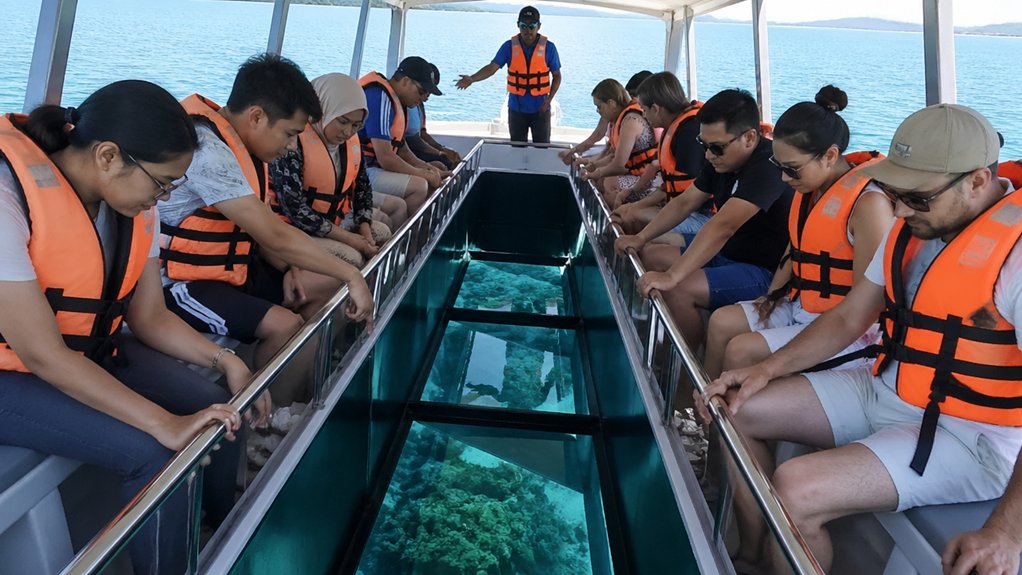
On most glass-bottom boat trips, the safety briefing takes less than five minutes, yet it shapes everything that follows. You’ll see bright fish flicker under your feet, hear sandals scuff on deck, and feel how fast a narrow aisle clogs when one loose bag slides free. A few simple do’s and don’ts keep the view clear, the wildlife calm, and your phone out of the drink. Want to know which habits matter most?
Key Takeaways
- Move slowly, hold handrails, and follow crew directions when boarding, seating, and disembarking to keep the boat stable and aisles clear.
- Wear soft-soled, non-marking shoes or go barefoot only if permitted, and keep sand, grit, and wet items away from viewing areas.
- Do not tap, lean on, sit on, or place bags over glass panels, and report any cracks, fogging, or loose seals.
- Stow backpacks, towels, tripods, and valuables under seats or in lockers so nothing blocks walkways or slides onto the glass.
- Keep voices low, avoid flash or bright screens, and keep hands and gear inside to respect wildlife and other passengers.

Waikiki Glass Bottom Boat Cruise
Experience the beauty of Oʻahu South Shore as we sail toward Lēʻahi (Diamond Head) aboard the spacious Haleiwa Queen, a 50ft power catamaran, with...

Oahu Catamaran Snorkel Tour: See Turtles 100% Guaranteed
Experience one Viator's 2025 Top 20 Best Excursions in the country. This Oahu Catamaran snorkel tour offers unbeatab...

Oahu Grand Circle Island Experience from Waikiki
Enjoy Grand Circle Island experience tour with breathtaking views of Amelia Earhart Lookout on Diamond Head, admire...
Oahu Circle Island Snorkeling Tour: Dole, Pali Lookout & More
Looking for the BEST VALUE & MOST COMPLETE Circle Island Snorkeling Tour? Join us for the ultimate full-day, action-...
What Is Glass Bottom Boat Etiquette?
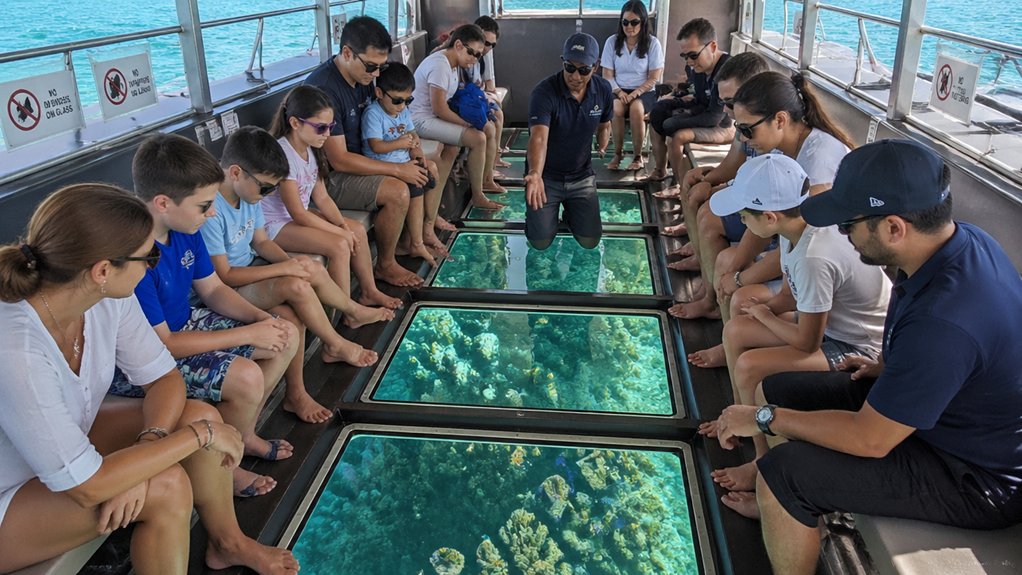
Think of glass bottom boat etiquette as the simple set of habits that keeps the ride safe, calm, and full of clear underwater views.
On a glass-bottom boat, you share limited space and a front-row window into the marine ecosystem. That’s why you move gently, keep your voice low, and leave the glass panels untouched. No tapping, no scratching, and no bags dropped across the viewing area. You also skip flash photos and bright lights, since glare blocks your view and can unsettle wildlife. Good etiquette means respecting capacity limits and staying in designated spots so everyone gets a look. It also means giving life vests and walkways room to do their jobs, without turning the deck into a clumsy shuffle line at sea. These habits also help make the experience more comfortable for non-swimmers, who can enjoy marine views without needing to enter the water.
Listen to the Safety Briefing
Before the boat even leaves the dock, give the safety briefing your full attention. Pay full attention so you know where life jackets, fire extinguishers, and emergency exits are before you glide away. Listen for rules about moving near the glass panels, where you can stand, and when you should stay seated, especially if the water turns choppy. Those details protect you, keep views clear, and spare the boat extra strain. You should also catch any crew guidance about photos through the glass, including flash limits and railing rules, so marine life and fellow guests aren’t disturbed. If you have mobility, medical, or flotation needs, ask a question then. A short chat now can help you find the safest seat and avoid wobbles later. The briefing also covers key boat safety essentials that help everyone stay calm and prepared throughout the trip.
Wear Soft-Soled Boat Shoes
Choose white or light-colored boat shoes with non-marking rubber soles, because you’ll protect the glass panels from ugly scuffs and still keep your footing when the deck turns slick. You should skip hard soles, heels, or studs since they can scratch the boat and make a wet boarding area feel like a bad joke. Before you step near the viewing windows, wipe off sand, grit, and sunscreen on the mats or at the deck shower so your shoes stay clean and the view stays crystal clear. If you’re driving to the harbor, planning your Waikiki parking ahead of time can make boarding easier and help you avoid tracking extra grit onto the boat.
Non-Marking Sole Importance
Although glass-bottom boats invite you to look down, what you wear on your feet matters just as much. Choose white or light-coloured non-marking boat shoes with soft rubber soles to protect the Teak deck, painted trim, and glass viewing panels below. Thin, flexible soles and low-profile shapes help keep sand and grit from hitching a ride and scratching delicate panes. For a Waikiki boat tour, breathable soft-soled shoes also help you stay comfortable in the sun and sea breeze. Canvas or microfiber-lined pairs work beautifully, and they don’t leave mystery streaks. Before you board, check the operator’s shoe policy. Some ask for cleaned shoes, while others hand out slippers or disposable covers. Skip hard-soled trainers, boots, heels, and cleats. They can chip glass, dent frames, and scar finishes. Going barefoot instead? Rinse and dry your feet first so salt and sand don’t linger.
Grip And Deck Safety
Step lightly and your footing will thank you. On a glass bottom boat, soft-soled shoes with rubber grip help you stay steady when spray slicks the deck and the sea starts nudging the hull. They also protect teak and glass from scuffs that rough shoes can leave behind.
Skip high heels and hard soles. They wobble, slide, and can nick the deck. If crew asks, stow extra pairs on the rack so narrow walkways stay clear. Near the viewing panels, keep your hands on the rail and bend your knees a little. A lower center of gravity beats bravado in choppy water. Waikiki rides can feel rough in Waikiki when wind and swell make the water choppier, so secure footing matters even more. Bare feet might sound carefree, but they won’t give you the same traction when the boat shifts under your curious sea legs.
Still comparing Glass Bottom Boat Etiquette: Do’s And Don’ts Onboard?
Ask for tour ideas, hotel suggestions, or a simple trip plan that combines both.
Trip Helper
Clean Shoes Only
Always board with soft-soled, non-marking boat shoes that are clean enough to leave the glass and teak looking untouched. On a Yacht, clean shoes only isn’t a fussy rule. It’s how you protect the clear panels beneath your feet and keep the view bright. This matters even more on a glass-bottom boat in Waikiki, where clear viewing panels are the heart of the experience. Choose white or light-colored soles, then wipe them with a damp cloth or use the deck mat to remove sand, tar, and salt. Skip hard soles, heels, and rigid sandals, since pressure points can scuff, chip, or even crack glass. If barefoot time is allowed, ask the yacht´s crew first and follow their lead. Watch for posted shoe zones too. Sometimes you’ll remove shoes before crossing a glass hatch. Your feet stay safer, and the underwater show stays crystal clear.
Stow Bags and Loose Items Securely
You’ll enjoy the reef views more when you tuck bags and loose items into lockers or under-seat storage before the boat hits a wake. Zip soft luggage, stash hats and cameras, and keep keys or phones out of your pockets so nothing skids across the glass or clatters into the water. It also helps to pack tour essentials like sunscreen and a reusable water bottle so you’re not juggling extra items once you’re onboard. Follow the crew’s storage rules and keep aisles open, because a clear walkway makes the ride smoother for everyone and saves the glass from a bad day.
Secure Personal Belongings
A few quick habits keep the view clear and your stuff on board. To secure personal belongings, stow bags in designated lockers or under-seat compartments so they don’t slide a few degrees and drift over the glass. You’ll protect everyone’s reef view and save yourself a scramble when the boat shifts.
Next, secure loose items like sunglasses, phones, and cameras with wrist straps or zippered pockets. Boat crews say unsecured personal effects make up 37% of overboard loss claims, and the sea loves a sudden gust. Boat layouts vary, and some tours include restroom facilities, so ask the crew where to store essentials you may want easy access to during the ride. If you spot clips or Velcro straps on deck, use them to fasten soft bags and gear. For anything fragile or pricey, ask the crew for storage or tuck it into a waterproof tethered pouch. Spray happens. Sharp turns happen too, and waves don’t care.
Clear Walkways Always
Often, the best seatmate on a glass bottom boat is an open aisle. Before departure, stow backpacks and loose gear under seats or in lockers so the narrow 18 to 24 inch passage stays open for boarding, browsing, and quick evacuation. You help everyone relax when you keep clear walkways clear. Arriving a little early for boat check-in also gives you time to store gear properly before boarding begins.
- Zip cameras and phones into bags or wrist straps so they don’t skitter toward the glass panels.
- Keep towels, sandals, and tripods out of aisles. Wet items turn the deck slick fast.
- Place lifejackets and extras only where crew directs. That’s captains authority at work, and it protects exits.
Give the viewing windows breathing room too. Keep your stuff 2 to 3 feet back so everyone’s underwater panorama stays wide for all aboard.
Board and Exit Without Blocking Walkways
Step aboard like you’re joining a well-timed dance, and keep the narrow gangway clear by moving on and off one person at a time. On most boats, only one person fits anyway, so step on and off the gangway with purpose and keep the line flowing. If you brought a stroller, ask the crew about stroller-friendly tips before boarding so you can fold and stow it without slowing traffic. As soon as you reach your spot, stow bags and gear in lockers or under your seat, not in the aisle where feet, fins, and lifejackets tangle. Listen for crew directions and take the seat they assign so the center walkway stays open. If a child, older traveler, or someone with limited mobility needs extra time, signal the crew and give them room. When the trip ends, wait until told to disembark, then move out in single file promptly.
Move Carefully Near the Glass
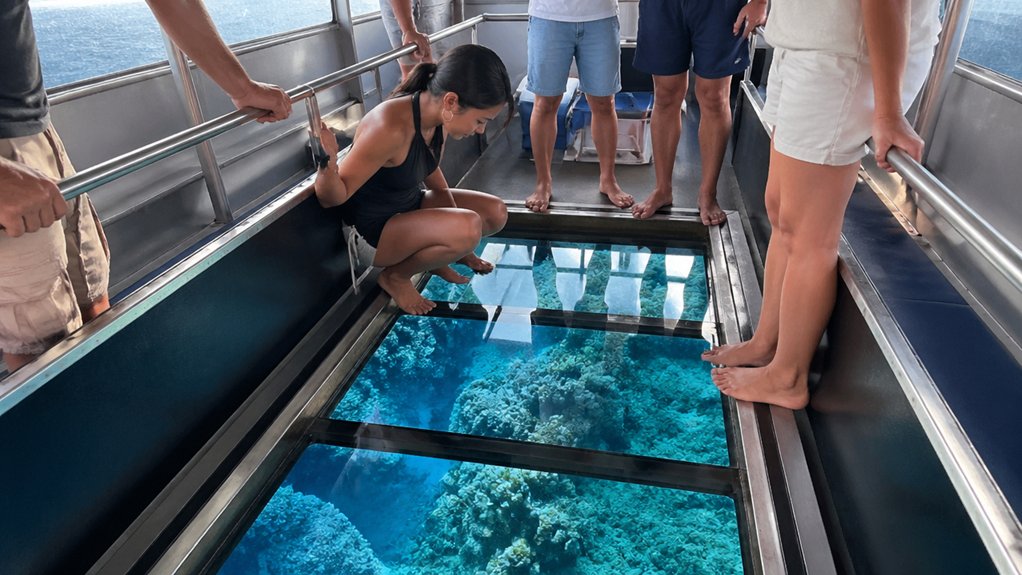
You’ll get a better view if you watch your footing, walk slowly, and keep your weight centered near the glass, especially when the deck feels slick. Keep the panels clear by holding drinks, sunscreen, and bags away from the viewing area, so everyone can enjoy the bright flicker of fish below. Choosing the best seats can also help you spot more marine life without crowding the glass. Avoid sudden movements when the boat rocks, and don’t lean on the glass or rails because these windows are for looking, not for testing your sea legs.
Watch Your Footing
Tread lightly near the viewing panels, because the best look into the water starts with steady feet on deck. Wear non-marking,non-slip shoes, or go barefoot if the crew says so. Around glass viewing panels, Move slowly and keep low center of gravity, especially when the boat rocks and kids get excited.
- Step where the crew directs and respect posted weight limits.
- Keep bags and loose gear secured so nothing skids underfoot.
- Stay off the glass edges, and guide children by the hand.
If anyone in your group has mobility needs, ask the crew accessibility questions before moving toward the glass so everyone can navigate the deck safely. Careful steps keep everyone balanced, calm, and ready for the next bright flash of fish below through the blue window.
Keep Glass Panels Clear
Often, the best underwater view comes when you treat the glass like a window, not a bench or a storage shelf. Keep the glass panels clear by wearing non-marking shoes with soft soles, or going barefoot if the crew allows it. That simple choice helps prevent scuffs, scratches, and pressure points that can cloud your view over time.
Skip the urge to set bags, coolers, or hard gear near the viewing area. Use the storage spots instead. If you notice fingerprints, salt spray, or sunscreen haze, wipe it away with a soft microfiber and mild freshwater solution. Clean glass also reduces glare and improves underwater photos if you plan to shoot through the panels. Follow crew directions about barricades and capacity limits, too. When you respect the panes and frames, the reef stays crisp, bright, and wonderfully close below your feet.
Avoid Sudden Movements
As the boat glides over the reef, move slowly when you step toward the glass and keep your weight centered. Walk slowly so the hull stays steady and the coral scene below doesn’t smear into a wobble. Hold onto handrails when you lean in. That small habit keeps your shoes, elbows, and curious camera from thumping the pane. If you’re deciding between Morning or Afternoon trips in Waikiki, calmer early conditions can make careful movement near the glass even easier.
- You hear soft water slaps and want a closer look.
- A quick stomp sends a shiver through the window and fish dart.
- A calm step lets you spot sea fans, parrotfish, and sandy ripples.
Keep children supervised near the viewing panels, especially during turns or choppy patches. Ask them to sit still and keep toys off the glass. Follow crew directions too. They know the safest spots, and nobody wants a dolphin-viewing faceplant.
Don’t Lean on Glass Panels
While the view below might tempt you to press in for a closer look, keep your body weight off the glass panels. On a boat gliding over blue waters, that’s one of the key Do’s and Don’ts to remember. Even tough safety glass has limits, and posted load ratings matter.
| Instead | Why |
|---|---|
| Stand nearby | Pressure stays low |
| Keep bags off | Glass avoids chips |
Don’t sit or stand on the panels. Repeated contact can leave scratches or tiny fractures that weaken them over time. Keep heels, cleats, and hard-edged gear away too. Non-marking deck shoes are fine nearby. Watch children and pets around railings above the viewing area. If you spot cracks, fogging, or loose seals, tell the crew right away and steer clear. For trip planning, it also helps to understand the refund policy before boarding.
Don’t Tap or Kick the Viewing Windows

Though the fish may glide right up to the window, keep your hands and feet to yourself. On your first time aboard, good yacht etiquette means resisting the urge to knock for a closer look. Tapping or kicking glass-bottom viewing windows sends vibrations through the hull, and that tiny thump can scatter fish and sea turtles in seconds.
Even if the fish drift close, yacht manners mean no tapping, one knock can send the whole scene scattering.
- A tap startles silver flashes below.
- A kick can weaken laminated or acrylic panels.
- Smudges and micro-scratches cloud the blue view.
From a Waikiki tour, you may spot colorful fish below, but keeping the viewing windows undisturbed gives you the best chance to see them behave naturally. You also shouldn’t stand, climb, or drop bags with wet shoes on the panels. Weight limits and crew directions matter more than curiosity. If something slams a window or you spot a crack, tell the crew right away. Don’t poke at it like a detective.
Take Turns at the Viewing Area
When you reach the glass, share the space and keep your turn brief so everyone behind you gets that clear look at the reef and passing fish. You’ll help the boat stay safe and calm when you follow the posted limit, keep your voice low, and avoid blocking other people’s sightlines with elbows, bags, or a long photo session. If you’ve got kids with you, rotate them through with an adult nearby so the line keeps moving and nobody turns the queue into a wiggly little traffic jam. If the crew helps manage the viewing line or points out marine life, it’s thoughtful to consider tipping etiquette at the end of the tour.
Share Viewing Space
On a busy boat, a little patience goes a long way at the viewing area. When space narrows to one glass panel or a slim bench, give yourself a quick check and keep your session brief during crowd peaks. Then step aside so sightlines stay open. Stow bags and skip tripods. They hog space and can stress the glass. Follow the crew’s markings or queue notes. On every yacht, common sense helps everyone spot the flicker of fish below. You’ll hear whispers and clicks nearby. If you’re joining Kewalo Basin glass-bottom boat tours, expect crew guidance that helps keep viewing orderly and enjoyable for everyone onboard.
- Keep kids close and curious, not pressed against the ledge.
- Offer priority views to older passengers or anyone with limited mobility.
- Stand to the side after looking, so the water, not your backpack, fills the frame.
Rotate Fairly
Good glass-bottom manners don’t stop at making room. Practice fair rotation so everyone gets a real look through the glass. If six to eight people fit comfortably, keep your turn to about two or three minutes when others are waiting. Those viewing time limits keep the line moving and the mood easy. If the crew assigns groups or numbers, follow them. They often time turns for the best angle or a slow drifting turtle. Step aside as soon as you’ve had your look. Encourage children to join respectful queuing and take turns in arrival order. Families may need a little extra time, but not a private screening. While you wait, keep bags and cameras off the bench and railing. Gear shouldn’t save spots for anyone. On the cheapest tours, limited space and fewer onboard extras can make fair turn-taking even more important.
Mind Others’ Sightlines
Although the reef below can tempt you to linger, keep your turn at the glass brief if the boat is busy, about 60 to 120 seconds so everyone in your group gets a look. Respect the stand time limit and angle your body side-on, so children and adults behind you keep clear sightlines. Follow the crew if they cap the panel at four to six people. That keeps traffic smooth and the boat balanced. On Waikiki boat tours, different boat styles may have slightly different viewing setups, so crew guidance helps everyone enjoy the reef comfortably. You’ll hear less shuffling and more delighted whispers.
- Take a quick peek, point out the striped fish, then move.
- Skip flash, wear darker colors, and cut reflections on the glass.
- Practice photo courtesy by grabbing one fast shot, then stepping to the photo area if there is one.
Keep Noise Low During the Ride
Usually, the best glass bottom boat rides are the quiet ones. Speak softly and skip the shouting. Sound skims across water and can spook fish, turtles, and birds, especially in marine reserves, quiet anchorages, and over coral reefs or seagrass beds. Keep music off or barely audible, and use headphones if you need a soundtrack. Make sure your group keeps chatter and loud laughter in check so you can hear the sea itself, from hull creaks to snapping shrimp. That calm mood helps everyone spot more wildlife through the glass. If you’re docking in a marina, respect posted quiet hours after 10 or 11 PM. Yacht owners and crews on large vessels will thank you, even if they never say a word that day.
Follow Crew Directions at All Times
Before the boat even leaves the dock, give the crew your full attention. Their safety briefing tells you where to stand, how to move, where life jackets wait, and which exits matter if the sea gets lively.
Before departure, listen hard: the crew’s briefing shows you where to move, where to brace, and how to stay safe.
- Stay seated or stand only where they say near the glass. You won’t fog the view, tap the panels, or jostle another passenger.
- Shift seats fast when they ask during transit, anchoring, or reef passages. Balanced weight keeps the ride smooth and helps the crew work cleanly.
- Dim bright screens, skip flash, and stow loose bags. Light spooks marine life, and wandering gear can scratch glass.
You paid the charter cost for clear views, not chaos. Follow directions quickly, and the underwater show stays sharp for everyone.
Stay Out of Restricted Areas
While the reef steals the spotlight, some parts of the boat are strictly hands-off. Respect signs marking restricted access areas like the wheelhouse, engine room, and crew only platforms. They’re off limits zones for good reason: safety, smooth operations, and your view of the sea below.
Stay behind railings and designated viewing lines near the glass. Don’t lean on it, tap it, or park your bag there unless the crew says it’s fine. Smudges, scratches, and extra weight can spoil visibility or stress the structure. Keep children close and inside passenger areas, even when a toy rolls away. If luggage, restrooms, or boarding ramps sit near restricted spaces, ask for help instead of slipping into crew corridors yourself. Curiosity’s great, but boats love boundaries.
Use Reef-Safe Sunscreen for Swim Stops
- Onshore, smooth it on 20 minutes early so it grips your skin.
- Add UPF layering with a rash guard or swim shirt to cut runoff and keep shoulders happy.
- Afterward, stash the bottle in a marina bin and look for biodegradable packaging.
You’ll still step into that bright, clear water protected, while parrotfish flicker below the glass like tiny neon commuters. Your skin wins, and the reef keeps glowing too.
Never Litter Overboard
That same care for the reef keeps going once you’re back on the boat, and it starts with a simple rule: don’t toss anything overboard. Even cigarette butts, bottle caps, fruit peels, and tiny wrappers become marine debris, and small pieces can linger for years. They also raise the risk of wildlife entanglement.
Use the onboard bins for rubbish and recyclables, and ask the crew where batteries, oil, or empty sunscreen containers should go. Keep glassware secured, or choose approved plastic or other biodegradable alternatives when available, because broken glass can drift below like invisible trouble. Don’t chuck food scraps either. If you spot floating trash beside the hull, tell the crew. Many operators will scoop it up when it’s safe, which is quietly heroic stuff.
Avoid Disturbing Marine Life During Stops
When the boat pauses over a busy patch of reef, the best move is to make yourself small and quiet. You’ll see more when you practice marine silence. Soft voices let striped fish keep grazing and turtles keep cruising instead of darting off like late commuters.
- Keep hands, fins, and gear inside. Dangling anything risks brush contact, stressed animals, and trouble when propellers start again.
- Skip controlled feeding and all touching. Food changes wild diets, and your fingers can strip protective mucus or pass along bacteria.
- Ask before using flashes or lights. Bright bursts can confuse night hunters, while even tiny scraps of trash can choke, tangle, or poison the reef you came to admire below the glass, where every shadow looks alive today.
Frequently Asked Questions
Can I Bring a Stroller or Wheelchair on a Glass Bottom Boat?
Yes, you can bring one there, but you’ll need to notify the operator early about stroller access, wheelchair boarding, and mobility accommodations. You should check size limits, arrive early, and expect folding or transfer requirements.
Are Food and Drinks Allowed Onboard During the Tour?
Yes, you can usually bring bottled water and sealed snacks, but you’ll need to follow each operator’s no alcohol policy, use secure food storage, choose compostable packaging, and stow everything when crew members instruct you.
What Should I Do if I Get Seasick During the Ride?
If you get seasick, move deck-side for fresh air, seek shade, and sip water. Keep your eyes on the horizon, avoid the glass bottom, and lie back with your head still. Consider medication beforehand, too.
Can I Take Photos or Videos Through the Glass Panels?
Yes, you can; nearly 80% of glare comes from poor lighting, so you’ll get better shots with respectful filming, flash avoidance, and angles that reduce glass reflections. Ask crew first, secure your camera, don’t block others.
What Happens if Bad Weather Affects the Tour Schedule?
If bad weather hits, you’ll usually face tour cancellation or delay. Operators send safety updates, contact you early, explain refund policies, and often offer rescheduling, vouchers, or a calmer alternate route if conditions still allow.
Conclusion
Good etiquette doesn’t limit the trip. It gives you a better view. When you move lightly, stash your bag, and keep off the glass, you hear the soft slap of waves and spot brighter coral, quick silver fish, and sea turtles drifting below. Even if rules feel fussy at first, they protect the boat, the crew, and the reef. Follow them, stay curious, and you’ll leave with clear photos, easy memories, and no awkward lecture.


