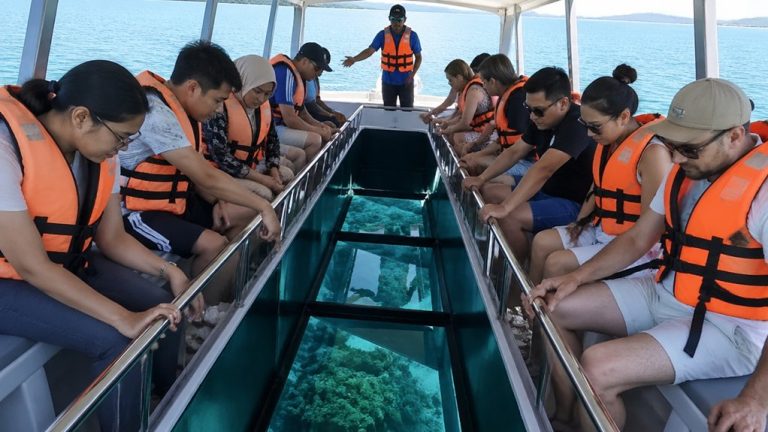
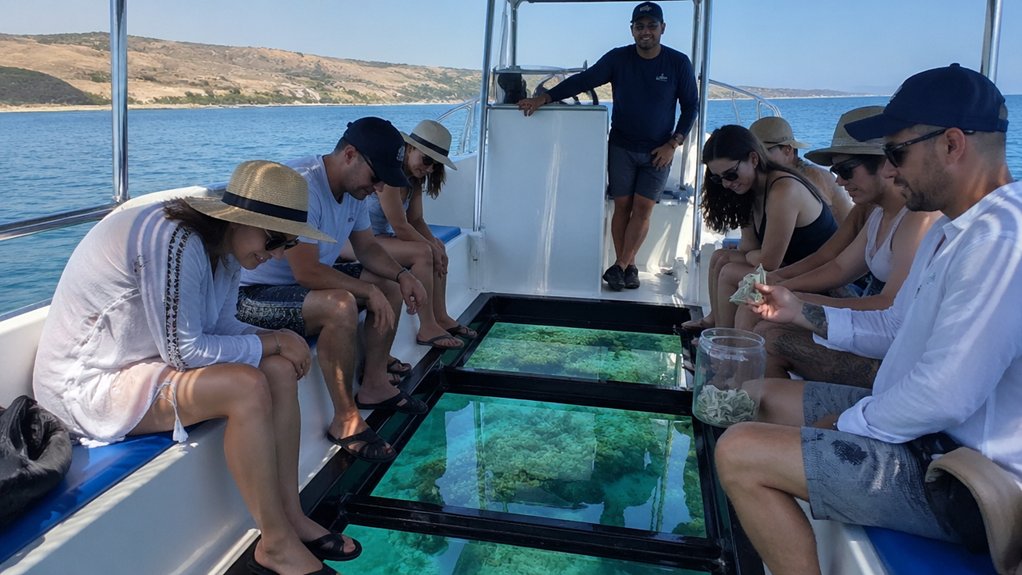
Just as the boat slows over a patch of bright coral and the guide points out a sea turtle below the glass, you might find yourself wondering about the tip jar by the dock. You’re not alone. A glass bottom boat tour feels easygoing, but the tipping part can get oddly murky. Before you hand over a few bills or hold back, it helps to know what crews actually expect and what your trip really calls for.
Key Takeaways
- Yes, tipping is customary on glass bottom boat tours, with 15–20% of the tour price being a common guideline.
- For short rides, many guests tip about $5–$10 per person, or $10–$20 per person on slightly longer trips.
- Tip at the end of the tour, usually in cash, handing it directly to the captain or crew while disembarking.
- Check whether a service charge is included, and add cash if needed so total crew gratuity reaches about 15–20%.
- Tip more for private charters or extra service like helping seniors, photos, drinks, snorkeling gear, or detailed commentary.

Oahu Grand Circle Island Experience from Waikiki
Enjoy Grand Circle Island experience tour with breathtaking views of Amelia Earhart Lookout on Diamond Head, admire Chinaman’s Hat in front of Kualo...

Oahu Catamaran Snorkel Tour: See Turtles 100% Guaranteed
Experience one Viator's 2025 Top 20 Best Excursions in the country. This Oahu Catamaran snorkel tour offers unbeatab...

Oahu Circle Island Snorkeling Tour: Dole, Pali Lookout & More
Looking for the BEST VALUE & MOST COMPLETE Circle Island Snorkeling Tour? Join us for the ultimate full-day, action-...

Oahu: Full or Half Day Grand Circle Island Tour
Choose from two exciting ways to experience Oahu's top attractions, scenic beauty, and local culture.Option 1: Dol...
How Much Should You Tip on a Boat Tour?
Usually, a good tip for a boat tour lands around 15 to 20 percent of the tour price, which gives you a solid starting point as you step off the dock with salt on your skin and sunscreen still in the air. On a $360 private charter, that percentage guideline means a tip amount of about $54 to $72. For shorter trips, many travelers use $10 to $20 per person instead. If your bill already includes a service charge, add only enough cash tip to bring the crew’s total to about 15 to 20 percent, skipping taxes and fees. If the crew hauls snorkels, pours drinks, or snaps bright reef photos, nudge your tip higher. Carry small bills for easy dockside math after the ride ends. On the cheapest glass bottom boat tours, you may give up extras or personalized service, which can also shape how generously you choose to tip.
When Is a Glass Bottom Boat Tip Expected?
Often, a tip on a glass bottom boat tour is expected at the end of the trip, right as the boat eases back to the dock and everyone stands up blinking at the bright water.
On most outings, that’s the moment when a cash tip changes hands, usually before you step off the glass-bottom boat.
- For a standard trip, a tip expected after the captain ties up.
- On a private charter, you still tip at the end, even if the tour length runs longer.
- If your bill includes a service charge, check it before choosing the final tip amount.
You’ll usually hand the money to the crew, not just the captain, and it often gets split behind the scenes. Think sun, salt, and quick thank-yous.
Before the trip, it also helps to review the cancellation policy so you know what happens if plans change.
What Affects a Boat Tour Tip Amount?
Your tip usually shifts with the kind of trip you book and how long you’re out on the water, since a quick shared ride doesn’t land the same as a private charter with hours of reef views and salty spray. You’ll also want to size up the crew’s service, from clear wildlife commentary to extra help with photos or steady hands for nervous swimmers. Before you hand over cash at the dock, check the price for service charges or taxes so you can tip smart and make sure the right crew members feel it. It also helps to review the refund policy before your tour, since cancellation terms can affect how you think about the total amount you’re spending.
Tour Type And Duration
As a simple rule, the kind of glass-bottom boat tour you book and how long you stay on the water both shape the tip.
- On a short 45-minute glass-bottom boat ride, tip amounts often land around $5 to $10 per person. Think quick views, bright fish, and a breezy hop ashore.
- For trips lasting two hours or a half day, match the duration with $10 to $20 per person, or about 15% to 20% of the fare. Add more if snorkeling, drinks, photos, or lunch are included.
- A private charter or full-day outing usually deserves at least $20 per person or 15% to 20%. If a service charge appears, top up until the total reaches roughly 15% to 20% overall before you step ashore.
On a Waikiki boat ride, where guests often pay for reef viewing and onboard narration, a tip can also reflect how engaging and informative the crew makes the experience.
Crew Service Level
Watch how the crew handles the little things, because service level can move your tip from the low end to the high end fast. On a glass-bottom boat, you can feel the difference right away. The best crew fits lifejackets carefully, steadies you as you step aboard, and keeps weight balanced without fuss.
If they add extra services like snapping photos, handing out slippers, or bringing drinks, your tip amount should rise. Great commentary in English counts too. On a private tour, personalized attention usually merits more, especially when someone helps a seasick passenger or guides you safely off the boat. Following boat etiquette also reflects a professional, guest-focused crew. When one person clearly goes above and beyond, a hand-delivered cash gratuity feels thoughtful and direct. You’ll notice calm voices and quick, capable hands.
Still comparing Should You Tip On A Glass Bottom Boat Tour?
Ask for tour ideas, hotel suggestions, or a simple trip plan that combines both.
Trip Helper
Price And Inclusions
Because the tour price sets the baseline, it often shapes your tip before the boat even leaves the dock. You can use a tip percentage of 10 to 20 percent, with 15 to 20 percent working well when no service charge appears on the bill. If one does, top up only until the crew reaches about 15 to 20 percent of the advertised fare. In Waikiki boat prices, the typical cost breakdown can vary by tour length, departure time, and added inclusions, so those details can help you judge what feels fair to tip.
- On a short cruise, a flat tip amount of $5 to $20 per person often fits.
- On a longer trip or private charter, $20+ each or 15 to 20 percent feels fair.
- Check the inclusions. Snorkel gear, snacks, photos, and extra attention can justify a bigger cash tip dropped in the jar while gulls fuss overhead as sunset light ripples nearby.
Should You Tip More for a Private Tour?
Expect to tip more on a private tour, since you’re paying for a more personal ride and often getting more hands-on help from a smaller crew. On a private boat tour, your tip percentage should usually land around 15 to 20 percent of the charter price. If your captain helps with snorkel gear, spots turtles, or snaps photos, round up the crew gratuity. A $360 trip, for example, calls for about $54 to $72, so $75 feels perfectly on course. Cash tipping works best because you can hand it over on board, hear the engine hum, and know the crew gets it directly. If you notice a service charge or included fee, check the total and aim for personalized service to be rewarded well fairly. If your outing includes hotel pickup options, that extra convenience can be another small factor when deciding how generously to tip.
Does a Service Charge Replace the Tip?
You’ll often see a 10% service charge on your bill, but that fee doesn’t always land in the crew’s hands, so ask at check-in or boarding before you assume you’re covered. If the charge isn’t clearly marked as a crew gratuity, you should usually tip enough to bring your total to about 15 to 20%, and many guests add another 5 to 10% in cash so the crew actually gets it. If you have any accessibility questions, ask them at check-in or before boarding so the crew can clarify what assistance is available. If the water sparkled, the guide kept the reef facts coming, and the crew made everything smooth, a few bills passed over with your sunscreen-slick fingers can be the simplest thank-you.
Service Charge Vs. Tip
While that extra line on your receipt can look like the tip, a mandatory service charge often goes to the company first and may not land fully in the crew’s hands. Before you assume it covers the crew tip, check the receipt or ask about the pooling policy.
- A service charge isn’t the same as gratuity. Ask whether the crew actually receives it.
- Remember taxes vs tip. Government taxes never count toward your crew tip.
- On a private charter, confirm the policy and use a cash tip if you want the full amount to reach the crew.
For most tours, aim for total gratuity around 15 to 20 percent. If the service charge is shared with the crew, you’ve covered part of it already. On glass bottom boat tours, safety-focused crew service often includes helping passengers follow basic onboard rules and viewing-area guidance.
When To Add More
That extra service charge on your glass-bottom boat receipt usually counts as part of the tip, not the whole thing. If you see a separate 10 percent service charge, add enough as a cash tip so your total percentage gratuity lands around 15 to 20 percent. Taxes don’t count, even if that local line looks hefty.
Add more when the day feels hands-on. On a private charter, the crew tip should climb if they help with snorkels, snap photos, or keep drinks coming while the hull glides over coral and flashing fish. If the service charge says it’s shared with staff, a smaller extra 5 to 10 percent works for standout service. If not, hand over small bills at the dock. Since many operators use pooled tips, your cash tip helps everyone. On tours with comfortable seating, guests often tip more when the crew helps seniors get settled and stays attentive throughout the ride.
How Should You Tip the Boat Crew?
Finish the tour by tipping the onboard crew in cash as you step off the boat, because their pay often depends heavily on gratuities and they usually share the tip among the guides and mates. In busy Waikiki, planning your boat parking ahead of time can make it easier to have cash ready when you disembark.
- For a group excursion, follow local tipping culture and use a percentage gratuity of 10 to 20 percent.
- On a private charter, tip toward the higher end, or give $10 to $20 per person for short trips and $20 or more on a full-day tour.
- Bring small bills and hand a cash tip to the boat crew directly, or use the tip jar. If your receipt includes service, add enough so the crew still receives about 15 to 20 percent of the advertised price.
Common Boat Tour Tipping Mistakes to Avoid
Once you know the usual tipping range, the easy part is avoiding the small mistakes that can make a generous day on the water land a little flat at the dock.
On a boat tour, don’t leave a token amount when a private boat usually calls for a 15 to 20 percent tip percentage. On a $360 trip, that means $54 to $72, not $5 and a shrug. Don’t base your tip on a sale price if you received full onboard service. Use the advertised price instead. Also, don’t mistake taxes or a printed service charge for the crew’s tip. If 10 percent is included, add 5 to 10 percent more. Bring small cash denominations. Hand tips directly to the captain or crew so crew distribution stays clear and nobody gets lost in the shuffle. If your tour company lists a check-in time, plan to arrive early enough that tipping at the dock doesn’t slow down boarding.
Frequently Asked Questions
Can You Tip the Boat Crew With a Credit Card?
Yes, you can tip the boat crew with a credit card, but you’ll need to confirm terminal availability, tipping apps, digital receipts, contactless payment, surcharge concerns, and preauthorization policies before boarding, because cash is easier.
Should You Tip if the Tour Is Canceled Early?
Yes, if 70% of your trip still runs smoothly, you’ll leave a partial gratuity; use refund etiquette, service compensation, weather considerations, operator communication, group protocols, and voucher options to decide whether you’d tip less or not.
Is Tipping Children or Trainee Crew Members Appropriate?
Yes, you can tip for trainee recognition, but ask about age restrictions, parental consent, and training compensation first; use symbolic tips or pooled child gratuities to support skill encouragement without singling out minors publicly, directly.
Do Cultural Tipping Expectations Vary Between Tourist Destinations?
Yes, you’ll find Local norms, Service customs, and Regional etiquette vary between destinations; Language barriers, Religious influences, Tourist expectations, and Payment habits shape whether you tip, how much you’ll give, and when cash matters most.
Should You Tip Differently on Eco-Friendly or Conservation-Focused Boat Tours?
Yes, you should tip more on eco-focused tours, practicing sustainable tipping when green certification, carbon offsetting, and local community support add value. Don’t replace tips with donation alternatives, ethical souvenirs, or volunteer discounts; reward crews directly.
Conclusion
As you step off the boat, think of your tip as the wake behind you. It’s a small trail that shows you noticed the clear views, the captain’s stories, and the crew’s steady help on the slippery deck. In most cases, 15 to 20 percent works well, or about $5 to $10 per person on a short shared ride. Check for service charges, tip in cash when you can, and leave the crew smiling, sunlit and salty.