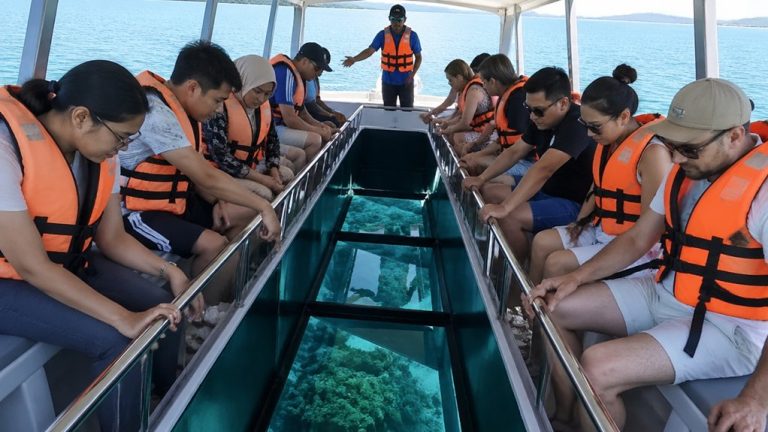
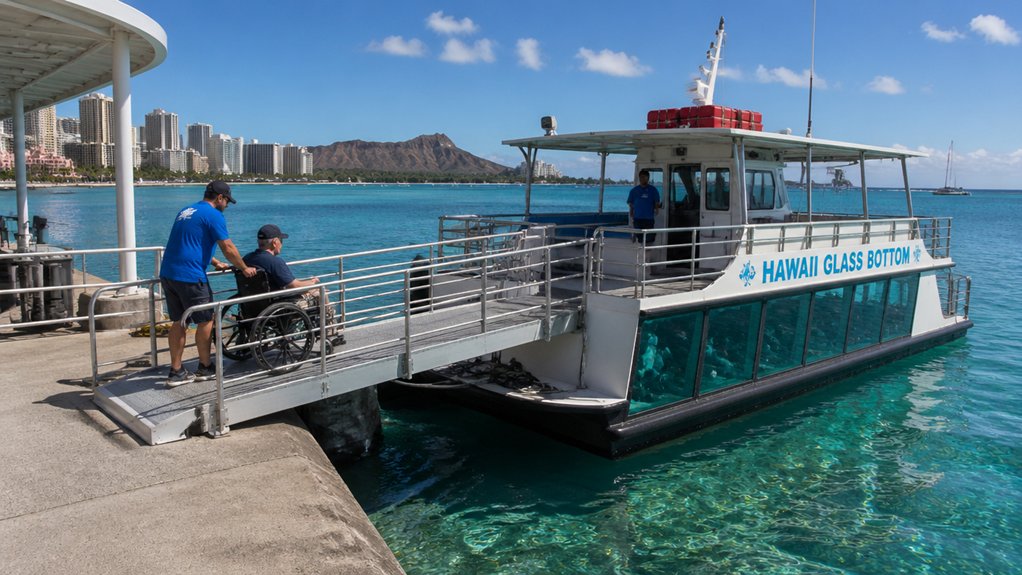
A Waikiki boat ramp can feel like a quick stage change: in about 15 to 20 steps, you’re from hot dock boards to a shaded deck with fish flickering below glass. You can make this outing work with a collapsible wheelchair or walker on some tours, especially if you plan ahead and ask the crew smart questions. The tricky part isn’t the ocean. It’s knowing which boat actually fits your day.
Key Takeaways
- Most Waikiki and Kewalo glass-bottom boats require walk-on boarding; remaining in a wheelchair during boarding is usually not permitted.
- Ambulatory guests, walker users, and collapsible wheelchair users are often accommodated with short transfers, ramps, handrails, and crew assistance.
- Manual or collapsible wheelchairs are usually accepted, but motorized wheelchairs and scooters generally must remain ashore.
- The 50-foot Haleiwa Queen is often the easiest option, offering stable boarding, quick seating, shade, railings, and dry glass-bottom viewing.
- Call before booking to confirm ramp setup, boarding gap, restroom availability, shuttle access, and morning departures for calmer water and clearer viewing.

Oahu Grand Circle Island Experience from Waikiki
Enjoy Grand Circle Island experience tour with breathtaking views of Amelia Earhart Lookout on Diamond Head, admire Chinaman’s Hat in front of Kualo...

Waikiki Turtle Snorkeling & 6-in-1 Adventure with Free Pickup
Experience a special turtle snorkeling adventure in Waikiki aboard a smooth and comfortable catamaran. This all-in-o...
Oahu Circle Island Snorkeling Tour: Dole, Pali Lookout & More
Looking for the BEST VALUE & MOST COMPLETE Circle Island Snorkeling Tour? Join us for the ultimate full-day, action-...

Waikiki Glass Bottom Boat Cruise
Experience the beauty of Oʻahu South Shore as we sail toward Lēʻahi (Diamond Head) aboard the spacious Haleiwa Qu...
Which Waikiki Glass Bottom Boats Are Accessible?
If you’re wondering which Waikiki glass-bottom boats are the most accessible, start by looking at operators that run from Kewalo Basin and Waikiki, including the 50-foot Haleiwa Queen and several smaller boats that cruise past Waikiki and Diamond Head for about an hour.
You’ll usually find straightforward boarding for ambulatory guests, plus people using walkers or collapsible wheelchairs. Expect a ramp with handrails and a short approach from dock to boat, often around 15 to 20 steps. Some families also ask about stroller-friendly tips, since boarding logistics at Waikiki glass-bottom boats can overlap with other mobility needs. Once aboard, you can settle into a seat quickly, with shade covering much of the deck and crew ready to help. Before booking your glass-bottom boat tour, call ahead. Policies can shift with weather, passenger counts, and each operator’s rules, so confirming mobility details saves guesswork today.
Which Tour Is Best for Wheelchair Users?
If you want the easiest boarding, you’ll want to compare how much stepping is required, because even with crew help and a wide ramp with handrails, you still may need to cross from dock to boat. For a low-effort hour on the water, the Haleiwa Queen stands out with seating right after boarding and broad shade overhead, so you can settle in and let Waikiki’s blue coastline slide by. You should also go in for the ride as much as the sea life, since the glass ports are limited and marine sightings depend on weather, waves, and a little island luck. Before booking, ask specific accessibility questions about boarding assistance, step height, and restroom access so you know what’s actually possible.
Boarding Ease Comparison
While no Waikiki glass-bottom tour is fully wheelchair accessible in the strictest sense, some are clearly easier to board than others. You’ll find the Haleiwa Queen glass-bottom boat more manageable than options because boarding at Kewalo Basin uses a short ramp, handrails, and roughly 15 to 20 steps from the dock. That setup can work if you use a walker or a collapsible wheelchair and can transfer, but not if you rely on a motorized chair or scooter. Crew help matters too. Reviews often praise attentive staff who guide boarding and seat mobility-impaired guests away. Since policies vary, ask whether you’ll step across from dock to boat or get special assistance. Also confirm wheelchair limits and prearrange lift-equipped transport, because availability can be patchy. If you’re comparing operators, researching Kewalo Basin tours ahead of time can help you verify current boarding conditions and assistance policies.
Best Low-Effort Option
For the easiest, lowest-effort Waikiki glass-bottom cruise, the Haleiwa Queen stands out right away. If you want a simple glass bottom boat tour, this is the one to check first. You get a short ramp or step from dock to boat, crew help, and quick seating once aboard.
- Boarding is usually just 15 to 20 steps from the dock with handrails.
- The 50-foot catamaran feels steady, with railings and lots of shade.
- Manual or collapsible wheelchairs and walkers are allowed, but motorized chairs aren’t.
- Tours run daily at several times, though you should confirm schedules and access needs.
If you’re worried about motion sensitivity, the boat’s stable ride can help, and it’s smart to review seasickness tips before your tour. You’ll still need some standing or weight-shift ability, or a helper. Still, the whole process feels invigoratingly unfussy. It’s calm, shaded, and pleasantly easy on you.
Wildlife Viewing Tradeoffs
Choosing between easy boarding and bigger wildlife odds is the real tradeoff here. You can roll up a short ramp with handrails, settle in fast, and enjoy stable glass viewing on the Haleiwa Queen, which stays roomy, dry, and about three quarters covered. If you use a collapsible or manual chair, this setup feels simple. But marine life doesn’t run on schedule. You might spot turtles, bright fish, dolphins, or winter humpbacks, yet the four viewing panels are limited and sightings vary with clouds, chop, and timing. Morning trips usually give you clearer water and better odds than afternoon departures. Crew narration helps a lot, and sometimes fish show up for a snack, but this is still a short cruise, not a wildlife jackpot. It rewards curiosity more than a checklist. Like most glass-bottom tours in Waikiki, the experience is as much about learning what you see as it is about checking animals off a list.
Still comparing Diamond Head?
Ask for tour ideas, hotel suggestions, or a simple trip plan that combines both.
Trip Helper
How Does Boarding From the Dock Work?
Step onto the dock at Kewalo Basin Harbor and the boarding process feels invigoratingly direct. You approach a short gap between dock and boat, then use the ramp with handrails as crew guide you aboard. If you use crutches or a collapsible walker, they’ll help you settle into a seat right away.
At Kewalo Basin Harbor, boarding feels brisk and hands-on, with a short step across and steady crew guidance up the ramp.
- Tell the operator ahead if you’ll transfer from a wheelchair.
- Bring a collapsible chair if needed.
- Expect to step across onto the vessel.
- Ask about lift alternatives before booking if you need one.
Motorized wheelchairs and scooters stay ashore, so planning matters. For arrival logistics, asking about Waikiki parking options in advance can make the experience easier. The wide entrance makes transfers smoother, and the harbor scene keeps things lively, with lines clinking and seabirds calling overhead in the bright salt air that morning.
How Much Walking or Ramp Use Is Required?
Although this isn’t a long walk, you should expect a short approach of about 15 to 20 steps from the dock and a brief ramp or step across onto the boat. The good news is that the ramp has handrails and a wide entrance, so the move feels more guided than tricky. Crew members usually help you board and can get you seated right away, which cuts down on standing time. Once you’re in place, the vessel stays steady and is covered, so you won’t need much movement during the ride. Keep in mind that restroom facilities may not be available on glass bottom boats, so planning ahead before boarding is a good idea. The bigger variable may be getting to the dock itself. Parking, shuttles, and pickup points can add distance, so it’s smart to call ahead and ask about accessible transport. Less surprise, more viewing.
Can You Bring a Manual Wheelchair or Walker?
You can usually bring a collapsible manual wheelchair or walker on board, and the crew helps you get seated as soon as you cross over from the dock or roll up the ramp with handrails. Once you’re aboard, you’ll find shaded seating and sturdy railings, which makes the setup feel practical and reassuring instead of fussy. If you use a power chair or scooter, you’ll need another plan, so it’s smart to call ahead and confirm the operator’s exact rules before you book. If you’re arranging transportation too, ask whether hotel pickup options are available when you call.
Manual Wheelchair Boarding
Picture a short, manageable shift from dock to deck rather than a major obstacle course. At the Haleiwa Queen, you make a brief Walk of about 15 to 20 steps from the dock area to the boarding point. A ramp with handrails and a wide entrance helps, and crew can steady your manual wheelchair, guide the transfer, and get you seated fast. These Ala Wai Harbor glass bottom boat tours are a popular way to explore Waikiki-area waters, so it helps to confirm accessibility details when you book.
- Bring a collapsible wheelchair for easier handling and safe storage onboard.
- Expect one step across from dock to ramp or boat.
- Ask for crew assistance before arrival so your boarding plan is ready.
- Confirm details with the operator, since dock setups can change.
It isn’t a silent ballet, but with a little planning, boarding feels practical, not dramatic.
Walker Access Limits
That same practical approach carries over to walkers and manual wheelchairs too. You can bring a collapsible chair or walker aboard the Haleiwa Queen, and the crew can guide you through boarding. At some departures, you’ll step from the dock to the boat. At others, you’ll use a ramp with handrails. Either way, staff can help if you’re using crutches or need steadying. Seating is available right away for guests with mobility needs. This matters when comparing a glass bottom boat with a submarine tour, since boarding methods and physical access can differ. The main limit is power equipment. Motorized wheelchairs and scooters aren’t allowed, so you’ll need another plan before booking. Because some docks leave a short 15-to-20-step transfer, call ahead to confirm ramp access, railings, capacity, and any waiver details before you go. That keeps the outing smooth and easy for everyone.
Can You Stay in Your Chair Onboard?
Start with the key detail: walk-on boarding is required, so you can’t stay in your wheelchair while getting onto the boat.
Once aboard, you may be able to remain in a mobility aid, but it depends on your setup and the operator’s rules. The crew helps you board, steady yourself, and get settled fast. Think through these points:
- Boarding: You’ll step across from the dock or use a ramp with handrails.
- Allowed gear: Collapsible/walkers-compatible chairs and walkers can come aboard.
- Not allowed: Motorized wheelchairs and scooters usually can’t.
- Best move: Call ahead to confirm ramp size, transfer help, and your chair type.
The catamaran feels very stable, with rails around the deck, so staying put once aboard can be realistic for many travelers too. Following onboard etiquette also helps keep boarding and seating smoother for everyone.
What Is Seating and Shade Like Onboard?
When you board the 50-foot Haleiwa Queen, you’ll find plenty of seating, and if you have mobility issues, the crew can help you get settled right away. About three-quarters of the boat is covered, so you can usually claim a shaded seat while still enjoying the bright Waikiki coastline through the open sides. You’ll stay comfortable on the stable, roomy deck, though a little breeze or sea spray might still sneak in and keep things interesting. Since Glass Bottom Boat Waikiki tickets generally cover the ride itself, what you’re really paying for is the onboard experience, views, and convenience.
Seating Layout
About three-quarters of the 50-foot Haleiwa Queen’s deck sits under cover, so you’ll find plenty of shaded seating even on a bright Waikiki morning. Your expert captain and crew can guide you to a seat soon after boarding, which helps if mobility is an issue.
- Seats ring the glass floor ports, so you can stay dry while watching fish flash below.
- Open-sided sections keep views wide, though you may feel wind or a little spray.
- Walkers and collapsible wheelchairs are welcome, but motorized chairs and scooters aren’t.
- Because of that setup, where you sit may depend on what aid you bring.
This setup also suits non-swimmers well, since you can enjoy Waikiki’s underwater views without getting in the water. That practical layout feels simple once you’re settled, and it lets you focus on coral patches, reef shadows, and the hush underfoot below.
Shade Coverage
Usually, shade feels easy to find on the Haleiwa Queen since roughly three-quarters of the 50-foot catamaran sits under cover. Once you board, you can usually settle right into a shaded main-deck seat, which helps if you don’t want to roll or walk through sunny spots first. The open sides keep views wide over Waikiki Beach and the water below, but they also let in breeze, glare, and the occasional salty splash. Some edge seats catch more sun, especially on morning or afternoon departures when the angle shifts. Because the boat is compact, shade can change a bit with the captain’s position too. Bring a light jacket or sweater. Even in cover, the wind can feel surprisingly cool, like the ocean’s own air-conditioning sometimes. Most Waikiki departures for glass bottom boats begin right from Waikiki, which can make boarding logistics feel more straightforward for many visitors.
Where Waikiki Boat Access Still Falls Short
Although Waikiki’s glass-bottom boat trips sound easy on paper, the access story still has a few hard edges once you reach the dock. Wheelchair access often depends on what you can physically do, not just what the brochure suggests.
- You still have to step from dock to boat, and that gap can feel longer than it looks.
- The ramp is short, with handrails and a wide entrance, but the boat may sit 15 to 20 steps away.
- Crew members can help you board and seat you fast, yet most trips don’t offer lifts or full transfer support.
- Motorized chairs, scooters, and some shuttle rides remain sticking points, especially when a waiver and safe transfer are required before you hear the hull slap the water.
It helps to review boat safety essentials before booking, since boarding limits and transfer requirements can affect whether the trip is realistically accessible.
Which Tours Need Extra Caution for Mobility?
If you’re sorting through Waikiki glass-bottom tours with mobility in mind, pay closest attention to the trips that still ask you to step from dock to boat. Kewalo Basin departures on the 50-foot Haleiwa Queen need that transfer, so motorized wheelchairs and scooters can’t board. You’ll want operators that clearly confirm ramp access, handrails, and crew help, because many Glass Bottom departures do offer that smoother setup. Be extra careful with small boats and sunset sailings if you use crutches or feel unsteady. Rough water can turn a pretty ride into a wobbly puzzle. Daytime cruises usually mean calmer seas and easier boarding. Also check shuttle lifts before tour day, and ask about passenger minimums and capacity limits so plans don’t suddenly drift away. If you’re arranging transportation first, review Kewalo Basin Harbor directions from Waikiki so you can confirm whether curb access and drop-off points will make boarding easier.
What Wildlife Can You Realistically Expect to See?
Often, the best way to picture a Waikiki glass-bottom tour is as a series of quick underwater windows, not a full aquarium show. You’re looking through four framed panels, each about 2 by 5 feet, so sightings feel brief and a little cinematic. Most trips give you a realistic shot at:
- small tropical reef fish flashing by the glass
- green sea turtles cruising past with calm, unhurried strokes
- fish clusters near the boat if the crew drops food
- seasonal surprises like dolphins or winter humpback whales
You may also spot colorful fish commonly seen from Waikiki glass-bottom boats, depending on water clarity and luck. That last category is the bonus round, not the baseline. Some outings feel quiet. Others deliver a memorable cameo. If you board expecting occasional glimpses instead of nonstop action, you’ll enjoy the mystery more than chasing guarantees today.
How Do Weather and Waves Affect Visibility?
When the ocean settles down and the light stays bright, the glass panels turn into much better windows. In calm, clear weather, you’ll have a stronger shot at spotting turtles, reef fish, and sometimes even whales during winter humpback season. The Glass Bottom view looks sharper because less rocking means less glare and less churn above the panels. In Waikiki, water clarity can make a big difference in how easily you can see marine life through the glass.
When waves build or clouds move in, visibility drops fast. Rough water makes the boat sway, and the moving surface can blur the roughly 2-by-5-foot panels set about 8 feet below deck. Afternoon trips can also show less wildlife on a sunset run. In rough weather, operators may shorten the cruise, change the route, or cancel altogether, which can limit what you see through the glass.
How Should You Book an Accessible Boat Tour?
Start by calling the operator and nailing down the access details before you book. For a Hawaii Glass Bottom tour, ask if the Haleiwa Queen can take your walker or collapsible wheelchair, and remember motorized chairs and scooters aren’t allowed.
- Ask about boarding help, the short ramp, handrails, and the 15 to 20 steps from dock to boat.
- Request crew assistance in advance so boarding feels smooth, not like a surprise gym class.
- Choose a morning departure if you can. Calmer water often means better wildlife views and clearer glass panels.
- Reconfirm 24 to 48 hours ahead. Daily trips can cancel for weather or if fewer than six passengers book. Review change and cancellation fees before you pay, too, and ask about refund timing with sellers.
Also ask for the cancellation policy details so you know what happens if weather or minimum passenger requirements affect your trip.
Frequently Asked Questions
Are Service Animals Allowed on the Glass Bottom Boat?
Yes, you can usually bring service animals on the glass bottom boat. You’ll want to notify the operator ahead, confirm any documentation, and prepare for wind, spray, and heat. Service animals? Crew assists boarding too.
What Should Passengers Wear for a Waikiki Boat Tour?
Wear quick-drying layers, non-slip closed-toe shoes or sturdy sandals, and bring a jacket. Pack Sun protection essentials like a hat and UV shirt. If you need comfort, bring your own cushion and keep valuables secure.
Is There a Restroom Onboard for Accessible Passengers?
Yes, you’ll have an Accessible Restroom onboard during the cruise. You can use it, but you may need to transfer from your wheelchair, and you should arrange crew assistance before boarding if you’ll need help.
Can Children With Mobility Needs Join the Tour?
Yes, just 15–20 steps separate dock and boat, and crew help you board via a ramp. Your child can join if they use a walker, crutches, or a collapsible wheelchair, with Inclusive Seating available immediately onboard.
How Early Should Wheelchair Users Arrive Before Departure?
Arrive 30–45 minutes before departure; if you need extra assistance, priority boarding, or a transfer from a collapsible wheelchair, get there 45–60 minutes early. Boarding time goes smoother when you call ahead and confirm logistics.
Conclusion
With the right boat and a quick call ahead, you can make a Waikiki glass bottom tour fit your day. Expect a short dock transfer, a helping hand from the crew, and a breezy ride where reef fish flicker like tossed confetti below the glass. The Haleiwa Queen is often the safest bet. Still, waves can turn the window into a shaken snow globe, so ask smart questions, pack patience, and let curiosity steer the trip.