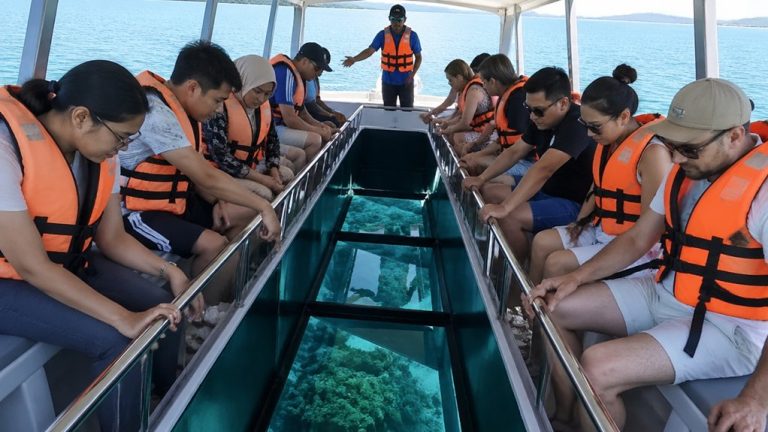
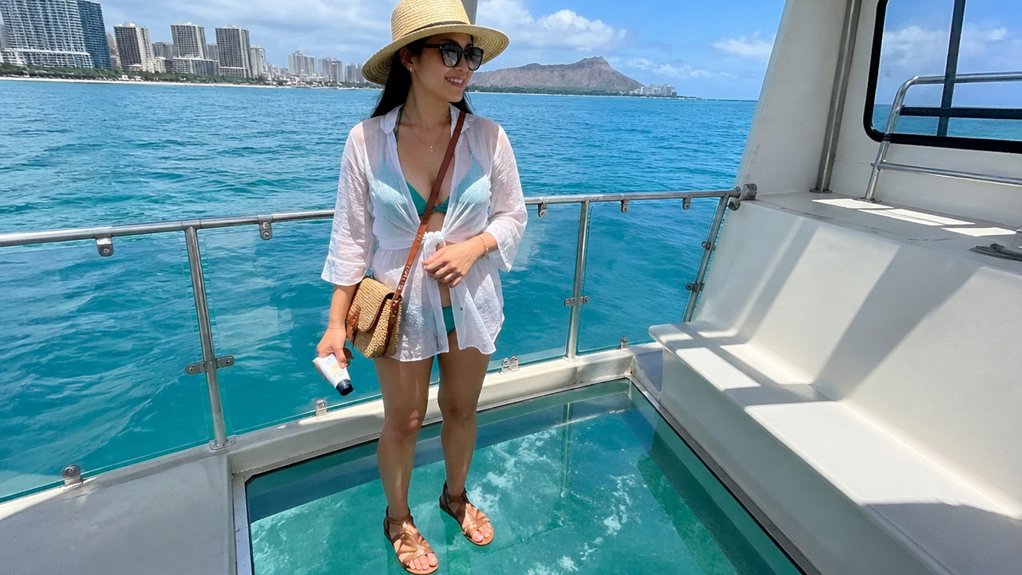
For a glass bottom boat tour in Waikiki, you’ll want clothes that handle sun, salt spray, and a light breeze without fuss. Think quick-dry layers, secure sandals, and sunglasses that won’t fly off when the trade winds pick up. You’re there to spot bright fish and shifting reef colors through the glass, not slide around in flimsy shoes or roast in heavy fabric. A few smart choices make the whole trip easier, and one mistake can get annoying fast.
Key Takeaways
- Wear breathable quick-dry shorts and a T-shirt; choose swimwear underneath only if your Waikiki boat tour includes a swim or snorkel stop.
- Bring a light layer like a hoodie, thin sweater, or windbreaker for breezy decks, sunset cruises, and spray-cooled evenings.
- Choose secure non-slip footwear such as strapped flip-flops, rubber-soled sandals, or water shoes; avoid heels and slippery dress shoes.
- Protect against sun with reef-safe SPF 30+ sunscreen, a wide-brim hat, and polarized UV-blocking sunglasses with a strap.
- Carry a small dry bag with essentials like sunscreen, phone, wallet, towel, water bottle, snacks, and motion-sickness remedies.

Oahu Grand Circle Island Experience from Waikiki
Enjoy Grand Circle Island experience tour with breathtaking views of Amelia Earhart Lookout on Diamond Head, admire Chinaman’s Hat in front of Kualo...

Waikiki Turtle Snorkeling & 6-in-1 Adventure with Free Pickup
Experience a special turtle snorkeling adventure in Waikiki aboard a smooth and comfortable catamaran. This all-in-o...
Oahu Circle Island Snorkeling Tour: Dole, Pali Lookout & More
Looking for the BEST VALUE & MOST COMPLETE Circle Island Snorkeling Tour? Join us for the ultimate full-day, action-...

Waikiki Glass Bottom Boat Cruise
Experience the beauty of Oʻahu South Shore as we sail toward Lēʻahi (Diamond Head) aboard the spacious Haleiwa Qu...
Start With a Simple Waikiki Boat Outfit
For a smooth start, wear your swimsuit under a simple Waikiki outfit like a T-shirt and shorts so you’re ready if a quick snorkel or dip sounds too good to skip. Slip on flip-flops for the dock and boarding, then stash a towel and sunscreen (reef-safe) in a small bag. Bringing essentials to pack like sun protection and a small day bag helps keep everything organized for the tour. You’ll appreciate a light jacket once trade winds pick up on the canopy-covered Haleiwa Queen, especially if the evening feels cooler after sunset. Quick-dry clothing helps during that short shuffle from beach briefing to boat, and it won’t stay soggy if sea spray finds you. Towels and changing areas make the switch easy later. Bottled water is provided, and you can bring snacks. Think simple, mobile, and ready for salt and a little breeze.
Choose Lightweight Clothes for the Heat
Most days in Waikiki, you’ll feel best in lightweight, breathable clothes that can handle sun, salt, and temperatures in the mid-70s to mid-80s. Choose cotton or moisture-wicking synthetics in light colors so you stay cooler during the cruise and while waiting at Kewalo Basin Harbor. If you’re wearing swimwear underneath, a quick-dry rash guard or thin long-sleeve shirt gives you extra sunscreen support without feeling stuffy. Pack a lightweight cover-up or thin sweater too. The canopy deck can feel cooler in the shade, especially on early mornings and evenings when the breeze skims the water. Skip denim, dark colors, and anything heavy that holds heat or stays damp after a splash. If you’re planning an accessible boat experience, choose outfits that stay comfortable while seated and leave room for any mobility gear. Even your flip-flops should feel airy and easy, for the short harbor walk back.
Wear Non-Slip Shoes or Sandals
You’ll want secure shoes that stay put when you step onto wet ramps and the catamaran’s slick deck. Choose non-slip sandals with straps or quick-dry water shoes with textured rubber soles, so you get better traction and can still slip them on and off without a tug-of-war. If your plans include a snorkel stop, those same shoes protect your feet from coral and rinse clean when the harbor leaves them sandy. Stable footwear can also help you stay steady if the boat starts rocking and reduce the chance of feeling uneasy on the water.
Secure Footwear Choices
Start with shoes that grip. You’ll step across wet docks and ramps, so pick non-slip water shoes or reef sandals with rubber soles. If you prefer flip-flops, choose a pair with secure straps so they don’t vanish mid-boarding. Some travelers also ask about restroom facilities, so secure shoes make it easier to move safely around the boat if needed.
| Choice | Why it works |
|---|---|
| non-slip water shoes | Quick-drying for a later snorkel |
| reef sandals | Rubber soles and toe coverage |
| flip-flops | Fine if they have a heel strap |
Skip smooth leather or dressy sandals that turn slick when wet. Test shoes before your tour. If you use a wheelchair or mobility aid, pack collapsible pairs that slip on easily and still grip well for boarding. Good footwear also helps if motion sickness makes you feel on the ramp while salt air and engine hum surround you gently.
Better Deck Traction
Often, the easiest way to feel steady on a glass bottom boat is to wear rubber-soled water shoes or non-slip sandals with real tread. Wet fiberglass, salt spray, and the plexiglass viewing panels can get slick fast, so you want secure footing that stays reliable when the catamaran shifts. Look for aquatic footwear that’s quick-draining and built for grip, not style points alone.
- Choose textured tread that bites into damp decks.
- Pick heel straps that help stop side-to-side sliding.
- Skip smooth flip-flops and leather soles that skate on wet surfaces.
If you bring collapsible shoes, make sure they fit snugly. Loose pairs can slide off, catch in the aisle, or turn a curious turtle sighting into an awkward shuffle for you. If anyone in your group has mobility concerns, ask accessibility questions before boarding so your footwear choice also matches the boat’s setup.
Still comparing Diamond Head?
Ask for tour ideas, hotel suggestions, or a simple trip plan that combines both.
Trip Helper
Easy On And Off
Slip into non-slip sandals or water shoes that let you move easily from dock to ramp to the Haleiwa Queen without that careful penguin walk on wet boards. You’ll board faster and feel steadier as the harbor splashes underfoot. Choose slip-on sandals or Velcro water shoes that come off quickly for beach briefings, then go right back on for boarding. Keep them light, since bulky shoes stay soggy, drag sand around, and clutter the canopy-covered deck. If you’re snorkeling, stash your pair in a small bag or bring a backup set so the floor stays clear. This simple habit follows good onboard etiquette by helping prevent trip hazards on the glass-bottom boat. If you use a collapsible wheelchair or walker, check that the wheels or feet grip the ramp and dock well. Good traction makes every step simpler for everyone.
Bring a Hat and Polarized Sunglasses
A wide-brim hat and polarized sunglasses usually earn their spot before you even leave Waikiki. Even on the canopy covered deck of the Haleiwa Queen, light slips in, so a wide-brim hat gives your face and neck extra sun protection during the hour on the water. Bring a packable hat if you’re riding over in flip-flops and a light cover-up.
- Choose polarized sunglasses with 100% UV protection.
- Add a strap or snug fit so wind doesn’t claim them.
- Use them for sharper skyline and Diamond Head photos.
You’ll cut glare, spot turtles or dolphins and stay comfortable. Just remember polarized lenses can make the glass bottom ports a trickier to read, which is trade for everything above the surface out there. If you want a more relaxed ride, comfort and seating can make a big difference, especially for seniors on a Waikiki glass bottom boat tour.
Apply Reef-Safe Sunscreen Before Boarding
Sunscreen comes next, and it’s worth putting on before you step aboard. Choose a broad-spectrum reef-safe sunscreen with zinc oxide or titanium dioxide, and skip formulas with oxybenzone or octinoxate for better reef protection. Hawaii’s reefs are among the most biologically diverse and economically valuable ecosystems on Earth, so using reef-safe sunscreen helps reduce one local stressor on these fragile habitats. Use SPF 30 or higher, then apply before boarding at least 15 to 30 minutes early so it can absorb. A nickel-to-quarter sized amount covers your face, and about a shot glass per arm or leg area helps you reach the label’s protection. Even on a shaded cruise, sunlight bounces off the water, so reapply every 80 minutes if you sweat or towel off. For the cleanest routine, avoid sprays and powders. Pick lotions or creams instead, and add a reef-safe lip balm with SPF if your lips burn fast.
Pack a Light Layer for Wind or Evening
Even if the day starts warm, bring a light layer because the breeze over open water can feel cooler than you expect. On the Haleiwa Queen, ocean breezes slip past the shaded deck, so your T-shirt may suddenly feel optimistic. Even when the glass bottom boat in Waikiki isn’t rough, light chop and steady wind can still make the air feel noticeably cooler.
Even on a warm afternoon, bring a light layer, the breeze off the water can turn surprisingly cool fast.
- Toss in a lightweight jacket or thin windbreaker for sunset.
- Choose a packable fleece that stows easily in a small bag.
- Keep a quick-dry cover-up handy if spray leaves you chilly.
You’ll stay comfortable without hauling extra bulk. That matters on a one-hour cruise where space is tight. If you’re heading out for evening whale-watching, add a light insulating piece, because South Shore temperatures can dip after sunset. Think simple, soft, and easy to grab when the wind picks up there.
Skip Swimwear on Regular Glass-Bottom Tours
Usually, you can leave the swimsuit behind on a regular glass-bottom boat tour in Waikiki, because you won’t be jumping in for a swim. On the Haleiwa Queen, the shaded canopy deck keeps things casual, so shorts, a T-shirt, and easy flip-flops work perfectly. Since this glass bottom boat cruise doesn’t include swim stops, swimwear usually just takes up space and never leaves the dry side of the rail. If sea breeze or shade makes you cool, bring a light jacket or cover-up instead. Add suncreen before boarding, because Waikiki’s glare bounces off the water and finds every uncovered spot. For check-in time, plan to arrive early enough to board without rushing. You’ll stay comfortable, look appropriate, and avoid dressing like you’re headed for a surprise cannonball. The ride is for viewing reefs and fish below.
Bring a Small Bag for Essentials
Once you’ve settled on simple boat clothes, pack a small dry bag or zippered beach tote to keep the day easy. A small dry bag keeps sunscreen, sunglasses, your phone, and wallet together without hogging space. Slip in a towel and a change of clothes, since you can rinse off at outside showers later.
- Stash motion-sickness medication where you can grab it fast.
- Add a collapsible water bottle, snacks, and any BYOB drinks.
- Keep valuables light, because storage is limited onboard.
If you’re bringing little ones, stroller-friendly tips can help you keep bags compact and easy to manage around Waikiki before and after the tour. You’ll appreciate a bag that stays close while you watch fish glide under the glass or hand it to a friend during snorkeling. Bottled water is provided, and guest coolers with ice help too for warm Waikiki afternoons.
Wear Easy-On Clothes for Harbor Boarding
At the harbor, simple clothes make the whole boarding process feel smoother. You’ll do better in shorts and a T-shirt or a swimsuit with a quick-on cover-up, since dock boarding often means stepping up a ramp, hearing lines clink, then stepping down into the boat. Choose slip-on footwear such as flip-flops or sandals, and skip belts, stiff layers, and tight shoes that slow you down. If trade winds pick up, a lightweight hoodie with a front zip is easy to pull on while you wait by the dock. If you’re using hotel pickup options, wearing easy-on clothes also makes getting in and out of the shuttle more convenient before you reach the harbor. If you use a walker or collapsible wheelchair, easy-to-move clothing like stretchy shorts or pants helps transfers feel less awkward. The goal is simple: less fuss, faster footing, and more time peering into that blue water.
Avoid Bulky Jewelry and Loose Accessories
Often, the easiest finishing touch is to wear less jewelry than you think you need. On a Waikiki glass bottom tour, simple wins while boarding Haleiwa Queen and stepping across the ramp. You should avoid bulky necklaces, long earrings, and big bracelets that can snag on railings or seats.
For a Waikiki glass bottom tour, less jewelry is the smartest finishing touch, simple, secure, and easy while boarding.
- Leave loose accessories behind. Better yet, leave scarves in bag, along with floppy hats, ties, and lanyards that the breezy deck loves to tease.
- Skip heavy expensive jewelry. With limited storage and a quick beach-to-boat shuffle, your hotel room is safer.
- Secure small items like studs or thin chains in a zippered pouch or snug pocket.
Waves can jostle belongings, even on a stable catamaran, and you’ll want them secure before snorkeling. Following Glass Bottom Boat Safety essentials also helps you avoid preventable snags and dropped items while moving around the deck.
Dress Kids in Cool, Sun-Safe Layers
Start with light layers that can keep up with salt air, sun, and a kid’s talent for getting damp at the worst possible moment. Choose lightweight breathable layers like a moisture-wicking tee and a thin rash guard, so your child stays cool but can still cover up if trade winds pick up. Before you board, smooth on reef-safe sunscreen and tuck a small refill into your bag. Add a wide-brimmed hat and UV-blocking sunglasses to shield small faces during the cruise.
For families with hesitant swimmers, a glass bottom boat tour lets kids enjoy Waikiki’s marine views without needing to get in the water. On their feet, pick non-slip sandals or water shoes for the dock and ramp. Pack a quick-dry towel, a change of clothes, and a light cover-up or hoodie for cooler evening rides. You’ll be glad when the splash zone finds them first anyway.
Pack Motion-Sickness Remedies if Needed
Even on a stable boat like the Haleiwa Queen, you should still prepare if motion sickness ever sneaks up on you. Take your preferred remedy early, whether that’s Dramamine about two hours before boarding or a simple backup like ginger or acupressure bands. If the forecast calls for showers, check a rainy day guide before you go so you know whether to head out or reschedule. Once you’re out on the water, stay under the shaded canopy, fix your eyes on the horizon, and let the gentle ride do the rest.
Take Medication Early
If your stomach tends to protest once the boat leaves the dock, take your usual motion-sickness medicine early so it has time to work before you’re peering through the glass at bright reef fish below.
For seasickness, timing matters more than bravado. You’ll usually want to take oral medication like Dramamine or meclizine about two hours before boarding.
This is especially helpful on a Glass Bottom Boat Waikiki tour with kids, since calmer, prepared passengers of all ages tend to enjoy the outing more.
- Follow the label, or your doctor’s advice, for a preventative dose the night before and another that morning.
- Pack ginger candies, tablets, or wristbands if you prefer backup without more medication.
- If you use transdermal scopolamine, apply the sealed patch 8 to 12 hours ahead, and ask your physician about interactions with other medicines before the tour starts and the engines begin humming.
Stable Boat, Still Prepare
Because the Haleiwa Queen rides as a stable 50-foot power catamaran, you may feel perfectly fine skimming over the open water for an hour under the shaded canopy, but it’s still smart to pack your usual motion-sickness backup. A stable boat, including the Haleiwa Queen, can still feel bouncy when weather shifts. If motion sickness tends to find you, tuck meclizine or another fast-acting option into a waterproof pouch. Kewalo Basin operators like glass bottom boat tours are designed for sightseeing, but changing ocean conditions can still catch sensitive stomachs off guard. Keep it easy to reach, since there’s only one restroom onboard. If queasiness sneaks up, move mid-ship, focus on the horizon or Diamond Head, and sip water from the crew. You’ll stay more comfortable and spend more time watching reef colors flash below the glass instead of counting waves like they’re plotting against your lunch.
Choose Your Preferred Remedy
Plan your seasickness strategy before you step aboard, and you’ll give yourself a much better shot at enjoying the reef instead of negotiating with your stomach. If you usually need motion-sickness medication, take it about two hours early so it’s working when the boat leaves the dock.
- Try acupressure wristbands before and during the cruise.
- Keep remedies in a secure pocket, and wear lightweight non-slip footwear for easy movement.
- Support hydration with the complimentary water, avoid heavy meals, and claim mid-ship seating if you’re sensitive.
Then keep your eyes on the horizon when the swells gently roll. You’ll hear engines hum, feel salt air, and spend more time spotting fish than planning an escape. That small prep can turn a queasy hour into views. If you’re also wondering about tipping etiquette, it’s a good idea to check whether gratuities are customary on your glass bottom boat tour.
Don’t Wear Heels or Slippery Shoes
While a glass bottom boat tour feels easygoing, your footwear still matters the moment you step onto the ramp and down into the catamaran. Skip heels, especially stilettos or wedges, because they can catch on the gangway or wobble on uneven marina surfaces at Kewalo Basin. Slick dress shoes with slippery soles aren’t much better once you meet wet decks and damp spots under the canopy.
You’ll feel steadier in flip-flops, rubber-soled sandals, or closed-toe shoes with non-marking grip. If you plan to walk the docks or stand for photos, secure shoes help you move with confidence instead of doing a surprise balance routine. The boat may feel stable, but the floor can get splashy, so choose footwear that stays put when it’s wet. If you’re driving in, choosing shoes that stay comfortable from the lot to the dock is part of Waikiki parking planning too.
Try This Easy Waikiki Cruise Outfit
You’ll feel ready for a Waikiki cruise in swimwear under shorts and a T-shirt or a light cover-up, so you can head to snorkel afterward and change fast in the harbor restrooms. Keep it easy with flip-flops for the ramp, then add a lightweight jacket or sweater when the canopy-covered deck gets breezy and the evening air turns cool. Finish with a hat, a towel, and reef-safe sunscreen before boarding, and if you use mobility aids, stick with easy-moving clothes and call ahead about wheelchair access. Since glass bottom boat tickets usually cover the ride itself, dressing simply and bringing only the essentials can help you get the most value from the experience.
Light, Casual Basics
Often, the easiest glass bottom boat outfit starts with a swimsuit under light casual layers, like a quick-dry tank or t-shirt and breathable shorts, so you can settle by the rail without fussing with your clothes.
Keep your swimwear simple, then add a quick-dry t-shirt for easy comfort in sun and spray. For evening sailings, tuck in a light jacket because Waikiki breezes can surprise you once the boat leaves shore.
- Apply reef-safe sunscreen before boarding.
- Wear a wide-brim hat and sunglasses with a strap.
- Stash a water bottle and small essentials in a beach pouch.
Flip-flops work for the harbor walk, and your outfit still feels polished enough for photos as Diamond Head glows and the hull hums over bright blue water nearby.
Footwear And Cover-Up
Slip into flip-flops or water sandals that dry fast and come off easily at the dock, then pull on a simple cover-up, light dress, or rashguard with shorts over your swimsuit for the walk through Waikiki. If you want surer footing on the ramp, non-marking shoes add grip.
| Pick | Why |
|---|---|
| flip-flops | easy dock swap |
| water sandals | better on sand |
| cover-up | easy harbor walk |
| dry bag | keeps towel, light jacket handy |
A small dry bag saves you from juggling damp straps and a towel while the crew helps everyone board. You stay neat on shore, ready for sea spray, and dressed for the short stroll back past shop windows and plumeria scent. Your feet stay happy, and your outfit won’t argue with saltwater later on.
Sun And Breeze Layers
Because Waikiki sun feels bright the minute you step toward the dock, start with a lightweight short-sleeve shirt or breathable tee over your swimsuit for a little shade that doesn’t trap heat.
- Add quick-dry shorts so spray dries fast and you can settle onto the canopy deck without feeling soggy.
- Bring a light long-sleeve layer for trade winds near Diamond Head or when the sky turns gold after sunset.
- Finish with slip-on sandals, a compact hat, reef-safe sunscreen, and towels in a small bag.
You’ll stay ready for warm planks, breezy rails, and easy ramp transfers. Water is provided on board, so your outfit can stay simple, practical, and pleasantly unfussy. It covers sun, handles splash, and saves you from lugging fussy extra layers all day.
Frequently Asked Questions
Can I Bring a Change of Clothes for After the Tour?
Yes, you can bring a compact outfit, post tour towel, and extra dry bag; you’ll appreciate a privacy poncho, wetshoe swap, sea scent remover, and sun protection shirt when you change easily back ashore afterward again.
Are There Lockers for Storing Extra Layers or Bags?
No, 100% of guests should expect no locker availability: you won’t find paid lockers or free lockers. For secure storage, use your car; ask crew assistance about bag compartments and the valuables policy before boarding there.
Should I Wear Contact Lenses or Glasses on Windy Rides?
Choose glasses: they help eye irritation prevention, wind blown makeup, and fogged lenses. Use anti glare coatings and secure fit options. If you wear contacts, follow contact solution tips and plan backup glasses placement carefully.
What Fabrics Dry Fastest if Ocean Spray Gets on Me?
Like a telegram, you’ll dry fastest in Quick dry synthetics: Nylon blends, Polyester swimwear, Moisture wicking shirts, Fast dry boardshorts, and Lightweight merino; pair them with Microfiber towels, and you’ll beat ocean spray comfortably today.
Do I Need Different Clothes During Hawaii’s Rainy Season?
Yes, you’ll want lightweight rainwear, a packable umbrella, quick dry layers, waterproof footwear, and moisture wicking underlayers. Add a breathable shell with jacket ventilation, so you stay comfortable when showers, wind, and sea spray hit suddenly.
Conclusion
You don’t need a fashion miracle for a Waikiki glass-bottom boat tour. You need clothes that dry fast, shoes that grip, and a hat that won’t chase the trade winds. The irony is simple: the less you pack, the better you look once the sun flashes on the water and fish flicker below the glass. Step aboard light, shaded, and steady, and you’ll spend less time adjusting straps and more time watching the reef glow.